

Key Takeaways
Option A
Comprehensive Coverage
Protection against events outside your control.
Best for: Drivers who want coverage for weather damage, theft, vandalism, and other non-collision incidents.
Option B
Collision Coverage
Protection when your vehicle strikes something.
Best for: Drivers who want their insurer to pay for repair or replacement costs after an at-fault or single-vehicle accident.
If you're still making loan or lease payments on your vehicle
Both Comprehensive and Collision Coverage
Most lenders require both until the loan is satisfied. Dropping either while you still owe money on the car could put you in breach of your financing agreement.
If you own an older vehicle outright with low market value
Neither - evaluate carefully
If your car's actual cash value is close to or below your deductible, paying premiums for either coverage may not make financial sense. Consider the math before renewing.
If you live in an area prone to severe weather, hail, or flooding
Comprehensive Coverage
Comprehensive pays for weather-related damage that collision coverage does not. Drivers in hail-prone or flood-prone regions often find this coverage particularly worth carrying.
If you drive frequently in heavy traffic or are a newer driver
Collision Coverage
Higher driving frequency and less experience increase the probability of at-fault or single-vehicle accidents, making collision coverage a practical safeguard.
What Each Coverage Actually Does
Auto insurance policies use precise language, and nowhere does that precision matter more than with comprehensive and collision coverage. Insurers bundle them together on your declarations page, and dealers often mention them in the same breath - but they respond to completely different types of loss.
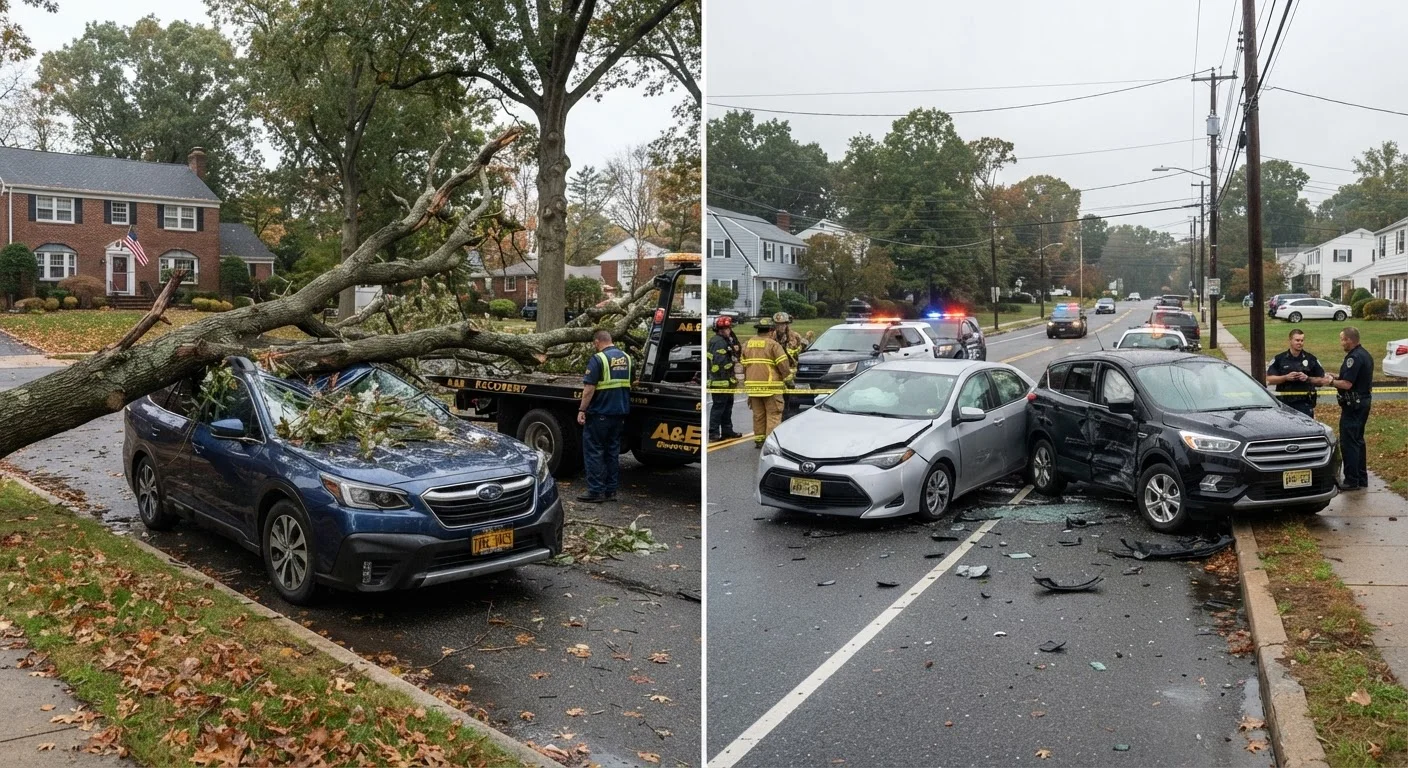
Comprehensive coverage (sometimes called "other than collision") pays for damage to your vehicle caused by events that are largely outside your control: theft, vandalism, fire, falling objects, flooding, hail, and strikes involving animals such as deer. If a tree limb collapses onto your parked car during a storm, that's a comprehensive claim.
Collision coverage responds when your vehicle makes physical contact with another vehicle or an object - a guardrail, a telephone pole, another car. Fault typically doesn't determine whether the claim is paid; what matters is that an impact occurred. If you back into a concrete pillar in a parking garage, that's a collision claim.
A common source of confusion is the deer scenario: if you swerve to avoid a deer and hit a tree, that's a collision claim. If you hit the deer directly, most insurers treat it as a comprehensive claim. The distinction matters because your deductibles for each coverage may differ.
| Criterion | Comprehensive Coverage | Collision Coverage |
|---|---|---|
| What triggers a claim | Non-collision events (weather, theft, fire, animals) | Impact with another vehicle or object |
| Fault relevance | Not applicable | Pays regardless of fault |
| Typical deductible | $250-$1,500+ | $250-$1,500+ |
| Relative premium cost | Generally lower | Generally higher |
| Required by lender/lessor | Usually yes | Usually yes |
| Covers theft | Yes | No |
| Covers hail or flood damage | Yes | No |
| Covers single-vehicle crash | No | Yes |
Deductibles, Premiums, and the Financial Trade-Off
Both coverages require you to pay a deductible - the out-of-pocket amount you cover before your insurer pays the rest. Deductibles typically range from $250 to $1,500 or more. Choosing a higher deductible lowers your monthly premium but increases your exposure when a claim occurs.
When deciding on deductible levels, consider two things: how much you could realistically pay out of pocket after an unexpected event, and the current market value of your vehicle. If your car's actual cash value is $4,000 and you carry a $1,500 deductible, the most your insurer could pay on a total-loss claim is $2,500 - before accounting for any depreciation adjustments. That math is worth running before you set your deductibles.
Collision coverage generally costs more than comprehensive because collision claims are statistically more frequent. Comprehensive claims - particularly theft and weather events - vary significantly by geography. Drivers in urban areas may pay more for comprehensive due to higher theft rates, while those in tornado or hail corridors face elevated weather-related risk.
For drivers carrying a loan or lease, this decision is often not optional. Most lenders require both coverages and specify maximum allowable deductibles in the financing contract. Dropping coverage without lender approval can trigger a force-placed insurance policy, which is typically more expensive and offers less protection. See our explanation of gap insurance for additional context on protecting yourself financially after a total loss.
What Neither Coverage Includes
Understanding the gaps in these coverages is just as important as knowing what they pay for. Neither comprehensive nor collision covers:
- Bodily injury or property damage to others - that's the job of liability coverage, which is legally required in nearly every state.
- Your medical bills or those of your passengers - personal injury protection (PIP) or medical payments coverage applies here, depending on your state.
- Personal belongings stolen from your vehicle - a stolen laptop or camera is typically a homeowners or renters insurance matter, not an auto claim.
- Mechanical breakdown or wear and tear - neither coverage functions as a warranty.
- Rideshare gaps - if you drive for a rideshare platform, standard personal auto coverage may not apply during active trips.
Many drivers are surprised to discover these limitations only after filing a claim. Reviewing your policy's declarations page and exclusions section before you need it is far better than discovering gaps afterward. Our piece on auto insurance myths addresses several related misconceptions that can lead drivers to unknowingly carry less protection than they expect.
This article is for general informational purposes only and does not constitute insurance or financial advice. Coverage terms, exclusions, and requirements vary by insurer and state. Consult a licensed insurance professional for guidance specific to your situation.