

| Engine Air Filter Interval | Every 15,000-30,000 miles (varies by environment) (General manufacturer guidance; confirm in owner's manual) |
| Cabin Air Filter Interval | Every 12,000-15,000 miles or annually (General manufacturer guidance; may be shorter in high-pollen areas) |
| Fuel Filter Interval (external) | Every 20,000-40,000 miles (Typical for older vehicles with inline fuel filters) |
| Fuel Filter Interval (in-tank) | Often listed as lifetime; inspect around 60,000-80,000 miles (Common mechanic guidance for modern vehicles) |
| DIY Difficulty - Air & Cabin Filters | Low - usually no special tools required |
| DIY Difficulty - In-Tank Fuel Filter | High - requires fuel system depressurization (Best handled by a qualified mechanic) |
Why Vehicle Filters Matter
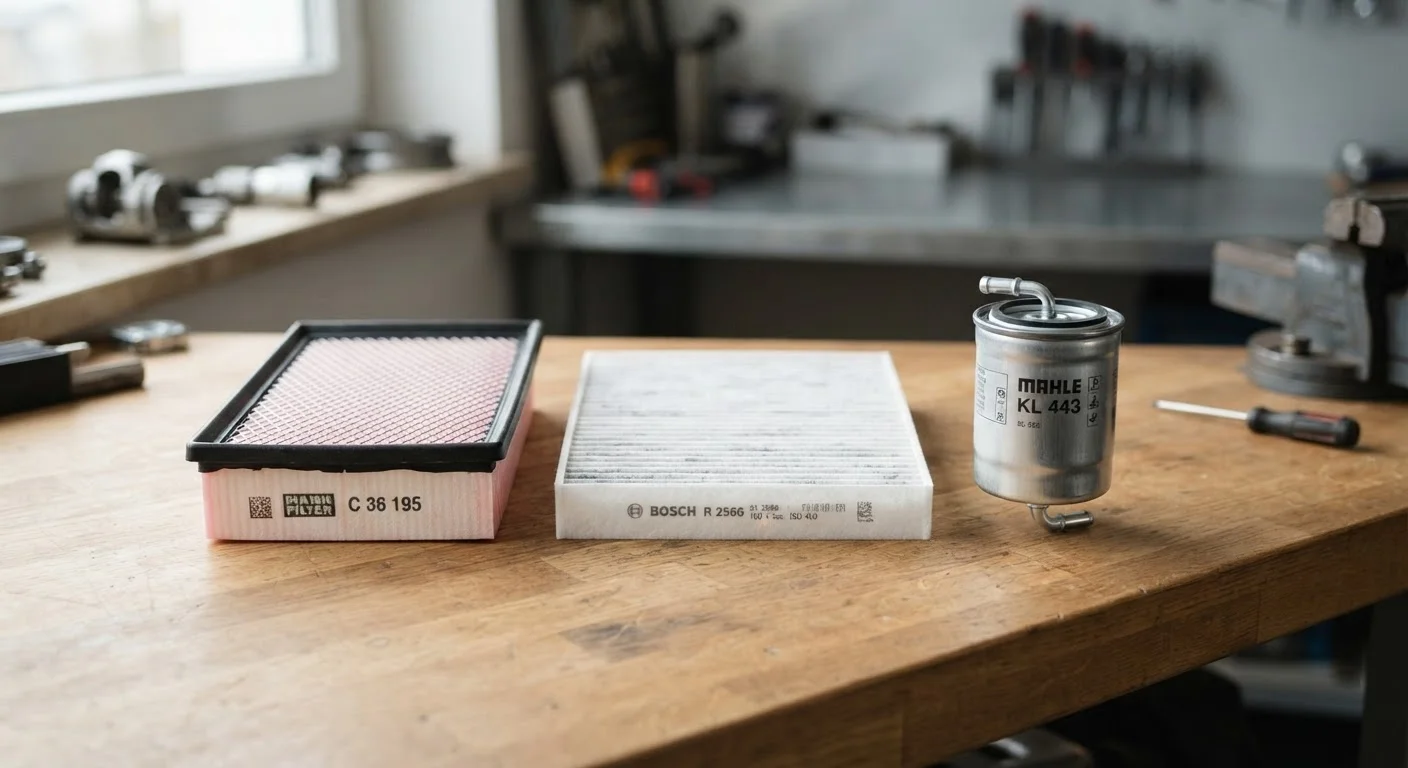
Your vehicle depends on clean air, clean fuel, and breathable cabin air to function reliably and protect both the engine and the people inside. Three separate filters handle each of those jobs - and when any one of them is overdue, the consequences range from reduced fuel economy to engine damage. Understanding what each filter does, and when it typically needs replacement, is one of the most practical things you can do as a vehicle owner.
For a broader look at how filters fit into your overall service routine, see your car's full maintenance schedule explained.
| Engine Air Filter Interval | Every 15,000-30,000 miles (varies by environment) (General manufacturer guidance; confirm in owner's manual) |
| Cabin Air Filter Interval | Every 12,000-15,000 miles or annually (General manufacturer guidance; may be shorter in high-pollen areas) |
| Fuel Filter Interval (external) | Every 20,000-40,000 miles (Typical for older vehicles with inline fuel filters) |
| Fuel Filter Interval (in-tank) | Often listed as lifetime; inspect around 60,000-80,000 miles (Common mechanic guidance for modern vehicles) |
| DIY Difficulty - Air & Cabin Filters | Low - usually no special tools required |
| DIY Difficulty - In-Tank Fuel Filter | High - requires fuel system depressurization (Best handled by a qualified mechanic) |
The Engine Air Filter
The engine air filter sits between the outside air and your engine's intake system. Its job is to trap dust, pollen, insects, and debris before they can reach the combustion chamber. A clean filter allows the engine to draw the volume of air it needs for efficient combustion; a clogged one restricts airflow, which can reduce power, increase fuel consumption, and - in severe cases - allow contaminants to reach cylinder walls and cause accelerated wear.
Replacement Interval
Most manufacturers recommend replacing the engine air filter every 15,000 to 30,000 miles, but this varies significantly by driving environment. Dusty roads, construction zones, or unpaved surfaces will clog a filter far faster than highway driving in clean air. Always consult your owner's manual for the interval specific to your vehicle.
Signs It's Overdue
- Visible darkening or debris buildup when you hold the filter up to light
- Reduced acceleration responsiveness
- Decline in fuel economy without another obvious cause
- Check-engine light related to mass airflow sensor readings
The Cabin Air Filter
The cabin air filter - sometimes called a pollen filter or HVAC filter - cleans the air that flows through your vehicle's heating, ventilation, and air conditioning system before it enters the passenger compartment. It captures pollen, road dust, exhaust particulates, mold spores, and other airborne contaminants. This filter matters most for passengers who have allergies or respiratory sensitivities, but a clogged one also reduces HVAC system efficiency for everyone.
Replacement Interval
A common guideline is every 12,000 to 15,000 miles, or roughly once a year - though vehicles operated in heavily polluted urban areas or during high-pollen seasons may need more frequent changes. The seasonal maintenance guide covers how environmental conditions affect service timing.
Signs It's Overdue
- Musty or stale odor when the HVAC system runs
- Noticeably weak airflow from vents even at high fan speeds
- Increased dust accumulation on the dashboard
- Worsening allergy symptoms for occupants
The Fuel Filter
The fuel filter screens the gasoline or diesel flowing from the tank to the engine, removing rust particles, sediment, and other contaminants that accumulate in fuel and fuel lines over time. A clogged fuel filter restricts flow to the fuel injectors, which can cause hard starting, hesitation under acceleration, engine misfires, and - if ignored long enough - strain on the fuel pump that shortens its life considerably.
Replacement Interval
Older vehicles with external inline fuel filters typically required replacement every 20,000 to 40,000 miles. Many modern vehicles use a fuel filter integrated inside the fuel tank, and manufacturers often list these as a lifetime component - though most mechanics recommend inspecting them around 60,000 to 80,000 miles, especially on higher-mileage vehicles. Skipping this is one of the deferred-maintenance decisions covered in the real cost of skipping routine maintenance.
Signs It's Overdue
- Engine hesitation or stumbling during acceleration
- Difficulty starting, especially when the engine is warm
- Rough idling or intermittent stalling
- Fuel pump running louder than usual
If your vehicle has crossed 100,000 miles, fuel system components - including filters - deserve closer attention. The high-mileage vehicle care guide explains how maintenance priorities shift as the odometer climbs.
Choosing When to DIY and When to Use a Mechanic
Engine air filters and cabin air filters are among the most approachable DIY maintenance tasks - both are typically accessible without special tools, and replacement takes only a few minutes. Fuel filters are more variable: an inline external filter is often a manageable job for a careful home mechanic, while an in-tank filter generally requires fuel system depressurization and is best left to a qualified technician.
Regardless of which filter you're addressing, always match the replacement part to your vehicle's year, make, and model as listed in your owner's manual. And remember - not every maintenance claim you hear holds up, so rely on your owner's manual and reputable service guidance rather than generalized rules of thumb.
Engine Air Filter
A replaceable filter that removes airborne particles - dust, pollen, debris - from the air entering the engine's intake system before combustion. Keeping it clean helps maintain engine efficiency and protects internal components.
Cabin Air Filter
A filter located in the HVAC system that cleans air before it circulates into the passenger compartment. It traps pollen, dust, and other particulates to improve interior air quality and system airflow.
Fuel Filter
A filter placed in the fuel delivery system that screens contaminants - including rust, sediment, and debris - out of gasoline or diesel before it reaches the fuel injectors and engine.
Mass Airflow Sensor (MAF)
A sensor that measures the volume of air entering the engine and relays that data to the engine control unit. A clogged air filter can impair the MAF sensor's accuracy, potentially triggering a check-engine warning.
Fuel Injector
A precision valve that delivers a measured spray of fuel into the engine's combustion chamber. Contaminant-laden fuel reaching the injectors can cause misfires, poor performance, and costly damage.
HVAC System
Stands for Heating, Ventilation, and Air Conditioning. In a vehicle, this system controls interior temperature and airflow, with the cabin air filter protecting the air quality delivered to occupants.