

Key Takeaways
Vehicle Maintenance Schedule
A vehicle maintenance schedule is a manufacturer-recommended plan that specifies which services your car needs and at what mileage or time intervals. It covers routine tasks - like oil changes, tire rotations, and fluid checks - as well as less-frequent services such as spark plug replacements and transmission fluid changes. Following this schedule helps preserve the engine's health, reduces the likelihood of unexpected breakdowns, and keeps your warranty intact.
Manufacturers typically publish two schedules: one for "normal" driving conditions and one for "severe" conditions - which include frequent short trips, extreme temperatures, towing, or stop-and-go city driving. Many drivers who assume they fall under normal conditions actually qualify as severe.
What Your Owner's Manual Is Actually Telling You
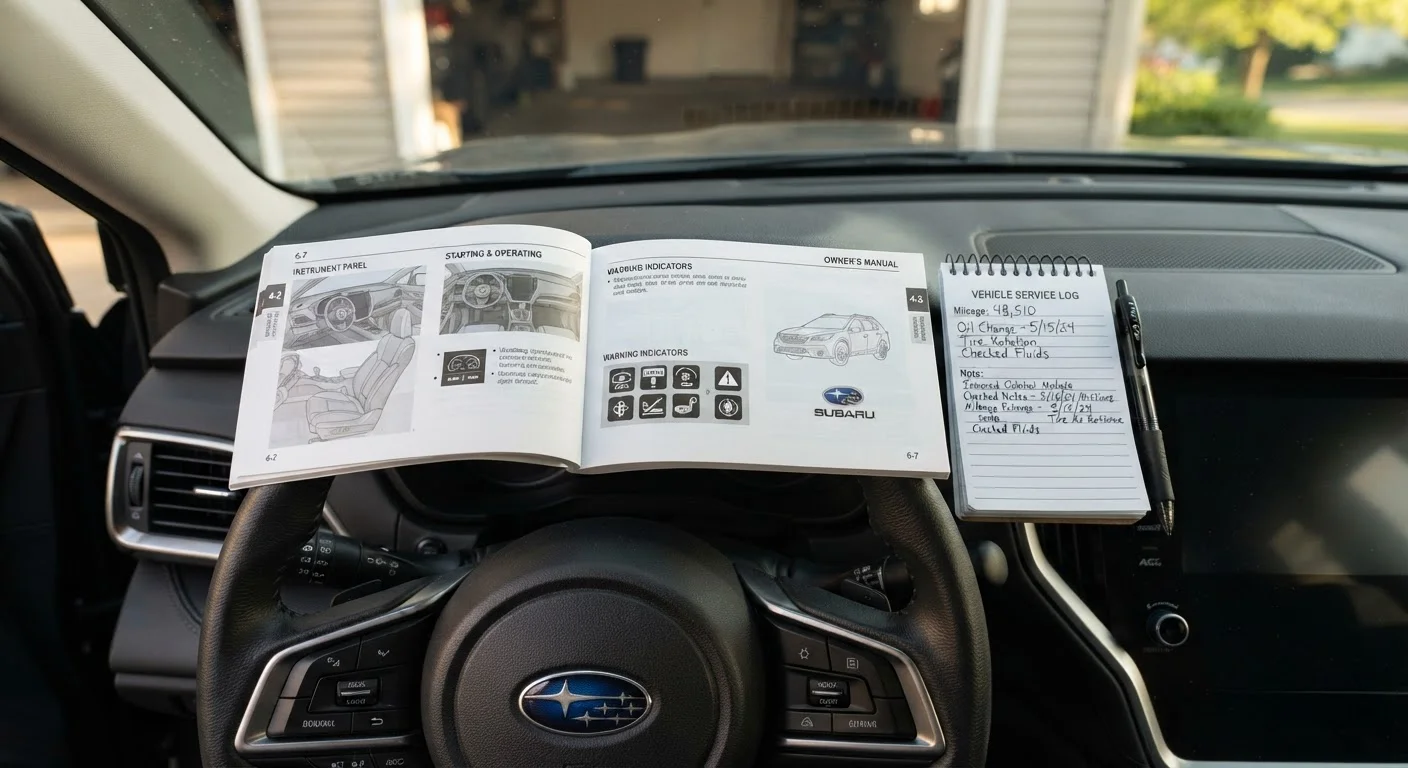
The owner's manual is the single most authoritative source for your vehicle's maintenance needs - yet it's the most commonly ignored document in the glove box. Manufacturers engineer each model with specific tolerances, fluid capacities, and component lifespans, and those figures are reflected in the maintenance tables printed in that manual. Generic advice from a quick internet search may not apply to your engine, your transmission, or the conditions you drive in.
Most manuals divide maintenance into two lists: a normal schedule and a severe-duty schedule. The normal schedule assumes moderate temperatures, highway-weighted driving, and relatively long trips that allow the engine to fully warm up. The severe schedule applies when your driving patterns stress the engine more - short trips, extreme heat or cold, towing, or heavy city traffic. If you commute in stop-and-go traffic daily, you likely fall under the severe category and should follow the shorter intervals.
Intervals are expressed in two ways: mileage and elapsed time - whichever comes first. A driver who puts on very few miles a year still needs oil changes and other time-sensitive services, because fluids degrade chemically regardless of how far the car has traveled.
Breaking Down the Service Intervals
Maintenance tasks fall into three broad frequency tiers:
- Every service visit (or as indicated): Oil and oil filter changes, tire pressure check, visual brake inspection, windshield washer fluid. These protect core systems and take little time.
- Every 15,000-30,000 miles: Air filter replacement, cabin air filter, tire rotation, brake pad measurement, battery terminal inspection, and a comprehensive fluid check covering coolant, brake fluid, and power steering fluid.
- Every 30,000-100,000+ miles: Spark plugs, drive belts, timing belt or chain service (where applicable), transmission fluid, coolant flush, and fuel system inspection. These are the services most drivers underestimate until a failure occurs.
The 100,000-mile mark is often treated as a finish line, but it's better understood as a transition point. Maintenance demands shift meaningfully after 100,000 miles, particularly around seals, gaskets, and timing components.
Set Mileage Reminders on Your Phone
Note your current odometer reading alongside each service interval from your owner's manual, then set a calendar or mileage-tracker reminder before you hit the next threshold. Many vehicles also have built-in service reminder systems in the instrument cluster - check your manual for how to read and reset them.
Understanding these intervals also helps you budget more accurately. For a fuller picture of managing vehicle ownership costs over time, see our guide on keeping car ownership costs manageable.
Common Myths That Lead Drivers Astray
A handful of persistent myths can cause drivers to over-service their vehicles (spending unnecessarily) or under-service them (risking real damage).
"Change your oil every 3,000 miles." This rule was reasonable for older engine designs. Most current vehicles with conventional oil are rated for 5,000-7,500 miles between changes; those running full synthetic may extend to 10,000 miles or beyond. For more on how oil type affects your interval, see our breakdown of synthetic versus conventional motor oil.
"If it's not broken, don't fix it." Preventive maintenance is specifically designed to address wear before it causes a failure. Timing belts, for example, typically show no warning signs before snapping - and a snapped timing belt can destroy an engine.
"Dealerships are the only place for valid warranty maintenance." Under federal law (the Magnuson-Moss Warranty Act), manufacturers generally cannot void a warranty simply because you used an independent shop, provided the service was performed correctly and documented.
Tracking Services So Nothing Falls Through the Cracks
Staying on schedule is easier when you have a system. A simple maintenance log - whether a paper notebook kept in the glovebox or a dedicated app - helps you track what was done, when, and by whom. This record is also valuable when selling the vehicle, as a documented service history gives buyers confidence and can support resale clarity. Our article on keeping a car maintenance log walks through how to set one up effectively.
Some drivers also find it useful to review dashboard warning lights alongside their maintenance schedule - because a warning light between scheduled services can indicate that something needs attention sooner than the interval suggests.
Finally, if you're comfortable handling some tasks yourself, knowing which jobs are genuinely DIY-safe versus which require a professional makes a real difference. Our guide on DIY car maintenance gives a realistic breakdown of what most drivers can handle at home.