

Key Takeaways
Low-Impact Exercise
Low-impact exercise refers to physical activity in which at least one foot remains in contact with the ground - or the body is fully supported by water or equipment - at all times. This dramatically reduces the mechanical stress placed on joints, bones, and connective tissue compared to high-impact activities like running or jumping. Common examples include swimming, cycling, walking, rowing, and yoga.
"Impact" in this context refers specifically to ground reaction forces - the force transmitted through the body when it strikes a surface. Low-impact activity minimizes these peak forces, not necessarily overall exercise intensity or cardiovascular demand.
What Makes an Exercise "Low-Impact"?
The term "low-impact" is frequently misunderstood as meaning gentle, easy, or ineffective. In reality, it describes a specific mechanical quality: how much force travels through the body during movement. High-impact activities - running, jumping, aerobics - involve moments when both feet leave the ground, generating substantial ground reaction forces upon landing. Low-impact activities eliminate or dramatically reduce those forces.
This distinction matters because cumulative joint stress is one of the primary drivers of overuse injury. Reducing impact doesn't reduce effort - a vigorous cycling session or swim workout can be genuinely challenging while placing a fraction of the stress on knees, hips, and ankles compared to an equivalent run.
Common low-impact modalities include:
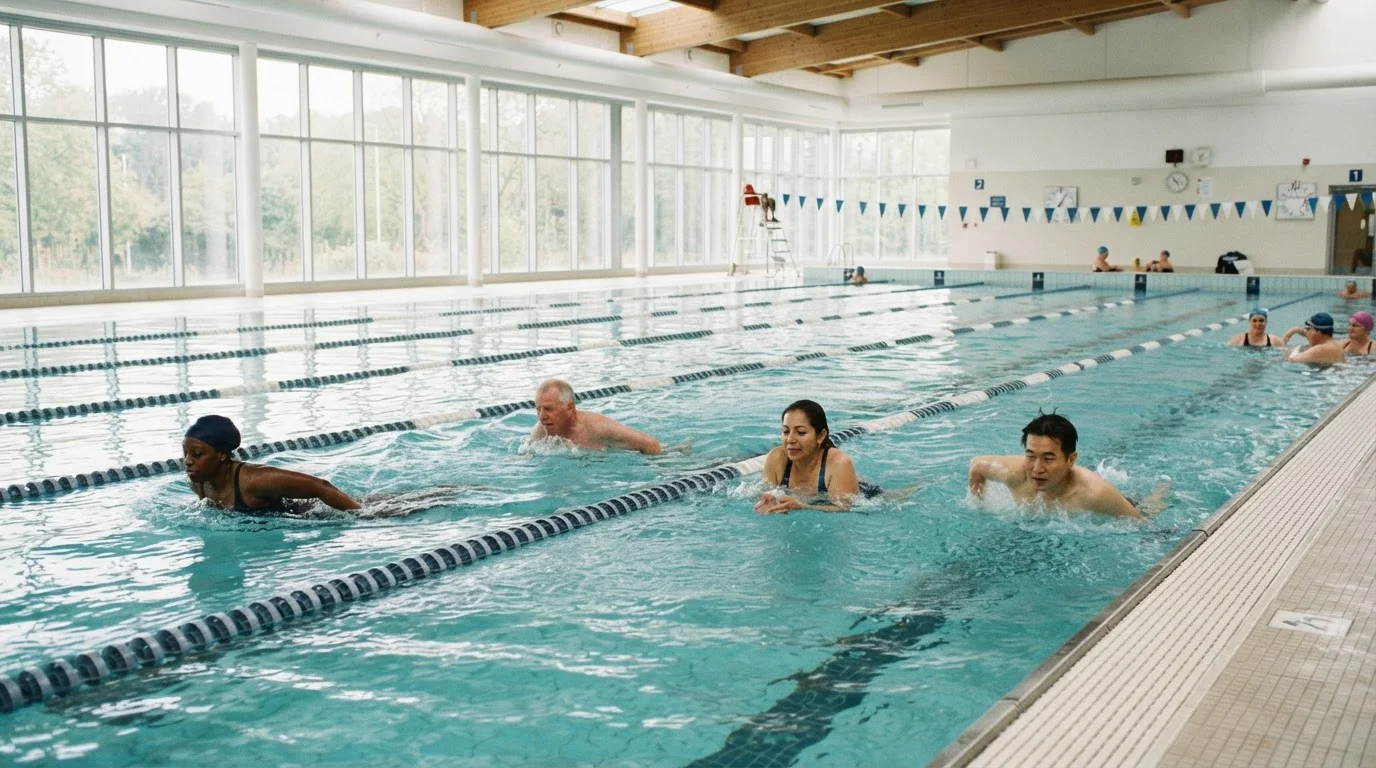
- Swimming and aquatic exercise - water buoyancy offloads body weight almost entirely
- Cycling (stationary or outdoor) - continuous pedaling with no ground strike
- Walking - one foot always contacts the ground
- Rowing - full-body effort with seated, supported movement
- Yoga and Pilates - bodyweight movement with controlled range of motion
- Elliptical training - mimics running mechanics without the impact
These aren't compromise options. They are legitimate training tools with well-established cardiovascular, muscular, and psychological benefits.
Who Benefits Most - And Why
While low-impact exercise suits virtually any healthy adult, several populations gain disproportionate value from making it their primary mode of movement.
Older Adults
Age-related changes in cartilage, bone density, and connective tissue increase susceptibility to injury from repetitive high-impact loading. Low-impact activity allows older adults to maintain cardiovascular fitness, muscle mass, and balance - all of which decline with inactivity - while protecting vulnerable structures. Aquatic exercise, in particular, has a strong evidence base for improving functional mobility in this group.
People Managing Joint Conditions
Conditions such as osteoarthritis affect millions of Americans and can make high-impact movement painful or contraindicated. Low-impact activity keeps joints moving - which is essential for maintaining cartilage health - without aggravating inflammation. Anyone managing a joint condition should consult a healthcare provider before starting or modifying an exercise program.
Pregnant Women
Low-impact exercise is generally considered safe throughout an uncomplicated pregnancy and is associated with benefits including reduced gestational weight gain, improved mood, and better cardiovascular health. High-impact activity carries a higher risk of pelvic floor stress and balance-related falls. Pregnant individuals should always discuss exercise choices with their obstetric care team.
Beginners
For people new to regular exercise, starting with low-impact movement reduces early injury risk while building the foundational fitness that makes harder training sustainable later. The everyday activities that count as exercise are an excellent on-ramp for those just getting started.
Low-Impact Isn't Just for Recovery - Trained Athletes Use It Too
One of the most persistent myths about low-impact exercise is that it's only appropriate when someone is injured, deconditioned, or easing back into activity after a break. In reality, periodically replacing high-impact sessions with low-impact alternatives is a smart, evidence-supported strategy for athletes at all levels.
Elite endurance runners commonly cross-train on bikes or in pools to accumulate aerobic volume without adding to their cumulative running load. This approach helps manage the risk of stress fractures and tendon overuse injuries - common hazards when weekly mileage climbs too quickly. The cardiovascular adaptations from low-impact cardio are largely transferable across modalities.
Zone 2 cardio - a low-intensity aerobic training approach widely used by endurance athletes - is almost always low-impact by nature, favoring cycling, walking, or rowing. Its goal is building mitochondrial density and fat oxidation capacity without generating the fatigue of harder sessions.
If your current routine is generating persistent aches, mood disruption, or declining performance, it may be worth reviewing your overall load. Our article on signs your routine may be doing more harm than good covers these signals in detail.
This article is for general informational and educational purposes only and is not a substitute for professional medical or fitness advice. Consult a qualified healthcare provider before beginning any new exercise program, particularly if you have a medical condition or injury.