

| Flexibility type | Passive quality - requires external force |
| Mobility type | Active quality - requires muscular control |
| Stretching role | Method/tool to develop flexibility and mobility |
| Best warm-up stretch type | Dynamic stretching (Supported by exercise science consensus) |
| Best post-workout stretch type | Static stretching (Commonly recommended in sports medicine) |
| Key risk zone | Passive range without active control |
Three Terms, Three Different Things
Walk into any gym or scroll through a fitness app and you'll encounter mobility, flexibility, and stretching used almost interchangeably. They're related - but treating them as synonyms can lead to training gaps that limit performance and increase injury risk.
Understanding what each term actually means helps you build a more complete movement practice, whether you're a beginner or a seasoned athlete. For a complementary look at how different training modes serve different goals, see our piece on strength training vs. cardio.
Flexibility
The passive ability of a muscle or muscle group to lengthen when an external force is applied. It reflects tissue length but not active muscular control through that range.
Mobility
The ability of a joint to move actively through its full range of motion under muscular control. Mobility integrates flexibility, strength, and neuromuscular coordination.
Stretching
A category of techniques - including static, dynamic, PNF, and ballistic methods - used to increase tissue length and improve range of motion. Stretching is the tool; flexibility and mobility are the outcomes.
Range of Motion (ROM)
The extent to which a joint can move in a particular direction. ROM can be passive (moved by an external force) or active (achieved through one's own muscle effort).
Proprioceptive Neuromuscular Facilitation (PNF)
An advanced stretching technique that uses cycles of contraction and relaxation to increase flexibility, often producing greater gains than static stretching alone.
Hypermobility
A condition in which joints move beyond their typical range. Hypermobility without adequate muscular control can increase injury risk rather than improve function.
Flexibility, Mobility, and Stretching - Defined and Compared
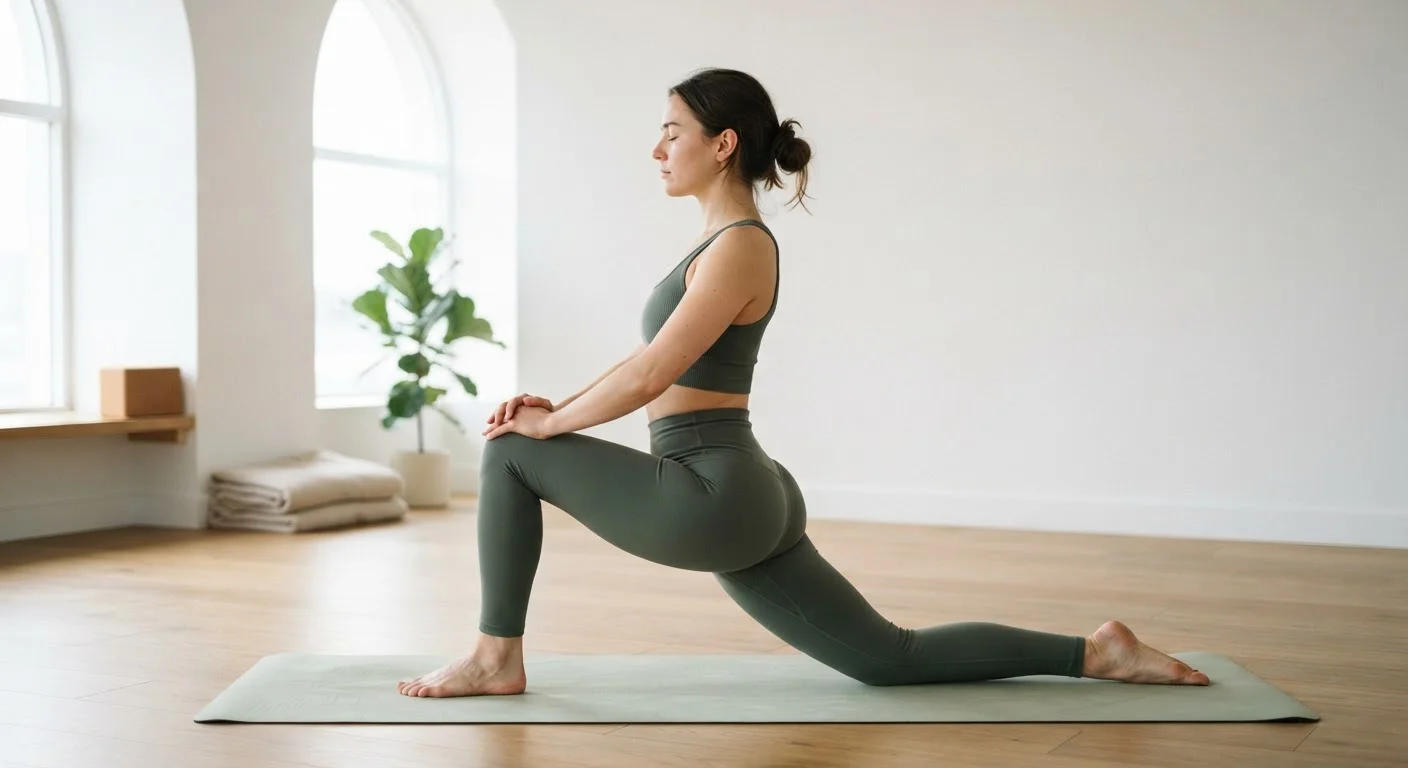
Flexibility is a passive quality. It describes the capacity of a muscle (or group of muscles) to lengthen when an external force is applied - your own body weight, gravity, or a partner. When you sit in a static hamstring stretch and hold it, you're working on flexibility. The key word is passive: the muscle is being lengthened without requiring active muscular effort to get there or stay there.
Mobility is an active quality. It describes a joint's ability to move through its full range of motion under your own muscular control. Someone can be flexible - able to be pushed into a deep squat position - but lack the mobility to actively lower themselves there with control. Mobility integrates flexibility, strength, and neuromuscular coordination. This is why mobility work often looks more like controlled movement drills than traditional stretches.
Stretching is the method, not the outcome. It's a collection of techniques - static, dynamic, PNF (proprioceptive neuromuscular facilitation), ballistic - used to improve flexibility and, in some approaches, mobility. Stretching is the tool; flexibility and mobility are the targets.
| Flexibility type | Passive quality - requires external force |
| Mobility type | Active quality - requires muscular control |
| Stretching role | Method/tool to develop flexibility and mobility |
| Best warm-up stretch type | Dynamic stretching (Supported by exercise science consensus) |
| Best post-workout stretch type | Static stretching (Commonly recommended in sports medicine) |
| Key risk zone | Passive range without active control |
In practical terms: you can have high flexibility but poor mobility (passive range without active control), or solid mobility in one joint but limited flexibility in adjacent muscle groups. A complete training approach addresses both.
Why the Distinction Matters for Training
The difference isn't just semantic. Research in exercise science consistently distinguishes passive flexibility gains from functional joint mobility - and the two don't always transfer to each other automatically. Holding a prolonged static stretch improves tissue length over time, but it doesn't automatically teach your nervous system to control movement through that new range.
This matters because injury often occurs in ranges the body can reach but hasn't learned to control. A hypermobile joint that lacks supporting muscular strength and coordination is, in some ways, more vulnerable than a stiff one. Building mobility means training both the range and the strength within it.
For training purposes, consider these practical distinctions:
- Static stretching (holding a position 20-60 seconds) is well-supported for improving passive flexibility, particularly when performed consistently after workouts or in dedicated sessions.
- Dynamic stretching (controlled, repetitive movement through a range) is generally better suited to warm-ups because it activates muscles while moving joints through their range.
- Mobility drills - such as controlled articular rotations, deep squat holds with active engagement, or hip 90/90 transitions - train active control, not just tissue length.
Most well-rounded fitness routines benefit from including both flexibility work and mobility training. Neither replaces the other.
This article is for general informational purposes only and is not a substitute for personalized advice from a qualified fitness professional or healthcare provider. If you have an injury, chronic condition, or specific movement concerns, consult a professional before starting a new training program.