

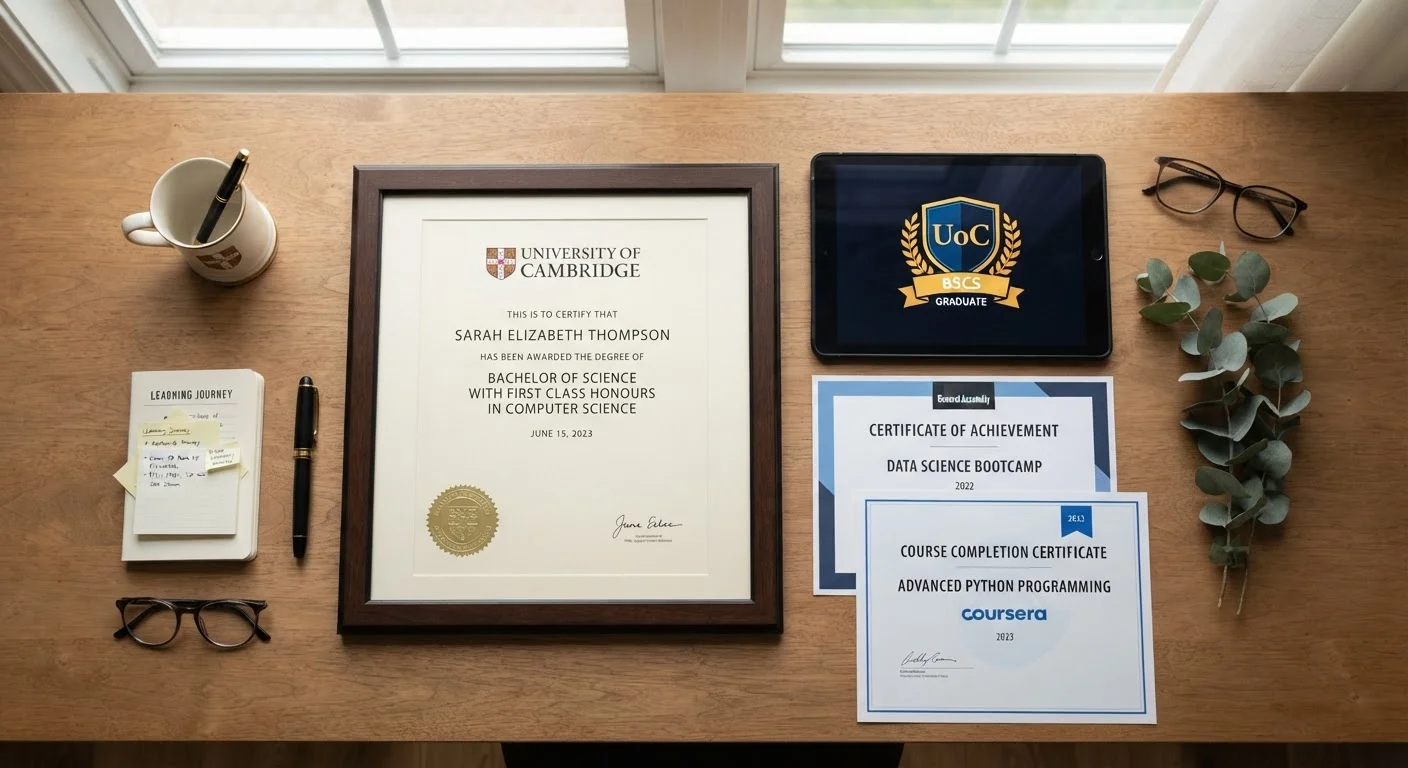
| Micro-credential / Digital Badge | Hours to weeks; non-degree, competency-specific |
| Professional Certificate | Weeks to months; non-credit, job-skills focused |
| Academic Certificate | Months to 1 year; credit-bearing, from accredited colleges |
| Associate Degree | ~2 years; undergraduate, credit-bearing |
| Bachelor's Degree | ~4 years; undergraduate, broadly recognized |
| Graduate Certificate | 6-12 months; post-bachelor's, specialized focus |
| Master's / Doctoral Degree | 1-6 years; deepest academic credential level |
Why Credential Type Matters
Not all online learning credentials carry the same weight - or signal the same thing. A hiring manager, admissions officer, or licensing board may interpret a certificate, a badge, and a degree very differently, even if the subject matter overlaps. Understanding what each credential type actually represents helps you make smarter decisions about where to invest your time and tuition dollars.
This reference guide breaks down the most common credential types available through online learning - what they are, how they're earned, and what they communicate to the people who see them.
Micro-credential
A short, narrowly focused recognition of competency in a specific skill, typically earned through a brief online course or assessment. Often issued as a digital badge.
Digital badge
A shareable, verifiable image file that represents a completed learning achievement. Metadata embedded in the badge confirms what was learned, when, and by whom.
Accreditation
A quality-assurance process by which an educational institution or program is evaluated against established standards by a recognized accrediting body. Accreditation affects credit transferability and financial aid eligibility.
Credit-bearing course
A course that awards academic credit hours recognized by the issuing institution. Credit-bearing courses can typically be applied toward a degree or academic certificate.
Professional certificate
A non-credit credential awarded upon completing a structured series of courses focused on job-ready skills. Issued by universities, associations, or online platforms.
Graduate certificate
A credit-bearing academic credential offered at the graduate level, usually requiring fewer courses than a full master's degree. Allows for specialization without completing an entire graduate program.
A Credential-by-Credential Breakdown
Use the quick reference below, then read on for important context on each type.
| Micro-credential / Digital Badge | Hours to weeks; non-degree, competency-specific |
| Professional Certificate | Weeks to months; non-credit, job-skills focused |
| Academic Certificate | Months to 1 year; credit-bearing, from accredited colleges |
| Associate Degree | ~2 years; undergraduate, credit-bearing |
| Bachelor's Degree | ~4 years; undergraduate, broadly recognized |
| Graduate Certificate | 6-12 months; post-bachelor's, specialized focus |
| Master's / Doctoral Degree | 1-6 years; deepest academic credential level |
Micro-Credentials and Digital Badges
Micro-credentials are short, competency-focused recognitions typically awarded after completing a brief online course or assessment - often measured in hours or days rather than months. Digital badges are the most common format: a shareable graphic embedded with verifiable metadata about what was learned and where. They signal narrow, specific skill acquisition and are most meaningful in fast-moving fields like tech, marketing, and data analysis where employers recognize the issuing platform or organization. Their recognition varies widely, so evaluate the issuing organization carefully before enrolling.
Professional Certificates
Professional certificates are multi-course credentials that typically take weeks to several months to complete. They are offered by universities, professional associations, and online learning platforms. Unlike academic certificates, professional certificates are usually not credit-bearing, meaning they don't count toward a degree. However, they signal practical, job-ready skills and are increasingly recognized by employers in fields such as project management, cybersecurity, data science, and human resources. For a deeper look at how these compare to degree paths, see online degrees vs. professional certificates.
Academic Certificates
Academic certificates are issued by accredited colleges and universities and are composed of credit-bearing courses. They sit below a degree on the credential ladder but above informal training. They typically require 12-30 credit hours and can sometimes be applied toward a related degree. Because they come from accredited institutions, they carry more transferable credibility than most platform-issued certificates. Accreditation status is a critical factor here - learn why accreditation matters before enrolling in any program.
Associate Degrees
An associate degree is a two-year undergraduate credential offered by community colleges and some universities, increasingly available fully online. It signals a foundational academic education in a field and can serve as a launchpad for a bachelor's degree or entry into specific careers such as nursing, paralegal work, or applied technology. For those weighing cost and flexibility, comparing community colleges to online universities is a worthwhile exercise.
Bachelor's and Graduate Degrees
Online bachelor's and graduate (master's or doctoral) degrees from regionally accredited institutions are widely recognized by employers and other academic institutions. They represent the deepest credential investment - in both time and cost - and signal comprehensive disciplinary knowledge, analytical ability, and sustained commitment. Graduate certificates, a subset at this level, allow learners to specialize without completing a full graduate degree.
Whatever credential you're considering, research suggests that credentials and hands-on experience each signal different things - understanding how employers in your specific field weigh each is essential before committing to a program.