

Key Takeaways
Option A
Secured Credit Card
The deposit-backed entry point for building or rebuilding credit.
Best for: People with no credit history or damaged credit who need a structured, low-risk way to establish a track record.
Option B
Unsecured Credit Card
The standard credit card extended based on creditworthiness alone.
Best for: Consumers with an established credit history who qualify for credit without providing a cash deposit upfront.
If you have no credit history and are starting from scratch
Secured Credit Card
A secured card provides a clear, accessible path to building a credit profile when lenders have no track record to evaluate. See our starter's roadmap to building credit for next steps.
If you are recovering from bankruptcy, collections, or serious missed payments
Secured Credit Card
Secured cards are widely available to those with damaged credit, and responsible use can help reestablish your standing over time.
If you have a fair-to-good credit score and want rewards or better terms
Unsecured Credit Card
Unsecured cards typically offer more favorable interest rates, higher limits, and rewards programs that secured cards rarely match.
If you want to avoid tying up cash in a deposit
Unsecured Credit Card
With no deposit requirement, unsecured cards leave your cash available for savings or everyday expenses.
If you are ready to transition after using a secured card responsibly
Unsecured Credit Card
After demonstrating consistent on-time payments and low utilization, many issuers will upgrade you or return your deposit - a natural next step in your credit journey.
The Core Structural Difference
The single most defining difference between secured and unsecured credit cards comes down to one question: does the lender require collateral?
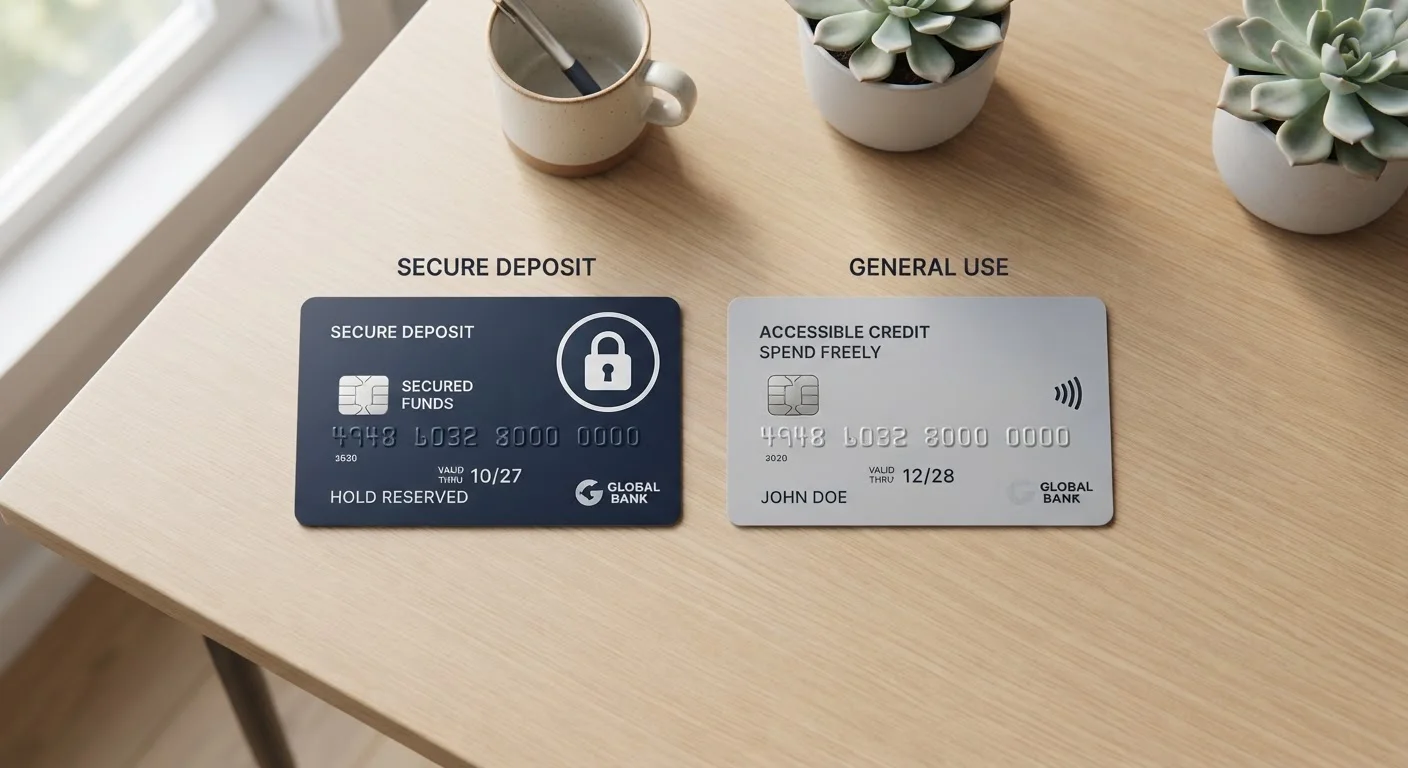
A secured credit card requires you to make a cash deposit - typically ranging from $200 to $500, though amounts vary - before you can use the card. That deposit is held by the issuer as collateral and almost always equals your initial credit limit. If you stop making payments, the issuer can apply your deposit to cover the balance. This dramatically reduces the lender's risk, which is why secured cards are accessible to people with limited or damaged credit histories.
An unsecured credit card, by contrast, requires no deposit. Instead, the issuer evaluates your credit score, income, and overall financial profile to decide whether to extend credit and at what limit. If you fail to repay, the issuer has no collateral to fall back on - hence the word "unsecured." This is the type most Americans picture when they think of a credit card.
Understanding this distinction helps clarify why each card behaves differently in terms of cost, access, and purpose.
| Criterion | Secured Credit Card | Unsecured Credit Card |
|---|---|---|
| Deposit Required | Yes - typically $200-$500+ | No deposit needed |
| Credit Limit | Usually equals your deposit | Set by issuer based on creditworthiness |
| Who Qualifies | Limited or damaged credit history | Fair to excellent credit history |
| Typical APR | Often higher | Varies; generally lower for good credit |
| Fees | More common; annual and maintenance fees | Varies widely; some have no annual fee |
| Reports to Credit Bureaus | Yes, if issuer participates | Yes |
| Rewards Programs | Rare | Common on standard and premium cards |
| Primary Use Case | Building or rebuilding credit | Everyday spending; credit maintenance |
Costs, Limits, and Terms: What to Expect
Secured cards typically come with higher fees relative to their credit limits. Annual fees, processing fees, and monthly maintenance charges are more common on secured products. Interest rates (APR) on secured cards also tend to run higher than on standard unsecured cards, though this varies by issuer. Because your credit limit mirrors your deposit, you may find little room to maneuver - and keeping your balance low relative to your limit is critical. Carrying a large balance against a $300 limit, for example, can push your credit utilization ratio - the percentage of available credit you're using - uncomfortably high, which can hurt your score. Our guide on keeping credit utilization in check explains exactly how to manage this factor.
Unsecured cards tend to offer more favorable terms for qualified applicants: lower APRs, higher credit limits, and optional rewards. However, it's worth noting that some unsecured cards marketed to people with fair credit can still carry steep fees and high interest rates - so reading the terms carefully matters regardless of card type.
This article is for general informational purposes only and does not constitute personalized financial advice. Consult a qualified financial professional for guidance specific to your situation.
Credit Building: Do Both Cards Actually Work?
Yes - provided the issuer reports your payment activity to all three major credit bureaus (Experian, Equifax, and TransUnion), both secured and unsecured cards can be effective credit-building tools. Before applying for a secured card specifically, confirm this reporting practice, as not all cards do it automatically.
The credit behaviors that move the needle are the same regardless of card type: paying on time every month, keeping your balance well below your credit limit, and avoiding unnecessary new applications in a short window. These habits build the payment history and utilization patterns that scoring models reward.
If you're starting with no history at all, our article on building credit from zero walks through the foundational steps in detail. And before applying for any new credit product, it's wise to run through a self-assessment - our pre-application checklist can help you prepare.
For those rebuilding after a setback like a bankruptcy or collection account, recovering your credit after a major financial setback offers a practical roadmap for making steady progress.
Graduating From Secured to Unsecured
Using a secured card responsibly is often a stepping stone, not a permanent arrangement. Many issuers periodically review secured cardholders' accounts and, after a track record of on-time payments - often six to twelve months, though timelines differ by issuer - may offer to upgrade the account to an unsecured product and return the deposit.
Some issuers handle this automatically; others require you to request a review. It's reasonable to ask your issuer about their upgrade criteria after you've demonstrated consistent responsible use. Keep in mind that some secured cards are not upgradeable, and you may need to apply for a new unsecured card separately and close the secured account once your credit improves.
Knowing when you're ready to make this move matters. If you're also weighing how to handle existing debt alongside this transition, it may help to understand how other tools compare - for instance, reviewing the differences covered in our piece on personal loans vs. balance transfer cards for paying off debt.
The bottom line: a secured card is a tool, not a judgment. Used intentionally, it can be the foundation of a healthier financial future.