

Key Takeaways
Why Abrupt Food Changes Cause Problems
A pet's digestive tract is home to billions of microorganisms - collectively called the gut microbiome - that help break down food and absorb nutrients. When a pet eats the same diet consistently, that microbial community becomes specialized for it. Switching foods abruptly introduces unfamiliar proteins, fiber types, and fat levels faster than the microbiome can adapt, often resulting in vomiting, diarrhea, gas, or a sudden loss of appetite.
This is not a sign that the new food is bad. It is simply a mismatch in timing. The same principle applies whether you are moving from dry kibble to wet food, changing protein sources (e.g., chicken to salmon), or upgrading to a life-stage-specific formula. For a deeper look at how moisture content and food type affect digestion, see our guide on wet food versus dry food.
Senior pets and those with a history of gastrointestinal sensitivity are particularly prone to upset during transitions and may need an extended 14-day schedule rather than the standard 7-10 days.
Always Consult Your Vet First
If your pet has a diagnosed condition - such as kidney disease, diabetes, inflammatory bowel disease, or a confirmed food allergy - do not change their diet without veterinary guidance. Some therapeutic diets are prescribed for a specific medical reason, and switching away from them without supervision can worsen health outcomes. This guide is intended for generally healthy pets.
What to Watch For During the Transition
Keeping a simple daily log helps you catch problems early and know whether to slow down, hold steady, or stop. Key things to monitor include:
- Stool consistency: Use a veterinary fecal scoring chart as a reference - a firm, well-formed stool is the goal. A score indicating watery or very soft stool means the transition is moving too fast.
- Appetite: Mild hesitation is normal for the first day or two. Persistent food refusal - especially in cats - needs attention.
- Energy and behavior: Lethargy beyond mild digestive discomfort is worth reporting to your vet.
- Skin and coat: These take longer to reflect dietary changes, so do not expect immediate feedback here.
Stop the Transition If Symptoms Persist
Mild, brief loose stools during the first day or two are common and not always cause for alarm. However, vomiting, bloody stool, significant lethargy, or symptoms lasting more than 48-72 hours warrant a call to your veterinarian. Do not push through a transition if your pet appears genuinely unwell.
Once the transition is complete, the signs your pet's diet may not be meeting their nutritional needs article can help you evaluate whether the new food is truly working over time.
Getting Started: Tools and Steps
The transition itself is straightforward when you have what you need on hand. Below are the tools that make the process easier and the step-by-step plan to follow.
What you will need
Kitchen scale or measuring cups
Ensures accurate ratio mixing between old and new food at each transition stage.
Daily symptom log
Tracks stool consistency, appetite, and energy so you can spot problems early.
Shallow mixing bowl
Makes it easy to combine and blend both foods evenly before serving.
Confirm the new food is appropriate for your pet
Before buying a large bag, verify that the new food is formulated for your pet's species, life stage (puppy/kitten, adult, senior), and size. Look for an AAFCO nutritional adequacy statement on the label - this indicates the food meets minimum established nutrient profiles. If your pet has a known sensitivity, scan the ingredient list carefully.
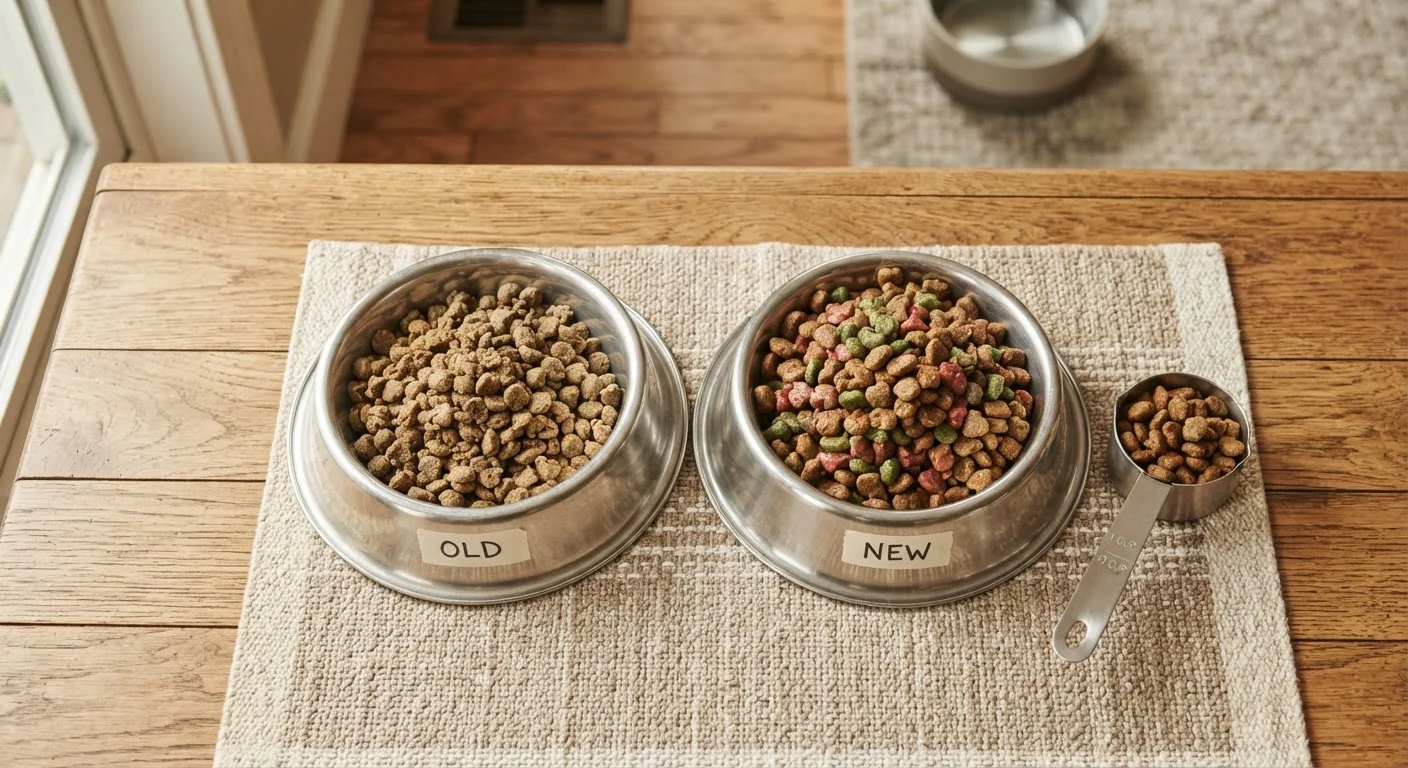
Days 1-2: Start with 75% old food, 25% new food
Mix roughly three parts of your pet's current food with one part of the new food. Keep total meal portions the same as usual - you are substituting, not adding. Serve this blend at each meal during days one and two and observe your pet's interest in the bowl and any changes in digestion.
Days 3-4: Move to a 50/50 blend
Increase the new food to an equal half-and-half mix. At this stage, most dogs and many cats begin accepting the blend without protest. Continue checking stool consistency - it should remain formed. Slight softness is common; watery or mucus-heavy stool signals you may be moving too fast.
Days 5-6: Shift to 25% old food, 75% new food
Now the new food makes up the majority of the meal. Your pet's digestive system has had several days to begin adjusting its gut microbiome - the community of beneficial bacteria that helps break down food. This step is often where you can see whether any lasting GI sensitivity exists with the new formula.
Days 7-10: Complete the transition to 100% new food
Serve the new food exclusively. Most healthy adult dogs adapt well within 7 days; cats and pets with sensitive stomachs may benefit from a full 10-day timeline. Continue monitoring for another few days after completing the switch, as some reactions can appear slightly delayed.
Cats May Need Extra Time
Cats are neophobic by nature - meaning they can be deeply resistant to new smells, textures, and flavors. If your cat refuses the new food entirely, slow the transition to 14 days or more and try warming the new food slightly to enhance its aroma. Never withhold food from a cat to force acceptance; prolonged anorexia in cats can cause hepatic lipidosis (fatty liver disease), a serious medical condition.
If this is your first time managing a pet's nutrition, our guide for first-time pet owners covers the broader fundamentals of feeding schedules, portion sizing, and choosing appropriate formulas.
This article is for general informational purposes only and does not constitute veterinary advice. Always consult a licensed veterinarian for guidance specific to your pet's health condition or dietary needs.