

Key Takeaways
Life Stage Nutrition
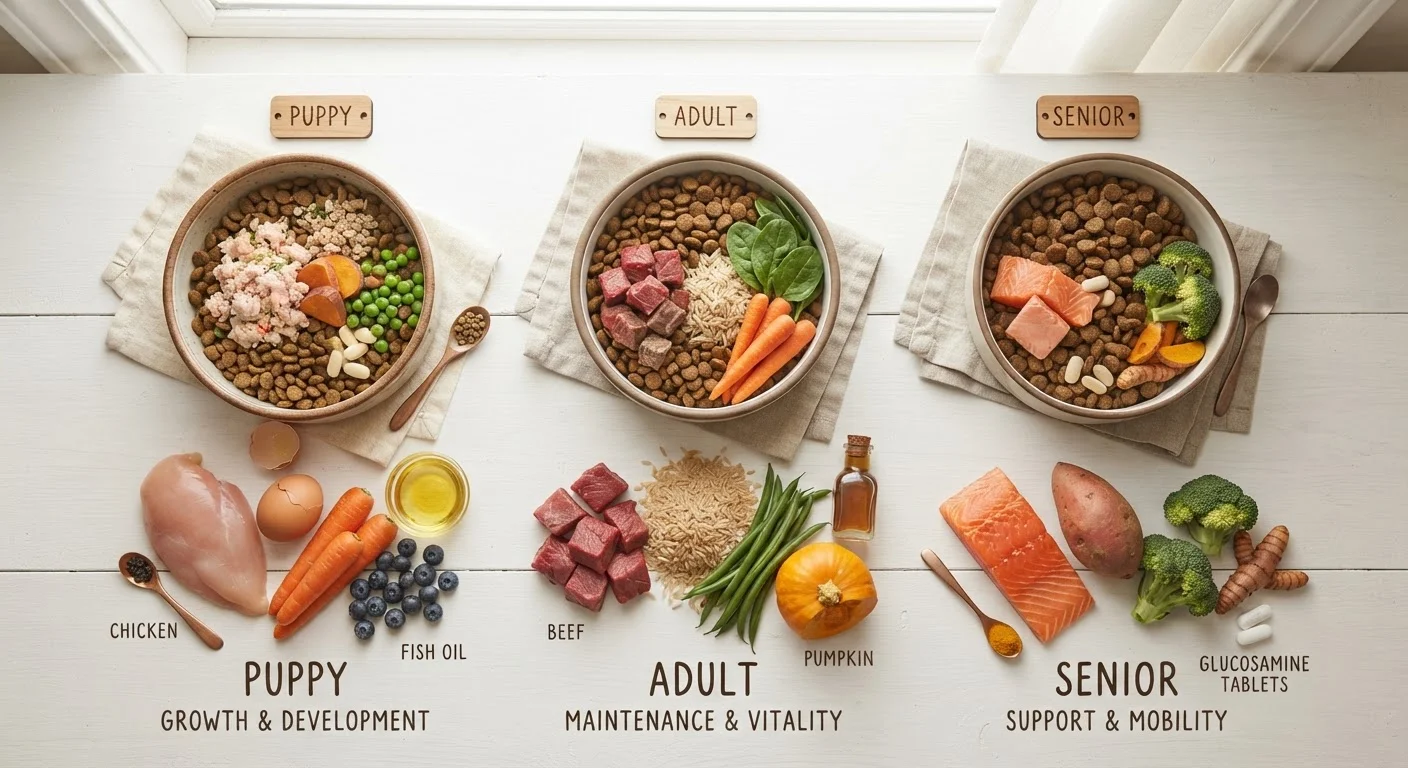
Life stage nutrition refers to the practice of feeding pets foods formulated specifically for their current phase of life - puppy or kitten, adult, or senior. Each stage brings distinct physiological demands: growing animals need more of certain nutrients, while older pets often need less of others. Feeding a food matched to your pet's life stage helps support healthy development, maintain a healthy weight, and reduce the risk of nutrition-related health issues.
The Association of American Feed Control Officials (AAFCO) establishes nutrient profiles for growth, reproduction, and adult maintenance - the basis for the life-stage claims on pet food labels.
Why One Formula Doesn't Fit Every Pet
Walk down any pet food aisle and you'll notice foods sorted by life stage - puppy, adult, senior. This isn't just a marketing division. The body of a 10-week-old puppy operates nothing like the body of a 10-year-old dog. Growth rates, metabolic speed, organ function, and even the ability to digest certain nutrients all change substantially as animals age.
Feeding the wrong life-stage food over time can lead to nutritional gaps or excesses. A puppy fed adult food may not get enough calcium and phosphorus for healthy bone development. A senior dog eating a high-calorie puppy formula may steadily gain weight, putting strain on joints and organs. For a solid grounding in what nutrients matter and why, see our breakdown of core dog nutrients.
~3×
More calcium needed during puppy growth vs. adult maintenance
AAFCO nutrient profiles for growth require significantly higher calcium minimums than adult maintenance profiles to support skeletal development.
7-8 years
Age large breeds are typically considered senior
Veterinary guidelines generally recognize large and giant breed dogs as seniors earlier than small breeds due to faster aging trajectories.
~30%
Reduction in caloric needs common in neutered adult cats
Research suggests that gonadectomy can reduce a cat's maintenance energy requirement, making portion management critical to prevent weight gain.
The Growth Stage: Puppies and Kittens
Young animals are building everything from scratch - bones, muscles, organs, and immune systems - at a pace that won't occur again in their lifetime. This demands significantly more energy and specific nutrients per pound of body weight than adult maintenance requires.
- Protein: Essential for muscle and tissue development. Puppy and kitten foods are formulated with higher protein levels than adult foods.
- Calcium and phosphorus: Critical for bone and teeth formation, but the ratio between the two matters as much as the amounts. Imbalances can cause skeletal problems, particularly in large-breed puppies.
- DHA (docosahexaenoic acid): An omega-3 fatty acid important for brain and vision development, commonly added to puppy and kitten formulas.
- Calories: Growing pets need more calories relative to their size, but overfeeding - especially in large breeds - can accelerate growth in ways that stress developing joints.
Large and giant breed puppies have their own sub-category: foods formulated to support controlled, steady growth rather than the rapid weight gain that can increase orthopedic risk.
The Adult Stage: Maintenance and Stability
Once a pet reaches physical maturity, the goal of nutrition shifts from building to maintaining. Adult pets need a diet that sustains a healthy body weight, supports organ function, and provides consistent energy without excess calories that could lead to weight gain.
Adult maintenance foods are formulated to meet AAFCO's nutrient profile for this stage - generally lower in calories and fat than growth formulas, and calibrated so that a pet eating the right portion receives complete and balanced nutrition without nutritional overload.
This is also the stage where individual factors - activity level, reproductive status, breed, and any emerging health conditions - begin to matter more. A working dog has different energy needs than a lap dog. A cat that's been spayed or neutered typically has a lower caloric requirement than before the procedure. Portion control becomes one of the most practical tools an owner has.
Portion Size Matters as Much as Formula
Choosing the right life-stage food is only half the equation. Overfeeding a correctly formulated food still leads to weight gain and related health risks. Use the feeding guide on the label as a starting point, then adjust based on your pet's body condition score - which your vet can show you how to assess at home.
The Senior Stage: Adjusting for an Aging Body
The transition to senior status varies by species and size. Cats are often considered seniors around age 11; small dogs around 10-11 years; large and giant breeds as early as 7-8 years. As pets age, several physiological changes affect what they need from their diet.
- Muscle mass: Older pets are prone to muscle loss (sarcopenia). Highly digestible protein helps preserve lean muscle even as appetite may decrease.
- Calories: Many senior pets are less active and have a slower metabolism, increasing the risk of weight gain. Some, however, lose weight - so caloric needs must be evaluated individually.
- Joint health: Ingredients like glucosamine and chondroitin are often added to senior formulas to support cartilage and mobility.
- Organ support: Kidney function commonly declines with age. Some senior pets benefit from modified phosphorus levels; this is especially relevant in cats.
For a broader look at how aging changes your pet's overall health management, our article on keeping senior pets healthy covers mobility, screening, and vet care considerations alongside nutrition.
Reading Labels and Making the Transition
The AAFCO nutritional adequacy statement is the most reliable tool on a pet food label. It tells you whether the food was formulated to meet nutrient profiles for a specific life stage or tested through feeding trials. Foods labeled "all life stages" meet growth-level standards and are generally appropriate for any age, though they may be calorie-dense for less active adult or senior pets.
When transitioning between life-stage foods, gradual changeovers - typically over 7-10 days - help minimize digestive upset. Mix increasing amounts of the new food with decreasing amounts of the old food until the switch is complete.
If you're unsure whether signs like low energy, coat changes, or digestive irregularities relate to your pet's diet, our guide on signs your pet's diet may not be meeting their needs can help you identify red flags worth discussing with your vet.
This article is for general informational purposes only and is not a substitute for professional veterinary nutrition advice. Always consult your veterinarian before making significant changes to your pet's diet.