

| Core dog vaccines | Rabies, Distemper, Parvovirus, Adenovirus (DHPP/DA2PP) (AAHA Canine Vaccination Guidelines) |
| Core cat vaccines | Rabies, FHV-1, FCV, Panleukopenia (FVRCP) (AAFP Feline Vaccination Guidelines) |
| Puppy/kitten series start age | 6-8 weeks, completed by 16 weeks (AAHA & AAFP guidelines) |
| Rabies legal requirement | Mandated by law in most U.S. states for both dogs and cats (Varies by state and municipality) |
| Adult booster frequency | Every 1-3 years depending on vaccine type and local law (AAHA Canine Vaccination Guidelines) |
| Parvovirus environmental survival | Can persist in soil for months (Veterinary infectious disease literature) |
What Makes a Vaccine 'Core'?
Veterinary organizations - including the American Animal Hospital Association (AAHA) and the American Association of Feline Practitioners (AAFP) - classify vaccines into two categories: core and non-core. Core vaccines are recommended for virtually every pet, regardless of lifestyle, because the diseases they prevent are either highly contagious, potentially fatal, or transmissible to humans. Non-core vaccines are given based on individual risk factors, such as geographic location or exposure history.
Understanding this distinction helps you have more productive conversations with your veterinarian during routine visits. See the Annual Wellness Exam Checklist for Pet Owners to prepare for those discussions.
| Core dog vaccines | Rabies, Distemper, Parvovirus, Adenovirus (DHPP/DA2PP) (AAHA Canine Vaccination Guidelines) |
| Core cat vaccines | Rabies, FHV-1, FCV, Panleukopenia (FVRCP) (AAFP Feline Vaccination Guidelines) |
| Puppy/kitten series start age | 6-8 weeks, completed by 16 weeks (AAHA & AAFP guidelines) |
| Rabies legal requirement | Mandated by law in most U.S. states for both dogs and cats (Varies by state and municipality) |
| Adult booster frequency | Every 1-3 years depending on vaccine type and local law (AAHA Canine Vaccination Guidelines) |
| Parvovirus environmental survival | Can persist in soil for months (Veterinary infectious disease literature) |
Core Vaccines for Dogs
The following vaccines are considered core for dogs by AAHA guidelines:
- Rabies: Required by law in most U.S. states. Rabies is nearly always fatal once symptoms appear and can spread to humans. Puppies typically receive their first dose between 12-16 weeks of age, with boosters on a schedule your vet determines.
- Distemper: A serious viral illness affecting the respiratory, gastrointestinal, and nervous systems. There is no cure; vaccination is the primary defense.
- Parvovirus: Highly contagious and often fatal, particularly in puppies. The virus can survive in soil for months, meaning even minimally outdoor dogs face meaningful exposure risk.
- Adenovirus (Hepatitis): Protects against infectious canine hepatitis, a disease causing severe liver damage. This is typically combined with the distemper and parvovirus vaccines in a single DHPP or DA2PP shot.
Puppies receive a series of these vaccines starting around 6-8 weeks of age, with boosters every 3-4 weeks until 16 weeks old. Adult dogs then follow a booster schedule - often every 1-3 years depending on the vaccine and local regulations. Skipping boosters is one of the most common preventive care missteps pet owners make; for more, see Where New Pet Owners Go Wrong With Preventive Care.
Core Vaccines for Cats
AAFP guidelines identify the following as core vaccines for cats - whether they live indoors, outdoors, or both:
- Rabies: As with dogs, rabies vaccination is legally mandated in many U.S. states for cats. Indoor-only cats are not exempt from this requirement in most jurisdictions.
- Feline Herpesvirus-1 (FHV-1): A primary cause of upper respiratory infections in cats, often causing lifelong latent infection after initial exposure.
- Feline Calicivirus (FCV): Another major driver of upper respiratory disease and oral ulcers in cats. Both FHV-1 and FCV are included in the combination FVRCP vaccine.
- Feline Panleukopenia (FPV): Sometimes called feline distemper, this highly contagious parvoviral disease can be rapidly fatal. It is also included in the FVRCP combination shot.
Kittens typically begin the FVRCP series around 6-8 weeks of age, completing the series by 16 weeks. Adult boosters follow a schedule determined by your vet, and many core feline vaccines are now approved for 3-year intervals after the initial series.
Vaccination is a key pillar of Pet Health Fundamentals Every New Owner Should Build Into Daily Life - alongside parasite prevention, which you can read about in our guide to Parasite Prevention in Pets.
What to Expect at Vaccination Appointments
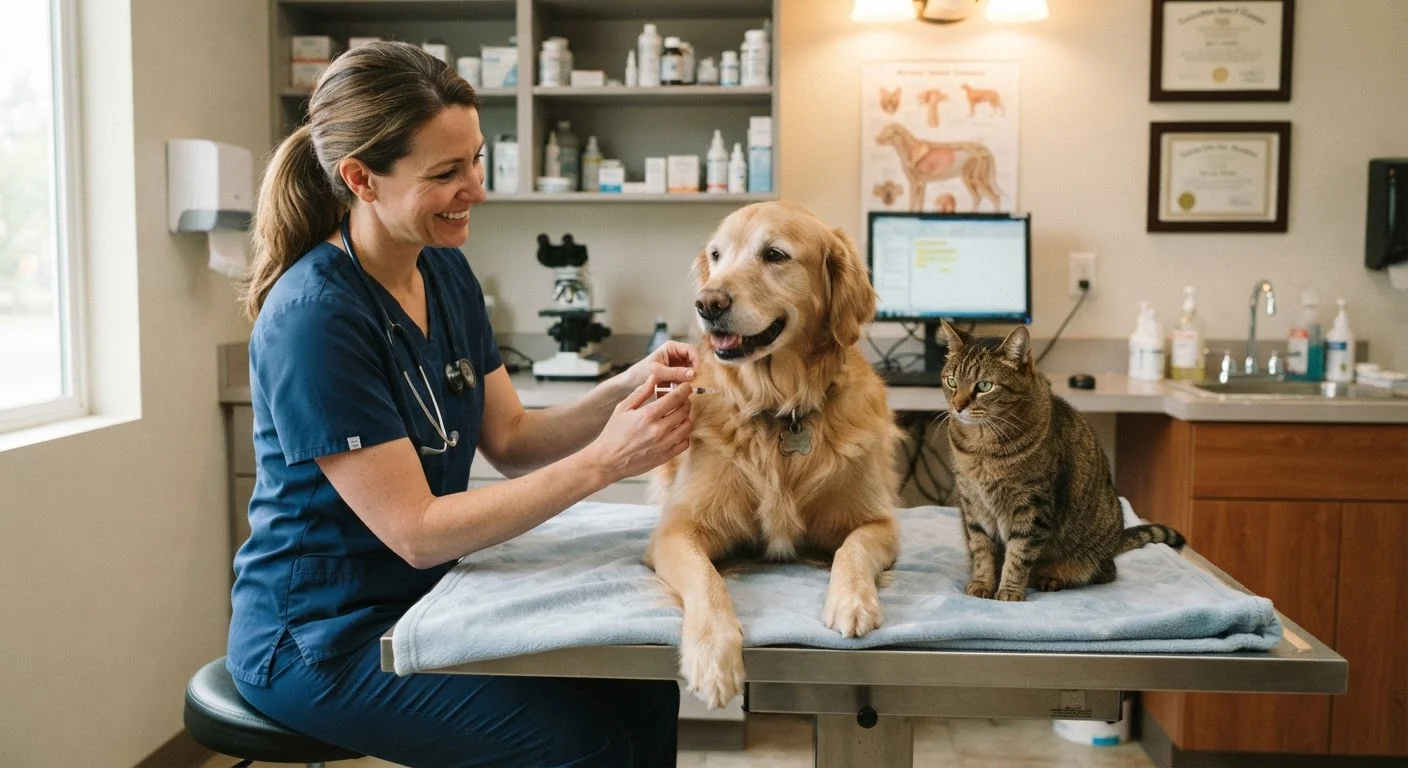
Your vet will perform a brief physical exam before administering any vaccine - an important step, because a pet who is actively ill may not mount a proper immune response. Mild side effects such as temporary soreness at the injection site, low-grade lethargy, or a slight fever can occur and usually resolve within 24-48 hours. Serious reactions are rare but possible; contact your vet promptly if your pet shows significant facial swelling, persistent vomiting, difficulty breathing, or extreme lethargy after vaccination.
Keep vaccination records in a safe place - many boarding facilities, groomers, and dog parks require proof of current vaccines. Ask your vet about digital record options or reminder programs to help you stay on schedule.
This article provides general educational information about pet vaccination and is not a substitute for professional veterinary advice. Consult your veterinarian to determine the right vaccination schedule for your individual pet.