

Key Takeaways
Positive Reinforcement
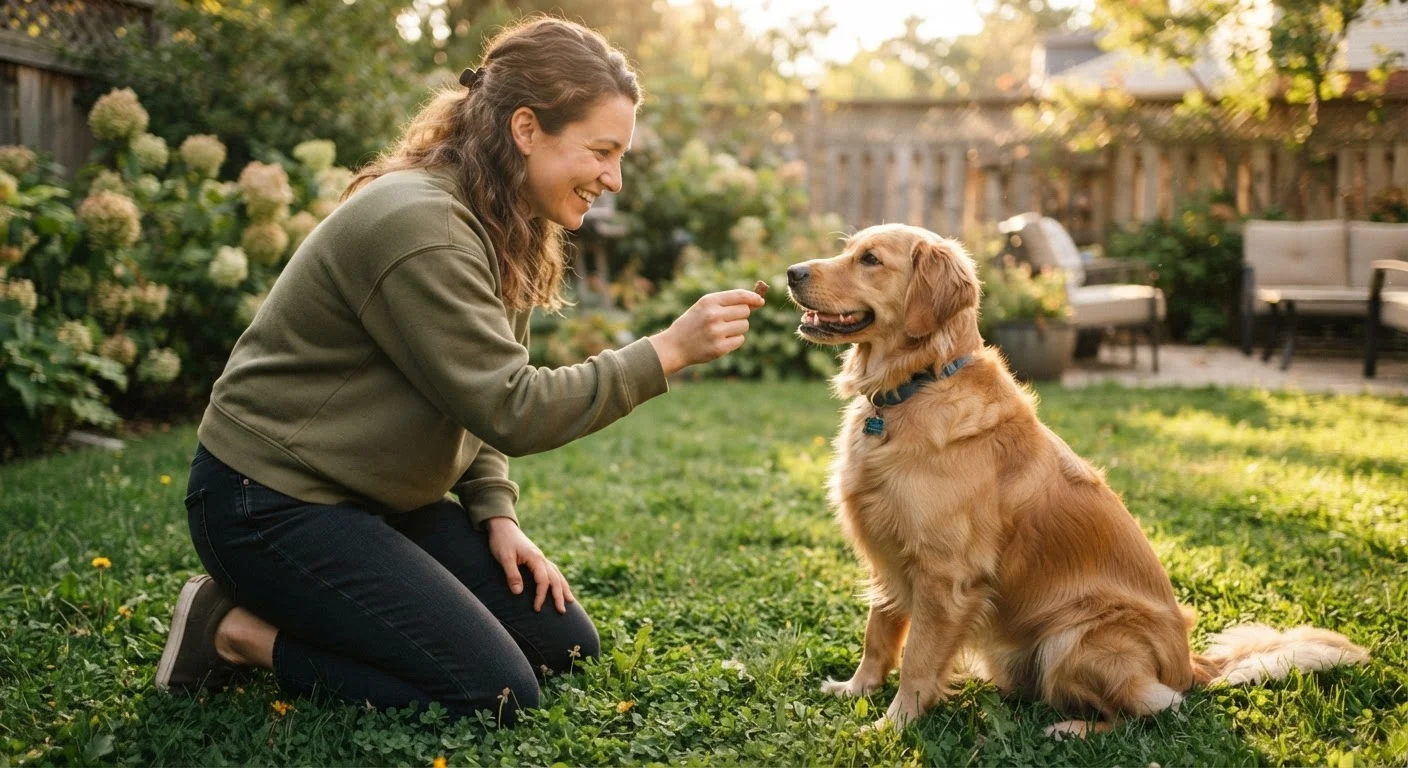
Positive reinforcement is a training approach in which a desired behavior is followed immediately by something the animal finds rewarding - such as food, praise, or play. The reward increases the likelihood that the animal will repeat the behavior in the future. This method is rooted in behavioral science and applies across virtually all species, from dogs and cats to birds and rabbits.
In operant conditioning terminology, 'positive' means adding a stimulus, and 'reinforcement' means the behavior becomes more frequent. The key variable is that the added stimulus must be genuinely rewarding to the individual animal, not just assumed to be.
More Than Treats: The Science Behind the Method
When most people hear 'positive reinforcement,' they picture handing a dog a biscuit. That image isn't wrong - but it's incomplete. Positive reinforcement is a well-studied principle of behavioral science, first formalized by psychologist B.F. Skinner in his research on operant conditioning. In plain terms: when a behavior produces a pleasant outcome, that behavior becomes more likely to happen again.
The word 'positive' here is mathematical, not emotional. It means something is added to the situation immediately after the behavior. The word 'reinforcement' means the targeted behavior increases in frequency. What gets added must be something the animal genuinely finds rewarding in that moment - which varies between individuals, species, and even moods.
This is why understanding your pet's specific motivators matters as much as understanding the method itself. For a food-motivated dog, a small treat works well. For a less food-focused cat, a short burst of play with a wand toy might be far more effective. The science is consistent; the application requires observation.
Start With High-Value Rewards During Initial Learning
When teaching a brand-new behavior, use the most motivating reward your pet responds to - often a soft, aromatic treat for dogs or a prized food for cats. Once the behavior is reliably established, you can gradually shift to lower-value rewards or variable schedules. Starting too low can slow learning significantly.
Why Timing Is the Most Critical Variable
The reward must follow the behavior within approximately one to two seconds to be associated with it clearly. Animals - especially those new to structured training - cannot connect a reward given ten seconds later with the behavior that earned it. They associate the reinforcer with whatever they were doing at the moment it arrived.
This is one of the most common reasons training stalls. An owner asks for a 'sit,' the dog sits, the owner says 'good boy,' walks to the kitchen, and returns with a treat. By then, the dog may be standing, sniffing the floor, or doing something else entirely. The treat lands on a different behavior than intended.
Tools like clicker devices or verbal marker words (a short, distinct sound like 'yes!') help bridge this gap. The marker is conditioned to predict the reward, so the marker itself communicates 'that exact thing you just did earns the reward' - even if the treat takes a few extra seconds to appear. For a deeper look at how timing affects your results, see reward timing concepts new trainers often confuse.
~1-2 sec
Ideal reward delivery window after behavior
Behavioral science research on operant conditioning consistently identifies this narrow window as critical for the animal to associate the reinforcer with the correct behavior.
Variable
Reinforcement schedule that strengthens behavior long-term
Once a behavior is learned, switching to a variable (unpredictable) reward schedule - rather than rewarding every single time - tends to produce more persistent behavior, a principle well-documented in learning science.
How It Differs From Punishment-Based Approaches
Positive reinforcement is often contrasted with aversive or punishment-based methods, which rely on adding something unpleasant (a correction, a startling noise) or removing something pleasant to reduce behavior. Research in veterinary behavioral science and applied animal behavior consistently shows that reinforcement-based methods produce learning that is more durable, less prone to creating fear or aggression, and more likely to preserve the trust relationship between pet and owner.
This does not mean positive reinforcement is 'soft' or that it lacks boundaries. It means the animal learns what to do rather than primarily learning what to avoid. Behaviors built on positive associations are more stable under real-world distractions and less likely to break down under stress.
Consistency, clear criteria, and patience are what make this approach work in practice - not leniency. The pet must understand exactly which behavior earned the reward, and that requires the trainer to be precise and predictable.
Applying This in Everyday Life
Positive reinforcement doesn't only happen during formal training sessions. Every time a pet offers a behavior and an outcome follows, learning occurs - whether or not you planned it. A dog that barks and is given attention to quiet it down is being reinforced for barking. A cat that meows at the food bowl and is fed immediately learns that meowing works.
Being aware of what you're unintentionally reinforcing is as important as deliberate training. Structured sessions - kept short, around five to ten minutes, with clear criteria for what earns the reward - give you far more control over what your pet actually learns.
This approach integrates naturally into daily care routines. A sit before the food bowl is placed down, a calm greeting rewarded before the leash goes on, a 'stay' practiced briefly before a door opens - these small moments add up. For new pet owners building these habits from scratch, pet health fundamentals for daily routines offers a solid starting framework. And when you're ready to apply this to a specific skill, building a reliable stay cue is a practical next step.
This article is for general informational and educational purposes. For behavioral concerns that may involve fear, aggression, or anxiety, consult a certified applied animal behaviorist or a veterinarian with behavioral training experience.