

Key Takeaways
Summary
22 items · 45-90 minutes
Why Health Planning Matters More Abroad
Traveling internationally opens up extraordinary experiences, but it also places you further from your usual healthcare network. For travelers managing chronic conditions, ongoing prescriptions, or recent health events, a little extra groundwork before departure can mean the difference between a seamless trip and a medical crisis far from home.
This isn't about letting health concerns limit your travel ambitions - it's about building the kind of preparation that lets you travel confidently. Think of this checklist as your health-focused layer on top of the complete pre-trip preparation checklist every traveler should have in place.
The information in this article is general travel guidance, not medical advice. Always consult a qualified healthcare professional before making decisions about your medications, treatments, or fitness to travel.
Before You Book
Medical Documentation
Medications and Supplies
Insurance and Emergency Prep
On the Road
Medical Documentation and Medications
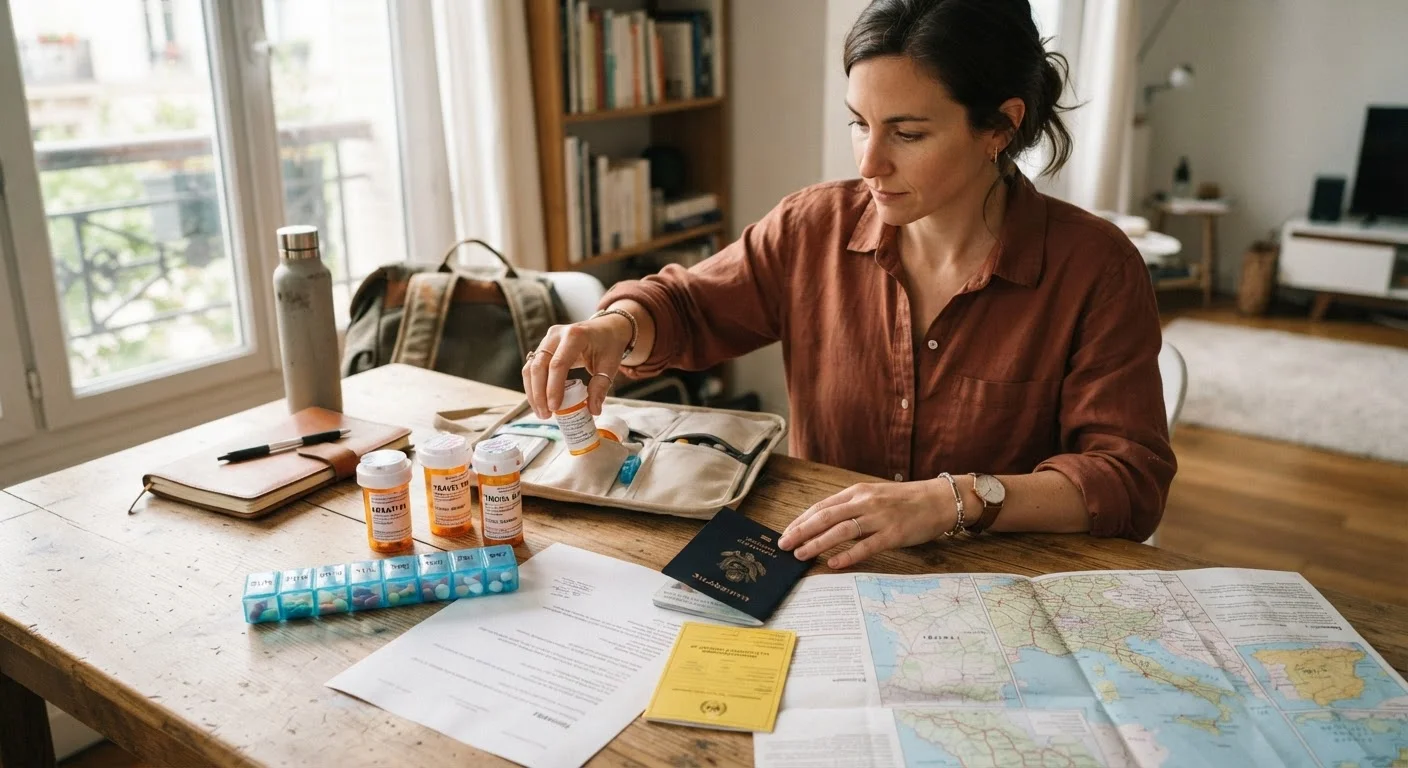
Getting your paperwork right is arguably the most critical part of health-focused international travel prep. Customs officials, airport security, and foreign pharmacies all operate differently - and being unprepared can cause serious delays or even confiscation of essential medications.
Some US Medications Are Illegal Abroad
Medications that are legally prescribed in the United States - including certain controlled substances for pain, anxiety, ADHD, and sleep - may be classified as illegal or heavily restricted in other countries. Attempting to bring them across the border, even with a valid prescription, can result in confiscation, fines, or detention. Always verify the legal status of every prescription with the destination country's embassy or official health ministry well before your departure date.
One often-overlooked issue is that medications commonly prescribed in the United States - including certain opioid-based pain relievers, ADHD stimulants, and some anxiety medications - are classified as controlled substances or outright prohibited in many countries. Before packing any prescription, verify its legal status at your destination through that country's embassy or official health ministry. Your physician or a travel medicine clinic can also help you navigate this.
When packing, keep all medications in their original pharmacy-labeled containers. A signed physician's letter on official letterhead - listing your diagnoses, medications, dosages, and the medical necessity - can smooth your path through customs and security. Carry this letter in your carry-on, not checked luggage. For details on what to pack and what to leave behind, see our guide on what experienced travelers leave out of their bags.
Insurance, Emergency Access, and Staying Connected
Most standard US health insurance plans - including many Medicare plans - provide little to no coverage outside the country. Before you travel, call your insurer to understand exactly what international benefits, if any, apply. Travel insurance with a dedicated medical and emergency evacuation component is worth understanding as a separate layer of protection. Our breakdown of what travel insurance policies cover is a good place to start.
Research the healthcare infrastructure at your destination before departure. Identify the nearest hospitals or clinics to where you'll be staying, and note whether your destination has public emergency services comparable to what you'd access at home. In some regions, private clinics may offer more reliable care for travelers. Keep emergency contact numbers - including your physician back home, your insurer's emergency line, and the nearest US Embassy - saved in your phone and written on a card in your wallet.
Reliable communication can be lifesaving in a medical situation. Consider how you'll stay connected: see our guide on international roaming versus local SIM cards so you're never unreachable when it matters most. For broader safety strategies abroad, staying safe abroad without letting fear run your trip covers practical habits every traveler should build.
Don't Count on Finding Your Medication Abroad
Even common medications may be unavailable, sold under different brand names, or manufactured at different strengths in other countries. Local pharmacies may not stock what you need, and sourcing medication from unverified vendors carries significant risk of counterfeit or substandard products. Pack a sufficient supply - plus a buffer - before you leave home, and consult your doctor if you're unsure how much you'll need.