

Key Takeaways
New Orleans Neighborhood Culture
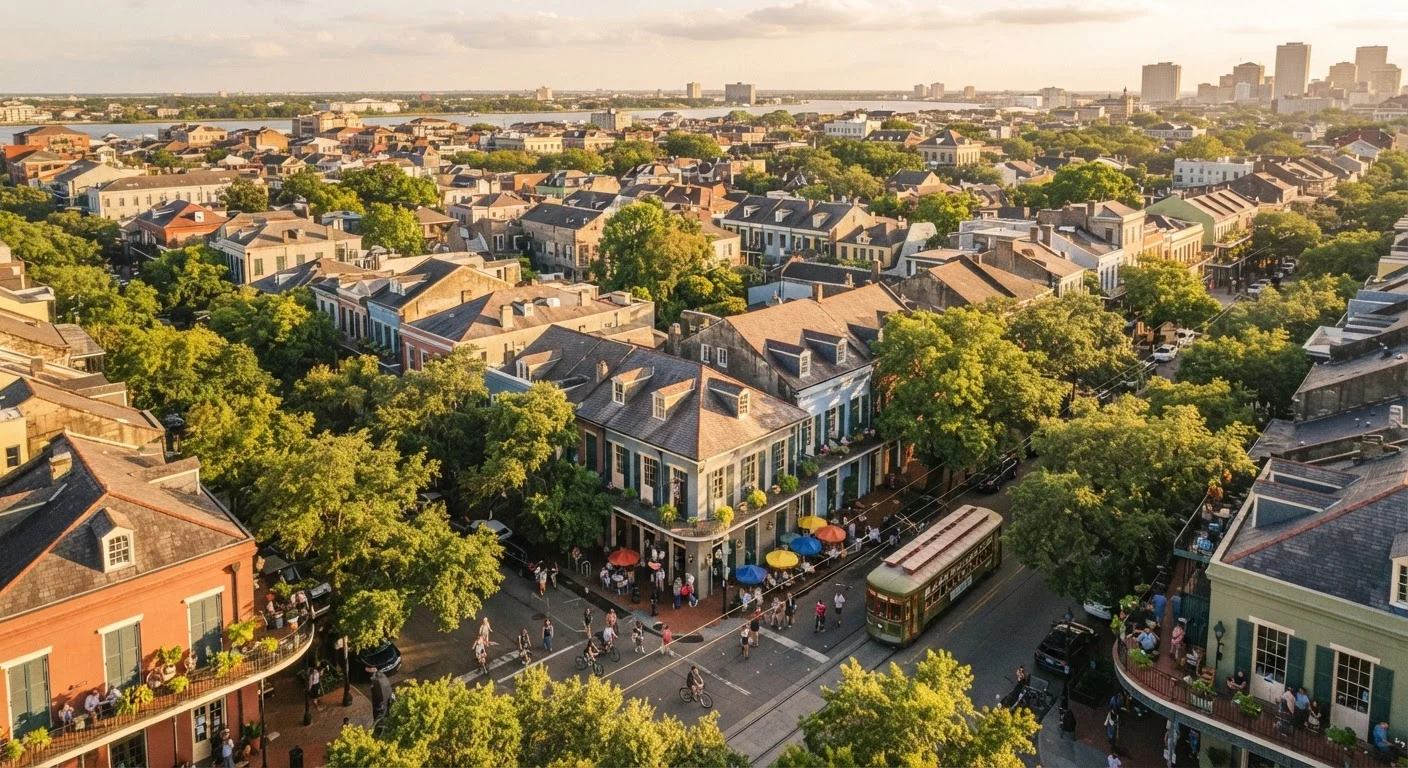
New Orleans is a city of distinct neighborhoods, each with its own architecture, traditions, cuisine, and community identity. While Bourbon Street draws millions of visitors, the city's deeper culture - its jazz roots, Creole cooking, and living history - is best experienced by exploring beyond the French Quarter. Understanding the neighborhoods helps travelers engage with the real New Orleans rather than a tourist-facing version of it.
New Orleans is divided into over 70 recognized neighborhoods, many shaped by historical waves of immigration, Creole and Afro-Caribbean heritage, and post-Katrina rebuilding efforts.
Why Bourbon Street Is Only the Beginning
Bourbon Street is loud, lively, and undeniably memorable - but it represents a narrow slice of what New Orleans actually is. Locals tend to steer clear of it on a regular basis, preferring the city's quieter, character-rich neighborhoods where the real rhythms of life play out. For travelers who want more than a souvenir shot glass and a hand grenade cocktail, a neighborhood-by-neighborhood approach unlocks a far richer experience.
New Orleans grew in layers - French, Spanish, Haitian Creole, West African, Irish, and Vietnamese communities have all left permanent marks on the city's streets, kitchens, and musical traditions. Each neighborhood is essentially a chapter in that story.
Tremé: America's Oldest African American Neighborhood
Just a short walk from the French Quarter, Tremé (pronounced treh-MAY) carries a history unlike anywhere else in the country. This is the neighborhood where free people of color gathered, organized, and created the cultural foundations of American jazz. Congo Square - now part of Louis Armstrong Park - was one of the few places in the antebellum South where enslaved Africans were permitted to gather, drum, and dance openly.
Today, Tremé is still a living community. Second line parades, brass bands, and neighborhood social aid and pleasure clubs continue traditions that are centuries old. Visitors can walk the neighborhood, visit St. Augustine Church (one of the oldest African American Catholic churches in the US), and catch spontaneous music that no ticketing platform can schedule.
Visiting Tremé Respectfully
Tremé is an active residential neighborhood, not a museum. Many of its residents have lived there for generations and take pride in their community's cultural contributions. Visitors are encouraged to engage respectfully, support local businesses, and observe any community events with awareness that these traditions belong first to the people who maintain them.
The Marigny and Bywater: Where Creatives and Locals Converge
Directly downriver from the French Quarter, the Faubourg Marigny and Bywater neighborhoods have long attracted artists, musicians, and longtime New Orleanians who wanted community without the crowds. Frenchmen Street is the Marigny's main artery for live music - multiple clubs line a single walkable block, and the music starts early and runs late, with no cover charge at several venues.
The Bywater, just beyond, has a slower, more residential feel. Colorful shotgun houses line the streets, neighborhood coffee shops buzz with regulars, and local restaurants serve food that travels well beyond trend cycles. Both neighborhoods are best explored on foot or by bike.
The Garden District: Architecture, History, and Oak Canopies
Developed in the early 19th century by American merchants who settled outside the French Creole Quarter, the Garden District is defined by its grand antebellum mansions set behind ornate wrought iron fences and shaded by ancient live oaks. Magazine Street cuts through the neighborhood offering an eclectic stretch of local shops, cafes, and galleries.
Lafayette Cemetery No. 1, one of the city's above-ground "cities of the dead," sits at the heart of the Garden District and is free to visit. The St. Charles Avenue streetcar - a National Historic Landmark in its own right - runs along the neighborhood's edge, offering one of the most scenic and affordable transit experiences in any American city.
70+
Recognized neighborhoods in New Orleans
According to the City of New Orleans' official neighborhood planning districts, the city contains more than 70 distinct communities, each with its own identity.
1,300 acres
Size of City Park in Mid-City
City Park is one of the largest urban parks in the United States, according to City Park New Orleans, surpassing New York's Central Park in total acreage.
1835
Year St. Charles streetcar line began service
The St. Charles streetcar line is one of the oldest continuously operating street railways in the world, according to the New Orleans Regional Transit Authority.
Mid-City and Bayou St. John: Everyday New Orleans
Mid-City offers a glimpse into how residents actually live. Bayou St. John, a peaceful waterway cutting through the neighborhood, is lined with families picnicking, kayakers paddling, and joggers on weekend mornings. City Park - one of the largest urban parks in the country - anchors the area with moss-draped oaks, the New Orleans Museum of Art, and the beloved Storyland attraction for families.
The food scene here is unpretentious and deeply local. From neighborhood Vietnamese restaurants rooted in the community that settled post-Vietnam War to old-school New Orleans po'boy shops, Mid-City rewards curious eaters without requiring a reservation or a long wait in a tourist line.