

Key Takeaways
Why Batteries Fail Silently
A car battery doesn't typically announce its decline. One morning your car starts fine; the next, it doesn't. That abrupt failure is rarely the result of a single bad night - it's usually the endpoint of a slow degradation that went unnoticed for months.
Lead-acid batteries (the standard in most gasoline-powered vehicles) work by converting chemical energy into electrical current. Over time, the internal plates sulfate, capacity drops, and the battery can no longer deliver the surge of power needed to start an engine, especially under load. This process is gradual and largely invisible without testing.
Understanding how batteries age - and what accelerates that aging - is the first step toward not being caught off guard. As part of a broader strategy for managing car ownership costs, battery awareness belongs near the top of any driver's maintenance checklist.
The Habits and Conditions That Shorten Battery Life
Several common driving patterns put disproportionate strain on a battery:
- Short trips: Your alternator recharges the battery while the engine runs. Trips under 10-15 minutes don't give it enough time to fully replenish what the starter motor consumed. Repeated short-trip driving gradually drains the battery's reserve capacity.
- Temperature extremes: Heat accelerates internal chemical reactions and fluid evaporation inside the battery; cold thickens engine oil and increases the power demand at startup. Both extremes stress the battery - though in different ways. If you live in a region with harsh winters or intense summers, proactive checks are especially important. See our guide on seasonal maintenance for winter and summer for a broader look at temperature-related vehicle care.
- Parasitic drain: Electronics left running - lights, phone chargers, or accessories plugged in while the engine is off - draw small but consistent current that depletes the battery over time.
- Infrequent use: A vehicle that sits for weeks without being driven will self-discharge. Batteries stored at a low state of charge sulfate faster, permanently reducing capacity.
“The battery is the heart of the vehicle's electrical system. Most drivers only think about it when the car doesn't start - by which point they've already lost the opportunity to maintain it.”
— ASE Technical Training Division, National Institute for Automotive Service Excellence - technician education materials
The Checks Every Driver Should Know
Battery maintenance doesn't require a garage full of tools. These are the most practical steps you can take:
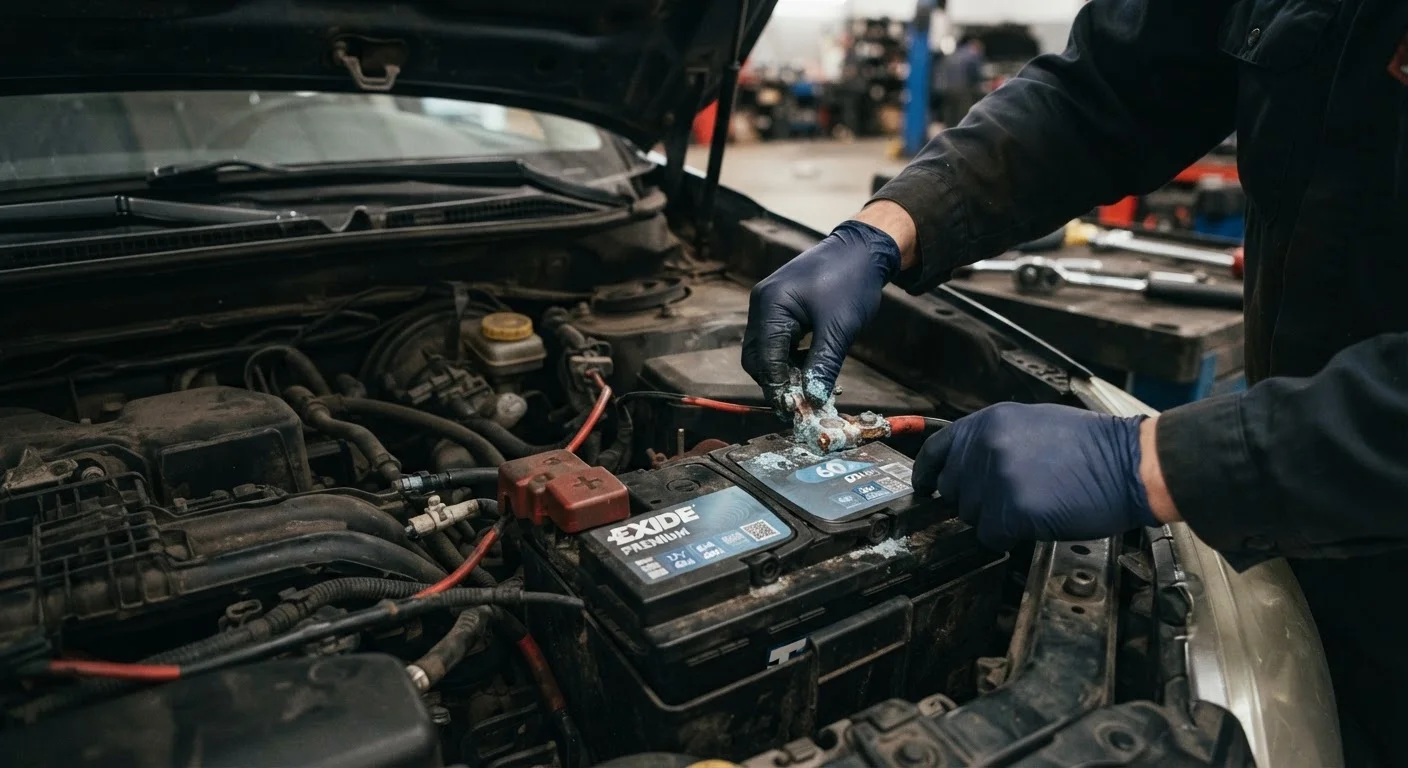
Inspect battery terminals every three months for corrosion buildup.
White or blue-gray powder around the terminals increases electrical resistance, which forces the battery to work harder and can prevent reliable starting. Catching it early means a simple cleaning rather than a failed start.
Have your battery load-tested when it reaches three years old.
A battery can show a full voltage reading while still failing under the actual load of starting an engine. A load test - which most auto parts stores offer at no charge - measures real-world capacity rather than resting voltage.
Keep the battery securely mounted in its hold-down bracket.
Vibration from driving gradually damages internal battery plates. A loose battery vibrates freely, accelerating that internal wear and shortening service life.
Use a trickle charger or battery maintainer if a vehicle sits unused for more than two weeks.
Self-discharge during storage drops a battery to a low state of charge where sulfation begins to form on the internal plates. A maintainer keeps the battery at an optimal charge level without overcharging it.
Listen for a sluggish or slow crank when starting the engine.
A healthy battery turns the engine over quickly and consistently. A labored, slow-sounding crank is a reliable early indicator that battery capacity has dropped and testing is warranted.
Knowing which tasks are genuinely safe to handle yourself matters. Our article on DIY car maintenance offers a clear-eyed look at what's reasonable for a home mechanic versus what requires a professional.
Quick Actions to Take This Week
You don't need to overhaul your maintenance routine to meaningfully extend battery life. A few targeted actions now can prevent a much bigger inconvenience later - and they cost little to nothing.
Skipping routine checks rarely saves time or money in the long run. For a fuller picture of how deferred maintenance compounds into larger bills, our piece on the real cost of skipping routine maintenance walks through the financial reality in detail.