

Key Takeaways
Total Cost of Car Ownership
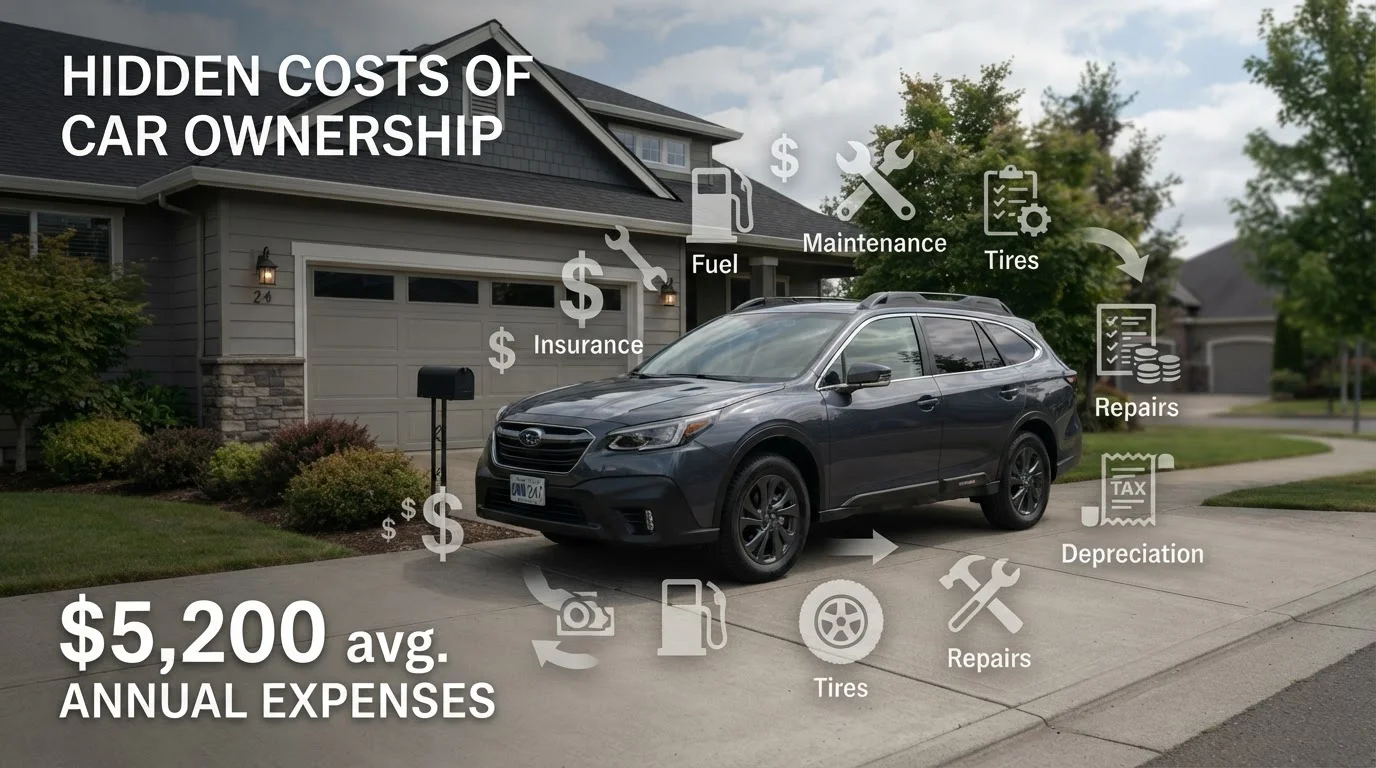
The total cost of owning a car includes every expense you incur from purchase to sale - not just the price you paid at the dealership. This includes depreciation, insurance premiums, fuel, routine maintenance, registration fees, and financing interest. Understanding all of these costs together gives you a realistic picture of what a vehicle truly costs per year.
Automotive analysts often express total ownership cost as a cents-per-mile figure, which allows direct comparison across different vehicle types and usage patterns.
Why the Sticker Price Is Just the Starting Point
When most people budget for a car, they think in terms of the purchase price - or at most, the monthly loan payment. But the actual financial commitment of vehicle ownership is substantially larger. Spread across a typical five-year ownership period, the costs beyond the purchase price can rival or even exceed what you originally paid for the car.
Breaking down these costs before you buy gives you far more control over your finances. It also helps you compare vehicles more honestly - a lower purchase price doesn't automatically mean a lower total cost if insurance, fuel, or maintenance expenses are higher.
For a deeper look at how one cost in particular quietly erodes vehicle value, see our article on why cars lose value and what affects the rate.
Depreciation: The Invisible Expense
Depreciation is the decline in your vehicle's market value over time, and for most drivers it represents the single largest ownership cost - one that never appears on a bill. A new car can shed a significant portion of its value in the first few years, meaning the gap between what you paid and what you could sell it for widens quickly.
Used vehicles depreciate more slowly because the steepest value drop has already occurred. This is one reason buying a vehicle that's two to four years old can lower your total cost of ownership even if the purchase price feels similar to a base-level new model.
~20%
Average new car value lost in year one
Industry estimates suggest new vehicles typically lose around 15-20% of their value within the first 12 months of ownership.
~50%
Value lost over five years on average
AAA and other automotive cost analysts estimate the average new vehicle retains roughly half its purchase price after five years, though this varies by model and market.
$1,500+
Estimated annual fuel cost for average driver
Based on driving around 15,000 miles annually at average U.S. fuel prices and a typical fleet-average fuel economy figure - actual costs vary widely.
Understanding depreciation is especially important when deciding between leasing and buying. Our side-by-side look at leasing vs. buying explains how each approach handles this cost differently.
Insurance, Fuel, and Financing Costs
Insurance is a mandatory recurring expense in every U.S. state, and premiums vary widely. Factors include your driving record, the vehicle's repair cost and safety rating, your location, and even your credit history in most states. A larger or sportier vehicle typically costs more to insure than a compact or midsize sedan with strong safety scores.
Fuel costs depend on your vehicle's fuel efficiency rating and how many miles you drive annually. A vehicle rated at 25 MPG versus 35 MPG can mean hundreds of dollars in additional fuel expense per year, compounded across years of ownership. Hybrid and electric vehicles shift this calculation, though they introduce their own ownership considerations.
Financing interest is an expense many buyers underweight. If you're carrying a loan, the interest paid over the full term adds meaningfully to what the vehicle actually costs you. Before signing, it's worth understanding your full loan agreement - our guide on reading an auto loan agreement walks through the key terms to review.
Calculate Your True Per-Mile Cost
Add up your annual costs - loan payments or depreciation, insurance, fuel, and maintenance - then divide by your yearly mileage. This per-mile figure lets you compare vehicles fairly and track whether your actual ownership costs are in line with your budget. Many drivers find this exercise reveals costs they had overlooked entirely.
Maintenance, Repairs, and the Fees You Forget
Routine maintenance - oil changes, tire rotations, air filters, brake inspections - represents a predictable and manageable cost when kept up consistently. The financial danger comes from skipping scheduled service. Deferred maintenance almost always results in larger repair bills later. For a clear breakdown of how that happens, see the real cost of skipping routine maintenance.
Beyond service, don't overlook the administrative costs that recur annually: state registration fees, personal property taxes (in states that apply them), emissions or safety inspection fees, and parking or toll costs. These vary by location but can add several hundred dollars per year to your total.
First-year owners in particular are often surprised by how quickly these costs accumulate. Our guide for new owners - what no one tells you about the first year - provides a practical walkthrough of what to expect and how to plan for it.