

Key Takeaways
Both hands remain on the steering wheel
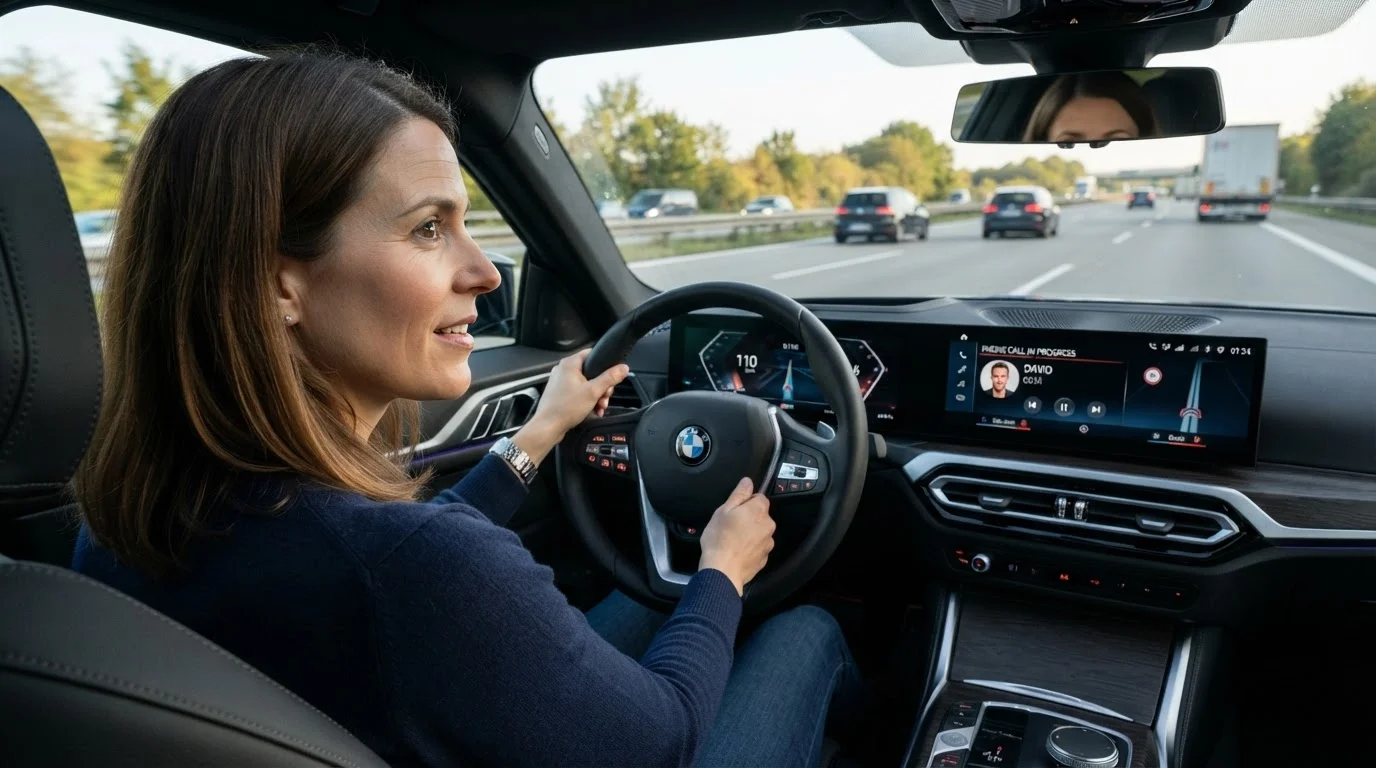
Keeping both hands free allows drivers to respond instantly to steering demands, which is especially important during sudden hazards or adverse road conditions.
Eliminates visual distraction from holding a device
Drivers are not tempted to glance at a screen or adjust a handheld device, removing one of the most acute categories of driving distraction.
Legal in most U.S. states
Handheld phone use while driving is banned in many states, making hands-free systems the legally compliant choice that avoids fines and license points.
Built-in systems reduce touchscreen interaction
Voice-activated in-car systems allow drivers to initiate and answer calls without touching a screen, reducing a separate but significant source of distraction.
Clearly safer than handheld phone use
The combined physical and visual demands of holding a phone are removed entirely, making hands-free a meaningful risk reduction over the alternative.
Cognitive distraction persists regardless of setup
Phone conversations demand mental processing that competes directly with the cognitive demands of driving, a risk that hands-free technology does not eliminate.
Reaction times are measurably slower during calls
Research has documented delayed braking and hazard response in drivers on phone calls, even when both hands are on the wheel and eyes are on the road.
Call participants cannot adapt to driving conditions
Unlike a passenger, a phone caller has no awareness of traffic or hazards and will not pause the conversation at a critical moment, making the cognitive burden constant.
May create a false sense of security
Because hands-free calling is legal and socially normalized, drivers may underestimate the remaining risk and engage in longer or more complex calls than is safe.
Emotionally charged calls amplify distraction
Stressful, emotional, or complex conversations increase cognitive load significantly beyond what a simple exchange requires, making context as important as the technology used.
Our Verdict
Hands-free calling is meaningfully safer than holding a phone while driving - it removes manual and visual distraction, keeps both hands on the wheel, and is far less likely to contribute to lane drifting or missed signals. However, it does not make phone conversations risk-free. Cognitive distraction is real and measurable, and conversations still draw mental resources away from driving.
Hands-free calling is the better choice for drivers who must occasionally take an important call, provided they use built-in vehicle systems, keep conversations brief, and recognize when conditions demand full attention.
What 'Hands-Free' Actually Means - and Doesn't Mean
Hands-free calling refers to any method of conducting a phone conversation without physically holding a device - including Bluetooth earpieces, voice-activated in-car systems (like Apple CarPlay or Android Auto), and speakerphone mounts. In most U.S. states, holding a phone to your ear while driving is illegal, which has made hands-free technology feel like the responsible alternative.
But the term can be misleading. 'Hands-free' accurately describes the physical setup - your hands stay on the wheel. What it does not mean is 'attention-free.' The conversation itself, not the device in your hand, is where much of the danger lies. Understanding this distinction is the foundation of making smarter decisions behind the wheel.
State Laws Vary - Check Before You Drive
Hands-free phone laws differ by state. Some states ban all handheld use; others have more specific rules about earpieces or speakerphone. A handful of states have additional restrictions for new or young drivers. Before relying on any hands-free setup, verify the rules in your state and any state you plan to drive through. Your state's Department of Motor Vehicles (DMV) website is a reliable starting point.
The Case For Hands-Free Calling
There are genuine, research-supported reasons why hands-free calling is safer than the handheld alternative.
Both hands remain on the steering wheel
Keeping both hands free allows drivers to respond instantly to steering demands, which is especially important during sudden hazards or adverse road conditions.
Eliminates visual distraction from holding a device
Drivers are not tempted to glance at a screen or adjust a handheld device, removing one of the most acute categories of driving distraction.
Legal in most U.S. states
Handheld phone use while driving is banned in many states, making hands-free systems the legally compliant choice that avoids fines and license points.
Built-in systems reduce touchscreen interaction
Voice-activated in-car systems allow drivers to initiate and answer calls without touching a screen, reducing a separate but significant source of distraction.
Clearly safer than handheld phone use
The combined physical and visual demands of holding a phone are removed entirely, making hands-free a meaningful risk reduction over the alternative.
When a driver holds a phone, they are simultaneously managing a manual task (gripping the device), a visual distraction (glancing at the screen), and a cognitive one (following the conversation). Hands-free systems eliminate the first two entirely. Studies from the National Highway Traffic Safety Administration (NHTSA) have consistently shown that visual and manual distractions are among the most acute risks while driving - taking eyes off the road for even two seconds substantially increases crash risk.
Beyond the physical mechanics, hands-free systems also allow drivers to keep both hands ready for sudden steering corrections, and built-in voice systems reduce the need to interact with a touchscreen at all - a major source of distraction on their own.
The Case Against: Cognitive Distraction Is Real
The more complicated part of the picture is what researchers call cognitive distraction - the mental load of maintaining a conversation that competes with the mental load of driving.
Cognitive distraction persists regardless of setup
Phone conversations demand mental processing that competes directly with the cognitive demands of driving, a risk that hands-free technology does not eliminate.
Reaction times are measurably slower during calls
Research has documented delayed braking and hazard response in drivers on phone calls, even when both hands are on the wheel and eyes are on the road.
Call participants cannot adapt to driving conditions
Unlike a passenger, a phone caller has no awareness of traffic or hazards and will not pause the conversation at a critical moment, making the cognitive burden constant.
May create a false sense of security
Because hands-free calling is legal and socially normalized, drivers may underestimate the remaining risk and engage in longer or more complex calls than is safe.
Emotionally charged calls amplify distraction
Stressful, emotional, or complex conversations increase cognitive load significantly beyond what a simple exchange requires, making context as important as the technology used.
Research from institutions including the University of Utah has found that drivers engaged in phone conversations - handheld or hands-free - show measurably slower reaction times, reduced awareness of road hazards, and a tendency to miss visual cues that they are otherwise looking directly at. This is sometimes called 'inattention blindness.' The brain processes what the eyes see less effectively when simultaneously engaged in complex conversation.
Critically, talking to a passenger does not carry the same risk. A passenger naturally adjusts the conversation during hazardous moments - they pause when traffic is heavy, point out hazards, and share the driver's visual context. A person on the other end of a phone call has no awareness of driving conditions and does not adapt accordingly. This is a meaningful difference that hands-free technology does nothing to address.
For a broader look at how mental distraction sits alongside other overlooked driving risks, see our guide to distracted driving habits hiding in plain sight.
Practical Guidance: When and How to Use Hands-Free Safely
Recognizing both sides of the debate leads to a practical middle ground. Here's how to apply the evidence to real driving situations:
- Use built-in systems over earpieces or speakerphone mounts. Integrated vehicle systems are designed to minimize driver interaction and keep audio quality high without requiring visual attention.
- Keep calls short and low-stakes. A brief, logistical exchange ('I'm on my way, be there in 10') carries far less cognitive load than a lengthy or emotionally charged conversation.
- Know when to let it ring. Heavy traffic, rain, highway merges, school zones, and construction areas all demand more cognitive bandwidth. These are not moments for any phone conversation.
- Pull over for complex calls. If you need to discuss something important, detailed, or stressful, stopping is the only approach that removes the risk entirely.
The goal is not to avoid all technology - it's to use it with an accurate understanding of its limitations. Hands-free calling is a tool, and like any tool, its safety depends on how and when it's used.