

Key Takeaways
Why Distraction Is Harder to Recognize Than It Looks
Most drivers know texting while driving is dangerous. What's harder to accept is that the distraction problem extends far beyond phone use. Researchers and safety agencies categorize distraction into three types: manual (hands off the wheel), visual (eyes off the road), and cognitive (mind off the task of driving). Many common habits trigger all three at once.
The challenge is that distracted driving rarely feels risky in the moment. Familiar roads, light traffic, and routine tasks create a false sense of safety. But crash data tells a different story - the NHTSA consistently links thousands of annual fatalities to distraction, and a significant share involve behaviors that drivers don't even register as dangerous.
Understanding the full picture of safe driving means confronting habits that feel harmless but quietly erode your ability to react.
~3,000
U.S. distraction-related traffic deaths per year
The NHTSA consistently reports approximately 3,000 annual fatalities linked to distracted driving in the United States.
5 seconds
Average eyes-off-road time for a single text
The NHTSA estimates that reading or sending a text takes roughly five seconds - enough to travel the length of a football field at 55 mph.
27 seconds
Cognitive distraction after completing a voice task
AAA Foundation for Traffic Safety research found mental attention takes up to 27 seconds to fully return after using voice-activated technology.
The Mistakes Drivers Make Without Realizing It
The following mistakes are common across all driver demographics and experience levels. What makes them particularly consequential is not their severity in any single instance, but their frequency - these are habits many drivers repeat every single day.
Using a handheld phone to text, scroll, or dial while driving.
Why it happens: Smartphones are deeply habitual, and many drivers underestimate how long their eyes leave the road during a quick glance.
Eating or drinking behind the wheel during a commute or road trip.
Why it happens: Time pressure and convenience make eating in the car feel necessary. Drivers don't consider it risky because it's familiar.
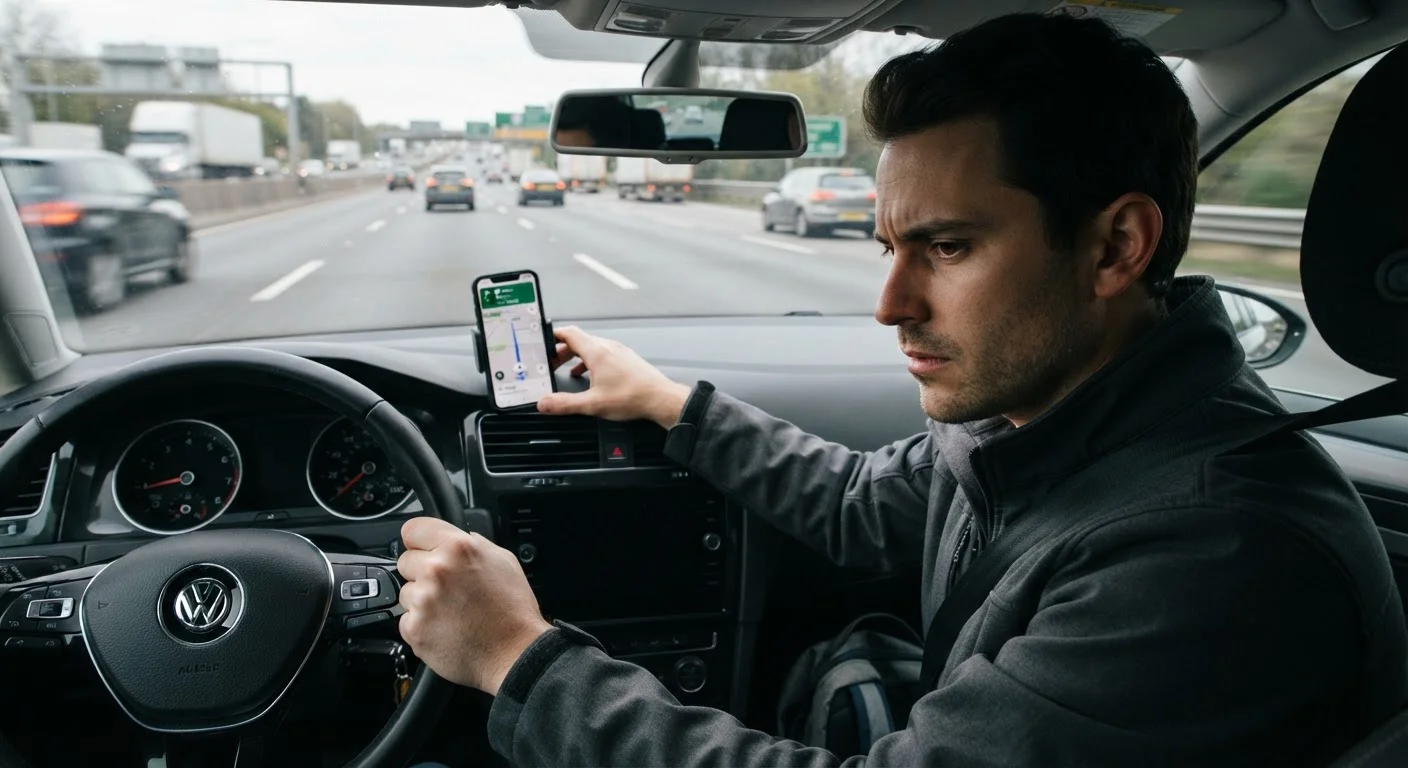
Adjusting the radio, climate controls, or GPS navigation while in motion.
Why it happens: These tasks feel minor and momentary, so drivers routinely complete them without stopping - often at the worst possible moment in traffic.
Engaging in emotionally intense or cognitively demanding conversations - even hands-free.
Why it happens: Drivers assume a call is safe as long as their hands are on the wheel. The cognitive load of a difficult conversation is invisible and easy to underestimate.
Daydreaming or "zoning out" on familiar routes.
Why it happens: Repetitive drives - the daily commute - reduce alertness. Drivers fall into autopilot and stop actively scanning the road.
Turning to interact with passengers - especially children - in the back seat.
Why it happens: Parental instinct or social habit drives drivers to make eye contact while talking to rear-seat passengers.
Distraction Affects All Drivers Equally
Experience behind the wheel does not make a driver immune to distraction. Research consistently shows that reaction time, hazard detection, and decision-making all degrade when attention is divided, regardless of how many years someone has held a license. No driver can safely multitask at highway speeds.
Distraction also compounds other road risks. When mental bandwidth is already stretched by a conversation or a navigation adjustment, hazards like a following-too-closely situation or a sudden lane change by another driver leave almost no margin for response. Veteran drivers maintain that advantage precisely by protecting their full attention for the road.
Cognitive Distraction Lingers After the Task Ends
Studies from the AAA Foundation for Traffic Safety suggest that mental distraction can persist for up to 27 seconds after completing a task - such as sending a voice-to-text message. That means a driver who finishes a hands-free call is not immediately fully attentive, even if both hands are back on the wheel. At 55 mph, 27 seconds covers roughly a quarter mile of road.
It's also worth noting that distraction's effects overlap with those of fatigue. The cognitive drift of zoning out on a familiar road closely mirrors what happens during drowsy driving - and the two can reinforce each other. Similarly, reduced visibility at night leaves even less room for divided attention, as outlined in the guidance on night driving challenges.
Building Habits That Keep Your Focus Where It Belongs
The most effective intervention is a consistent pre-departure routine. Before moving, take 60 seconds to: set your GPS destination, connect your phone to Do Not Disturb or a car mount, adjust mirrors, set climate controls, and secure any food or beverages. This removes the in-motion temptation to address those needs while driving.
Beyond the pre-trip checklist, awareness is the key ingredient. Recognizing that a 30-second radio adjustment or a five-minute phone call carries real risk is the first step toward changing behavior. Most drivers aren't reckless - they're simply operating on habits formed before they fully understood the stakes.
If you have passengers, communicate expectations openly. Assign a co-pilot to handle navigation or music changes. With children in the back seat, establish ground rules before the trip starts rather than managing disruptions mid-drive.
Safe driving isn't about perfection - it's about giving the road the attention it demands every time you're behind the wheel.