

Key Takeaways
The Foundation: Defensive Driving Principles
Defensive driving is the single most transferable safety skill a driver can develop. Unlike simply obeying traffic laws, defensive driving means continuously scanning the environment, predicting what other drivers might do, and positioning your vehicle to give yourself options. The National Safety Council describes it as driving to save lives and money regardless of conditions or the actions of others.
The core habits are straightforward but require deliberate practice:
- Maintain a three-second following distance - increase to four or more seconds in poor conditions. Choose a fixed object ahead, watch when the car in front passes it, then count before you reach the same point.
- Scan intersections before entering - even on a green light. Cross-traffic violations are among the most common urban crash causes.
- Avoid blind-spot positioning - don't linger beside other vehicles on multi-lane roads where you're invisible to their mirrors.
- Manage your speed contextually - posted limits represent maximum safe speeds under ideal conditions. Construction zones, curves, and congestion all call for reductions.
See the habits veteran drivers swear by for a deeper look at how experienced drivers think through hazards before they materialize.
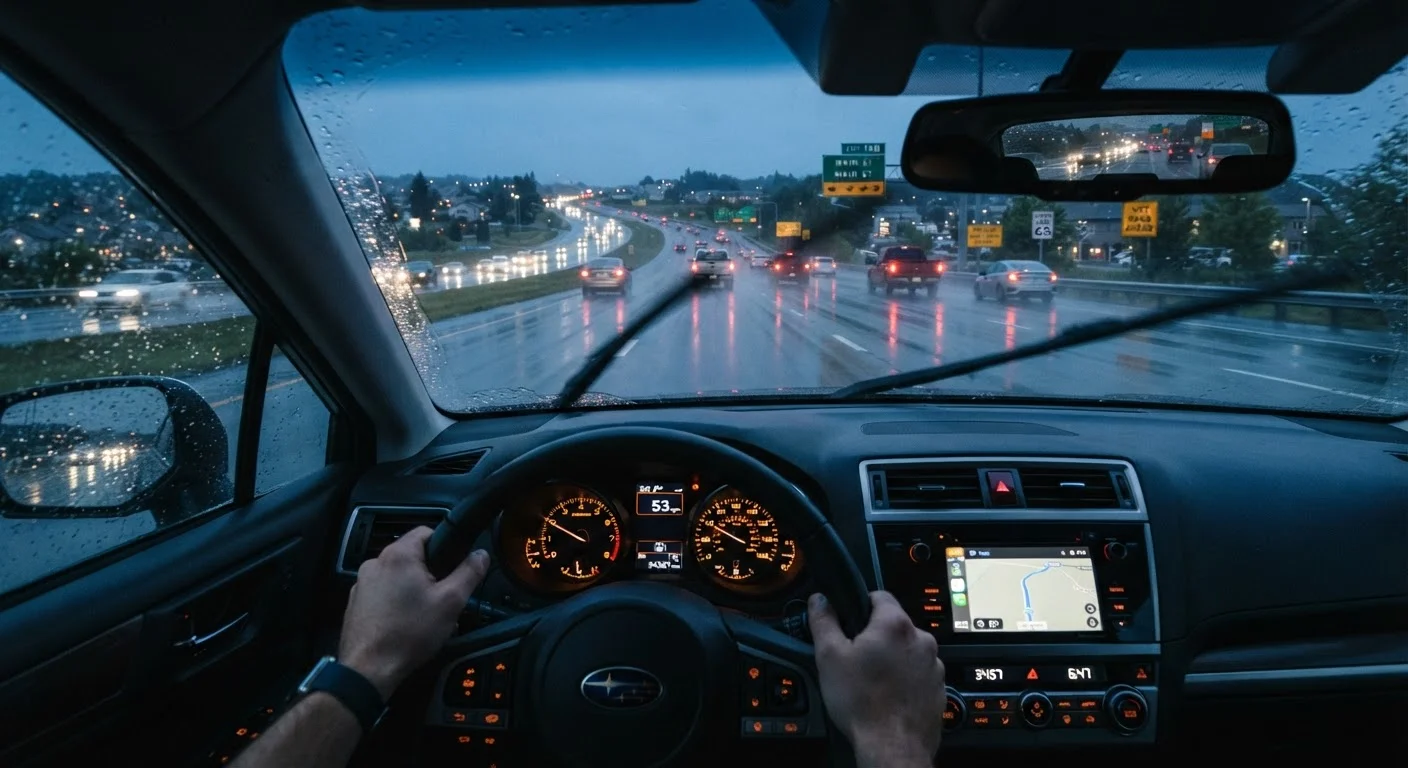
Adjust your following distance based on stopping distance, not habit. On wet roads, shift from a 3-second gap to at least 5 or 6 seconds - your tires' grip is reduced whether or not you can feel it yet.
Stopping distances increase substantially on wet or degraded surfaces, and most drivers underestimate how much distance they actually need at highway speeds.
Before merging onto a highway, match the speed of traffic in the target lane - not the posted limit. Entering at significantly slower speeds creates dangerous compression behind you.
Speed differentials between merging and through traffic are a consistent contributor to rear-end collisions at on-ramps, particularly during congestion.
Driving in Challenging Weather Conditions
Weather transforms the driving environment more dramatically than most drivers account for. Rain, snow, fog, and ice each change traction, visibility, and stopping distances in distinct ways - and the adjustments required differ accordingly.
Rain
Wet pavement can double stopping distances. The first 10-15 minutes of rain are often the most dangerous, as water mixes with accumulated road oils before washing them away. Slow down, increase following distance, and avoid sudden steering inputs that can trigger hydroplaning - a condition where tires lose contact with the road surface entirely.
Snow and Ice
On packed snow or ice, stopping distances can increase by eight to ten times compared to dry pavement. All-wheel drive helps you accelerate, but it does not improve braking. Approach every stop, curve, and merge more gradually than feels instinctive.
Fog
Low-beam headlights - not high beams - are the correct choice in fog because high beams reflect back off water droplets and reduce visibility further. Reduce speed significantly and watch for vehicles that may be stopped or barely moving ahead.
For a thorough breakdown of how each condition affects handling, see our weather driving guide.
Keeping Your Vehicle Road-Ready
No amount of skill compensates for a vehicle in poor mechanical condition. Regular maintenance is a safety practice, not just an ownership chore. Several systems deserve particular attention:
- Tires: Check pressure monthly and before any extended trip - underinflated tires reduce handling and increase blowout risk. Inspect tread depth with the penny test (Lincoln's head fully visible means it's time to replace).
- Brakes: Squealing, grinding, or a pulsating pedal are warning signs that warrant prompt inspection by a qualified mechanic.
- Lights: Walk around your vehicle periodically to confirm all headlights, taillights, and turn signals are functioning. A burned-out brake light is invisible to you but hazardous to everyone behind you.
- Fluids: Engine oil, coolant, and brake fluid all play roles in safe operation. Low brake fluid in particular can indicate a leak requiring immediate professional attention.
Before any long road trip, a structured pre-departure check pays dividends. Our driver's safety walkthrough covers exactly what to inspect and what emergency gear to pack. For ongoing upkeep guidance, the car maintenance hub is a practical reference.
Handling Emergencies Behind the Wheel
Even well-prepared drivers encounter unexpected situations. Knowing in advance how to respond keeps panic from overriding judgment.
Tire Blowout
A rear blowout typically causes the vehicle to pull or fishtail; a front blowout produces strong steering pull. In either case: do not brake hard or swerve abruptly. Grip the wheel firmly, ease off the accelerator gradually, and steer smoothly toward the shoulder. Controlled deceleration is the goal.
Brake Failure
If your brakes feel soft or fail to respond, pump the pedal firmly - this can restore hydraulic pressure in older systems. Downshift if driving a manual transmission. Use the parking brake gently and progressively as a last resort, steering toward an escape route such as a runaway truck ramp, open lot, or gradual uphill.
Skidding
For front-wheel skids (understeer), ease off the accelerator and avoid sharp steering corrections. For rear-wheel skids (oversteer), steer gently in the direction the rear is sliding while easing off the gas - counter-intuitive but effective. Modern electronic stability control systems assist significantly, but understanding the underlying response keeps you effective if the system has limits.
Never Overcorrect in a Skid or Blowout
Sharp, sudden steering inputs during a skid, blowout, or brake event frequently make the situation worse. Vehicle dynamics during these moments are sensitive - overcorrection is a leading cause of rollovers and loss of control. Small, deliberate inputs give the vehicle time to respond.
Building Safety Habits That Last
Individual skills matter, but safe driving is ultimately a set of ingrained habits reinforced every time you get behind the wheel. A few practices help habits stick:
- Eliminate distraction deliberately - set navigation before moving, place the phone out of reach, and configure audio controls while parked. Cognitive distraction persists briefly even after you put the phone down, a phenomenon researchers call inattention blindness.
- Drive rested - drowsy driving impairs reaction time in ways comparable to alcohol impairment. If you feel yourself drifting or missing exits, pulling over to rest is the responsible decision.
- Model the behavior you want to see - if you drive with newer or younger drivers in the car, your habits communicate expectations. Teen drivers benefit directly from riding with experienced adults who narrate their decision-making aloud.
Safe driving is not a fixed skill level achieved once - it's a practice revisited with every trip. The conditions change, the roads change, and so does your vehicle. Staying engaged, staying informed, and staying honest about your own state behind the wheel is what separates cautious drivers from merely experienced ones.