

Key Takeaways
Summary
22 items · 30-60 minutes
Why a Pre-Trip Walkthrough Matters
Long drives put your vehicle under sustained stress that everyday commuting simply doesn't replicate. Highway speeds, temperature swings, and hours of continuous engine load can expose weaknesses that were hiding under normal use. The good news: most of those vulnerabilities are detectable in your own driveway with basic tools and about an hour of focused attention.
This checklist is designed to be completed the day before departure, not the morning you leave. That gives you time to address anything that needs a mechanic's attention without scrambling. For broader seasonal readiness, the seasonal car maintenance guide covers how temperature extremes affect specific systems - worth reading before a summer or winter road trip.
Work through each group below systematically. If you find something that concerns you, treat it as a stop - not a maybe - before hitting the highway.
Tires
Fluids
Lights and Visibility
Belts, Hoses, and Battery
Brakes and Steering
Emergency Kit and In-Cabin Essentials
Tools You'll Need for the Walkthrough
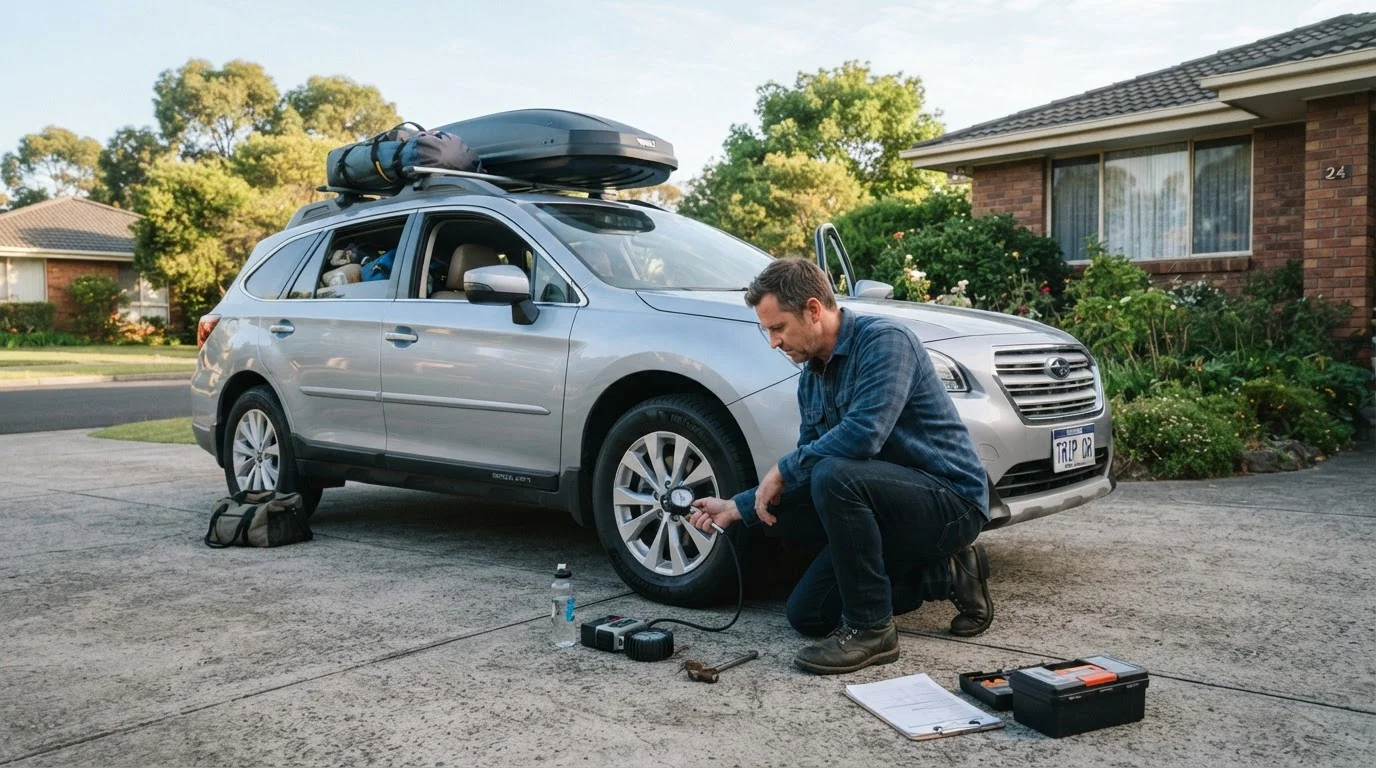
You don't need a mechanic's lift or professional equipment to run through this checklist. The items below cover everything used across all 22 checks.
Tire pressure gauge
Measures PSI in each tire accurately - digital gauges tend to be more precise than stick-style gauges.
Penny or tread depth gauge
Assesses remaining tread depth to determine whether tires are safe for highway driving.
Flashlight or work light
Illuminates the engine bay, tire sidewalls, and undercarriage areas that are hard to see in low light.
Clean rags or paper towels
Used to wipe the oil dipstick clean and check fluid colors accurately.
Owner's manual
Provides the manufacturer-specified fluid types, change intervals, and reservoir locations specific to your vehicle.
Portable tire inflator
Allows you to bring underinflated tires up to correct PSI without driving to a gas station.
Battery load tester
Tests whether an aging battery can hold a charge under real electrical demand - available at many auto parts stores as a free service.
After the Checklist: What to Do With What You Find
If every item checks out, you're ready. But if you've flagged something - a tread depth near the wear indicators, a fluid that's murky or low, a belt that looks cracked - don't rationalize it away because the trip is tomorrow. Many of these items can be addressed same-day at a shop with an opening, and a delay is far less costly than a breakdown or collision.
Don't Drive on a Known Brake or Tire Problem
If your walkthrough reveals worn brake pads, a tire below minimum tread depth, or a bulge in the sidewall, these are not items to monitor on the road - they are reasons to delay departure. Brake and tire failures at highway speed can be catastrophic. Have the vehicle inspected by a qualified mechanic before leaving. For context on how to respond if something fails while driving, see the guide to handling mechanical emergencies.
For hands-on guidance on checking fluids yourself, the driveway fluid check guide walks through each reservoir step by step. If your emergency kit isn't stocked, road trip packing essentials covers the gear experienced travelers recommend keeping on board.
Once you're confident in the vehicle, pair it with defensive driving habits to handle whatever the road sends your way. And if you'd like a broader pre-departure framework beyond the vehicle itself, the pre-trip preparation checklist covers documents, finances, and home security in one place.