

Key Takeaways
Adverse Weather Driving
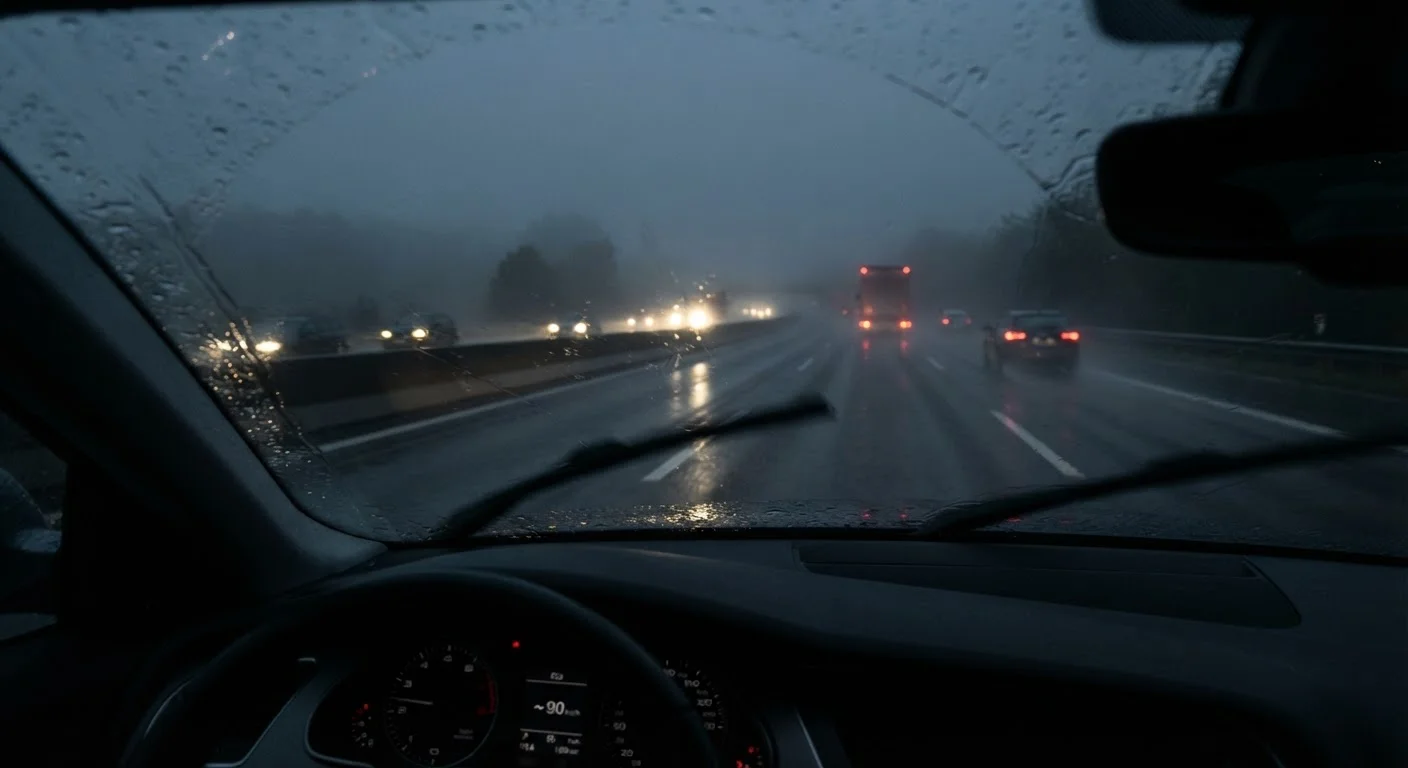
Adverse weather driving refers to operating a vehicle under conditions - rain, snow, ice, or fog - that reduce traction, visibility, or reaction time compared to dry, clear conditions. These conditions don't just make the drive less comfortable; they fundamentally change how your vehicle responds to steering, braking, and acceleration. Understanding these physical changes is the first step to adjusting your behavior appropriately.
Wet pavement can reduce tire friction by 30-40%, while black ice (a thin, nearly invisible layer of ice) can reduce it by up to 90%, according to road safety research.
How Rain Changes the Road Beneath Your Tires
Rain is the most commonly encountered form of adverse weather, and yet many drivers underestimate how much it changes the physics of driving. The most significant change is a reduction in tire grip. Water creates a film between your tire and the road surface, reducing friction and increasing the distance required to stop.
Hydroplaning - where your tires ride on a layer of water rather than contacting the road - can occur at speeds as low as 35 mph on standing water. When it happens, steering input has little effect until tires regain contact. The correct response is to ease off the gas gradually and avoid sharp steering movements.
Early rain is often the most dangerous phase. Oil and debris accumulate on dry roads and become slick when first wet, before rain washes them away. Adjust your speed before conditions worsen, not after.
Check Your Tires Before Wet Weather Arrives
Tread depth and proper tire pressure are your best defenses against hydroplaning and loss of traction. A quick check before a storm is far easier than managing a skid during one. Insert a quarter into the tread groove - if you can see the top of Washington's head, tread is wearing low and replacement should be considered.
Good tire tread depth is your primary defense against hydroplaning. The car maintenance fundamentals worth checking before wet-weather season include tread depth, tire pressure, and wiper blade condition.
Snow and Ice: When Traction Nearly Disappears
Snow and ice compound every challenge that rain presents, while adding new ones. On packed snow, braking distances roughly double compared to dry pavement. On glaze ice - particularly black ice, which is nearly invisible because it blends with the road surface - the reduction in traction is so severe that normal driver inputs can produce little or no response.
Black ice forms most commonly on bridges, overpasses, and shaded sections of road, where temperatures drop faster than on sun-exposed pavement. If surrounding air feels cold and the road appears slightly wet but your wipers are clear, slow down and test your grip gently with a light brake tap.
Winter tires (sometimes called snow tires) are specifically engineered with rubber compounds and tread patterns designed to remain pliable in cold temperatures and channel snow away from the contact patch. All-season tires are a compromise - they function in light snow but are measurably less effective in serious winter conditions.
Your vehicle's anti-lock braking system (ABS) prevents wheel lockup during hard braking, helping you maintain steering control. Traction control limits wheel spin during acceleration. Both systems help, but neither replaces appropriate speed management or adequate tires. Check our seasonal car maintenance guide for the specific checks that help your vehicle handle winter reliably.
Fog: Driving When You Can't See What's Ahead
Fog is uniquely dangerous because it creates a false sense of security. Drivers often travel faster than their visibility allows, leaving no room to stop for hazards that appear suddenly. The phrase used in road safety training is "overdriving your headlights" - moving faster than the distance your lights illuminate ahead of you.
The core rule in fog: slow down enough that you can stop within the distance you can see. If visibility drops to 100 feet, your stopping speed should reflect that margin - typically well below highway speeds.
High beams actively make fog worse. Light scatters off water droplets and reflects back toward the driver, creating a wall of glare. Use low beams, and use rear fog lights if your vehicle has them - they help drivers behind you see your vehicle.
In dense fog, turn signals, gentle braking, and predictable lane positioning matter more than usual. Other drivers are operating with impaired information too. Fog-related collisions are often multi-vehicle chain crashes, because following distances that seem adequate in clear conditions are dangerously short when visibility is measured in yards. For a comparison of how visibility hazards compound at night, see our article on night driving challenges.
Adjustments Every Driver Should Make in Bad Weather
Regardless of which adverse condition you're driving through, several principles apply consistently:
- Increase following distance. Double your gap in rain; triple it or more in snow or ice. Your reaction time doesn't change, but your stopping distance does.
- Slow down before you need to. Braking decisions made in advance are safer than emergency braking on a low-traction surface.
- Avoid sudden inputs. Smooth, gradual steering, braking, and acceleration preserve traction. Abrupt movements break it.
- Turn off cruise control. Maintaining a set speed on slippery surfaces removes your ability to modulate power in response to changing traction.
- Know your vehicle's limits. ABS, traction control, and stability control are tools - not substitutes for appropriate speed and caution.
Driver behavior is the most controllable variable in adverse weather. Vehicle preparation is a close second - worn wipers, underinflated tires, or low washer fluid can all compromise your ability to manage conditions. If you haven't reviewed your vehicle's readiness, the car maintenance section is a practical starting point.
For drivers who want to understand how risk profiles shift across different scenarios, our breakdown of highway vs. city driving risks adds useful context for applying these habits in different environments.