

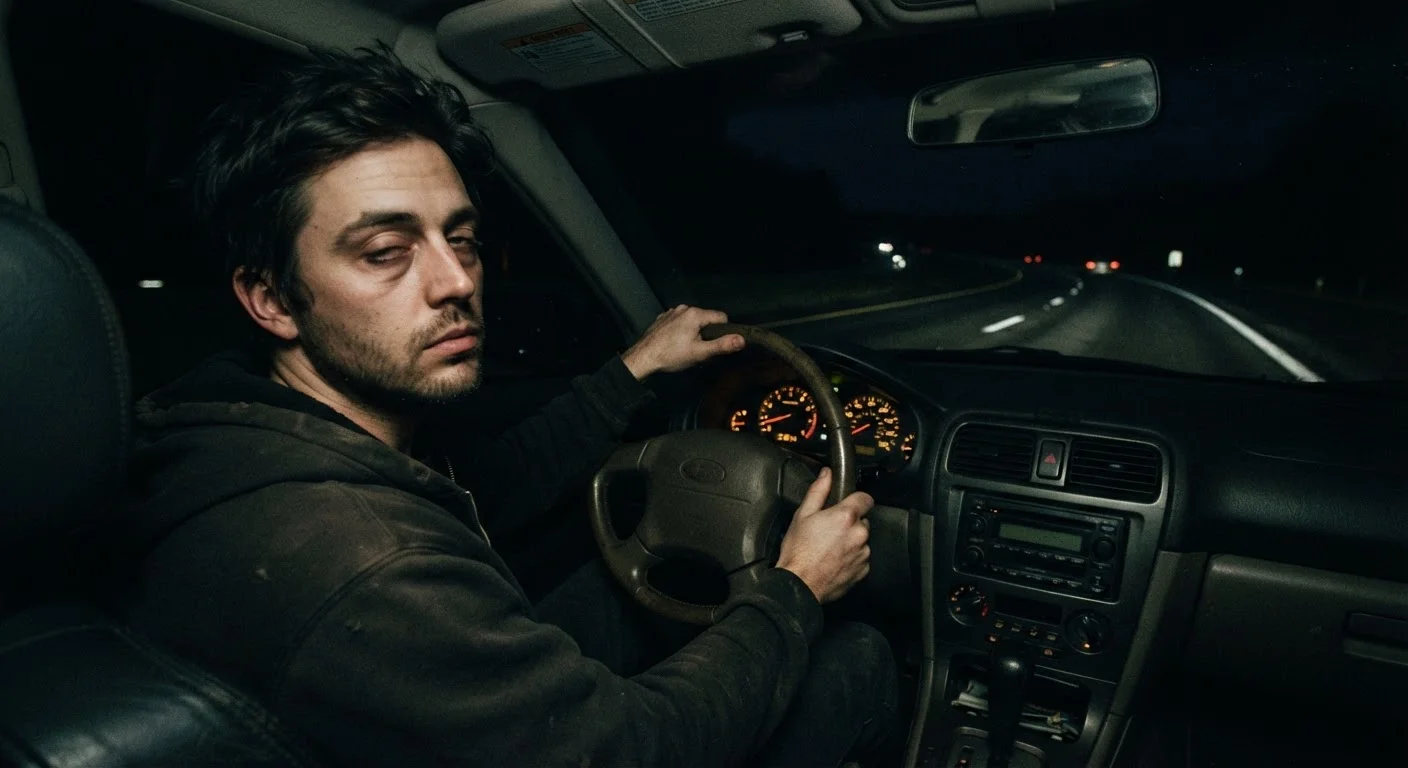
Key Takeaways
Why Drowsy Driving Is More Dangerous Than Most Drivers Realize
Fatigue behind the wheel is one of the most underreported and underappreciated road safety risks in the United States. Unlike alcohol or distraction, drowsiness is invisible to other drivers and, critically, often invisible to the driver experiencing it. Research from the National Highway Traffic Safety Administration (NHTSA) consistently links drowsy driving to tens of thousands of crashes each year - and experts believe the true numbers are significantly higher because fatigue is difficult to document at crash scenes.
What makes drowsy driving particularly dangerous is that impairment escalates gradually. Drivers rarely recognize the precise moment their judgment and reaction time begin to degrade. Combined with reduced visibility after dark, the risk compounds - see our guide to night driving challenges for more on how fatigue and darkness interact.
Myth
I can tell when I'm too tired to drive - I'll feel it coming on clearly.
Fact
Fatigue impairs self-awareness. Drivers frequently overestimate their own alertness, particularly as impairment deepens.
One of the defining characteristics of sleep deprivation is that it distorts a person's ability to accurately assess their own condition. Studies have demonstrated that moderately sleep-deprived individuals consistently rate their own alertness higher than objective performance measures indicate. By the time a driver feels dangerously sleepy, meaningful impairment has usually already set in. The absence of obvious warning signs is not evidence that you are safe to drive.
Myth
Turning up the radio or opening the window will keep me alert enough to finish the drive.
Fact
Sensory stimulation provides minimal, short-lived benefit and does not address the underlying physiological need for sleep.
Cold air and loud music may create a brief sensation of wakefulness, but research does not support these measures as reliable drowsiness countermeasures. They do not restore cognitive function or reduce reaction time. Drivers who rely on these tactics often continue driving past the point where stopping would have been the safer choice. The only physiological solution to sleepiness is sleep itself.
Myth
Drowsy driving is mostly a problem for people who pull all-nighters or work night shifts.
Fact
Anyone who is routinely sleeping less than seven hours - a common situation for many American adults - faces meaningful impairment risk behind the wheel.
While shift workers and people with untreated sleep disorders are at elevated risk, drowsy driving is not confined to extreme sleep deprivation. Cumulative sleep debt - missing even an hour or two per night over several days - degrades performance in ways that parallel acute sleep loss. Young male drivers and commercial drivers are statistically overrepresented in drowsy-driving crashes, but the condition affects drivers across all demographics.
Myth
Caffeine is a reliable fix - a strong coffee will get me through the rest of the trip safely.
Fact
Caffeine can temporarily mask the sensation of sleepiness but does not restore full cognitive function or eliminate the risk of microsleep.
Caffeine blocks adenosine receptors in the brain, which delays the subjective feeling of sleepiness, but it does not eliminate the underlying sleep debt or fully restore reaction time and judgment. It also takes roughly 20-30 minutes to reach peak effect. Importantly, caffeine cannot prevent microsleep episodes - brief, involuntary lapses into sleep lasting just a few seconds. At 65 mph, a four-second microsleep means the vehicle travels roughly the length of a football field with no driver input.
Myth
Drowsy driving isn't as dangerous as drunk driving - at least I'm conscious.
Fact
Research suggests that 18 hours of wakefulness produces impairment roughly equivalent to a blood alcohol concentration of 0.05%, and 24 hours approximates 0.10% - above the legal limit in all U.S. states.
Being awake is not the same as being functional. Studies conducted by traffic safety researchers have compared performance on driving simulators and closed-course tests between sleep-deprived and alcohol-impaired subjects, finding comparable degradation in lane-keeping, hazard response, and decision-making. Drowsy driving is also particularly dangerous because - unlike alcohol - there is no roadside test that objectively measures fatigue, making enforcement difficult and the problem easy to minimize.
Common Misconceptions That Put Drivers at Risk
Persistent myths about drowsy driving give many people false confidence. Understanding what the evidence actually shows - versus what feels intuitively true - is the first step toward making safer decisions. Drowsy driving shares important parallels with distracted driving: both degrade attention and reaction time, often without the driver fully perceiving the deficit.
Practical Steps to Reduce Your Risk
The only effective countermeasure for drowsiness is sleep. That said, there are concrete steps drivers can take to manage risk before and during a trip:
- Prioritize sleep before long drives. Adults generally need seven to nine hours per night. Starting a road trip on insufficient sleep compounds risk significantly as hours behind the wheel accumulate.
- Schedule stops every two hours or 100 miles on long trips. Brief breaks allow mental reset, even if you don't feel tired.
- Recognize high-risk windows. Crashes related to drowsiness spike between midnight and 6 a.m. and again in the mid-afternoon - when the body's circadian rhythm dips regardless of how much sleep you got the night before.
- Travel with a passenger when possible. Conversation keeps drivers more alert, and a co-pilot can monitor for warning signs the driver may not notice.
- If needed, pull over safely and nap. A short nap of 20 minutes, followed by time for caffeine to take effect, can provide a temporary boost - but should not be treated as a long-term solution on a continuous drive.
Understanding how stopping distance and reaction time change under impairment is equally important. Our breakdown of reaction time and following distance illustrates how even a one-second delay in response has serious consequences at highway speeds. For a broader look at safety-first driving habits, see our comprehensive safe driving resource.
Pull Over - Don't Push Through
If you notice repeated yawning, difficulty keeping your eyes open, drifting out of your lane, or missing exits, these are urgent warning signs - not minor inconveniences. Do not attempt to push through to your destination. Pull off at the next safe location, such as a rest area or well-lit parking lot, and rest before continuing. Fatigue-related crashes tend to be severe because an unconscious driver takes no evasive action.