

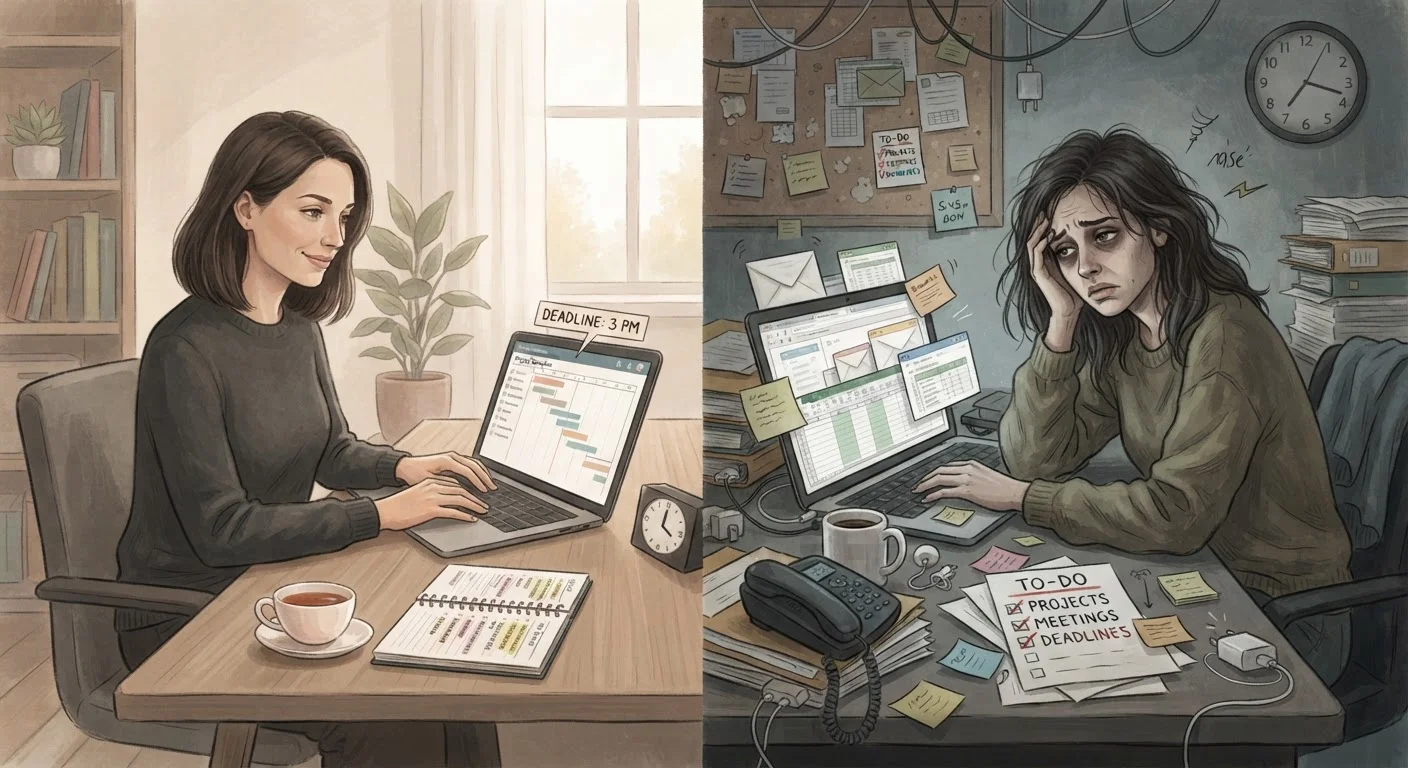
Key Takeaways
Option A
Everyday Stress
The short-term pressure that comes and goes.
Best for: Understanding manageable, time-limited tension that typically resolves on its own once the triggering situation passes.
Option B
Chronic Stress
The sustained burden that doesn't let up.
Best for: Recognizing prolonged, ongoing pressure that persists beyond the triggering event and warrants more deliberate management strategies.
If you experience occasional tension tied to deadlines, conflicts, or life events
Everyday Stress management tools
Short-term coping strategies - such as brief relaxation techniques or problem-solving - are typically well-matched to episodic stress that resolves naturally.
If your stress feels relentless, affects sleep, or has persisted for months
Chronic Stress evaluation and support
Chronic stress warrants a more structured approach and, in many cases, guidance from a licensed mental health or medical professional to assess underlying contributors.
If you want to build general emotional resilience regardless of stress type
Everyday Stress
Developing foundational habits - consistent sleep, regular movement, and social connection - strengthens your capacity to handle both acute and ongoing pressures over time.
How the Body Responds to Stress: A Quick Primer
Stress is a biological response, not just a feeling. When you perceive a threat - whether it's a looming deadline or a difficult conversation - your hypothalamic-pituitary-adrenal (HPA) axis activates, releasing hormones including cortisol and adrenaline. This response sharpens focus, raises heart rate, and prepares the body to act.
Under normal circumstances, this system is designed to switch off once the perceived threat passes. That recovery is what separates everyday stress from its chronic counterpart. When the stress response does not switch off - because the stressor is unrelenting or because the nervous system stays in a heightened state - the physiological consequences accumulate over time.
Understanding this distinction isn't just academic. It shapes which strategies are most useful and when professional support becomes genuinely important.
Everyday Stress: Normal, Temporary, and Often Useful
Everyday stress - sometimes called acute stress - is the kind most people are familiar with: the anxiety before a presentation, frustration during a traffic jam, or the mental load of juggling competing priorities. It tends to be identifiable, time-bound, and resolved once the situation changes.
Counterintuitively, some acute stress is adaptive. Research in psychophysiology has long recognized that moderate, short-duration stress can sharpen attention and improve performance on demanding tasks - a concept often described as the Yerkes-Dodson curve. The key is that recovery follows the stressor.
Common signs of everyday stress include temporary irritability, difficulty concentrating in the moment, muscle tension, or disrupted sleep on a particularly hard day. These symptoms typically subside within hours or a few days. Practical tools - a short walk, talking through a problem, or a brief breathing exercise - are often enough to restore equilibrium. For more on how physical activity supports mood, see our article on exercise and mental health.
Chronic Stress: When the Body Can't Find the Off Switch
Chronic stress occurs when the stress response remains elevated over an extended period - typically weeks to months - without adequate recovery. The sources are often persistent: financial insecurity, relationship conflict, caregiving demands, or a high-pressure work environment that never truly lets up.
The physiological impact differs meaningfully from everyday stress. Sustained cortisol elevation is associated with disruptions to immune function, cardiovascular health, sleep architecture, and metabolic regulation, according to research published across multiple disciplines of medicine and public health. Over time, the body's stress-response systems can become dysregulated, making it harder to return to baseline even when stressors momentarily ease.
| Criterion | Everyday Stress | Chronic Stress |
|---|---|---|
| Duration | Hours to a few days | Weeks to months |
| Cause | Specific, identifiable event | Persistent or unresolved stressor |
| Physiological response | HPA axis activates then recovers | HPA axis remains dysregulated |
| Common symptoms | Temporary tension, difficulty focusing | Fatigue, persistent overwhelm, mood changes |
| Resolution | Often self-resolving after situation passes | Requires deliberate, sustained intervention |
| Health impact | Minimal with adequate recovery | Associated with immune, cardiovascular, metabolic effects |
| Suggested response | Short-term coping tools, rest | Professional guidance, structured support |
Behaviorally, chronic stress often shows up as persistent fatigue, difficulty experiencing pleasure, increased irritability, changes in appetite, or a sense of being perpetually overwhelmed. Unlike everyday stress, these symptoms don't resolve after a good night's sleep or a quiet weekend.
If you recognize these patterns in your own experience, it's worth discussing them with a qualified healthcare or mental health professional. This article provides general educational information - it is not a substitute for personalized medical or psychological assessment.
Building Resilience: Practical Tools That Apply to Both
While chronic and everyday stress call for different levels of intervention, several evidence-informed habits support resilience across both. Consistent sleep is among the most well-supported: research links chronic sleep insufficiency with heightened stress reactivity, making existing stress harder to manage. Regular physical movement, even in modest amounts, is associated with lower cortisol levels and improved mood regulation over time.
Social connection also plays a documented role. Strong interpersonal support appears to buffer the physiological effects of stress - not by eliminating stressors, but by moderating the body's response to them. Small, consistent habits matter more than occasional large efforts. For a closer look at daily behaviors linked to emotional steadiness, see small daily habits that support emotional resilience.
Practices like mindfulness and structured relaxation techniques have a growing evidence base for reducing subjective stress and supporting HPA regulation. If you're exploring those options, our comparison of mindfulness vs. meditation can help clarify the differences between two commonly conflated approaches.
Workplace stress is one of the most frequently reported sources of chronic pressure for American adults. Our guide to mental well-being at work offers strategies specifically relevant to that context.
This article is for general informational and educational purposes only and is not a substitute for professional medical or mental health advice. If you are experiencing persistent or severe stress symptoms, please consult a qualified healthcare provider.