

Key Takeaways
Hydration and Nutrition
Hydration refers to the body's overall fluid balance, maintained primarily through drinking water and consuming water-rich foods. Nutrition encompasses the intake and use of nutrients from food and drink. These two systems are deeply interconnected: your hydration status influences appetite signals, digestive efficiency, and how well your body absorbs key nutrients from meals.
The hypothalamus regulates both thirst and hunger through overlapping neural pathways, which can lead to signals being misread when fluid intake is insufficient.
Why Hydration Belongs in Every Nutrition Conversation
Most nutrition discussions center on macronutrients, calorie counts, and food quality - but fluid intake sits quietly at the foundation of nearly every nutritional process in the body. Water is not just a beverage; it is the medium through which digestion happens, nutrients travel, and waste is cleared. Treating hydration as a separate topic from eating overlooks how tightly these systems operate together.
Consider that roughly 60% of the human body is water, and virtually every metabolic reaction depends on adequate fluid levels. The stomach lining, intestinal walls, and digestive enzymes all require water to function efficiently. When fluid intake falls short, the entire chain of nutrient processing is affected - often before any obvious symptoms of thirst appear.
For readers already familiar with general nutrition principles, understanding the hydration-nutrition relationship offers a practical lever for improving how the body uses the food it receives. See our guide to vitamins and minerals for a reference on which nutrients are most dependent on adequate fluid for absorption.
How Your Brain Confuses Thirst With Hunger
One of the most well-documented intersections of hydration and eating behavior involves the hypothalamus - the brain region that governs both thirst and hunger. Because these signals share overlapping neural pathways, mild dehydration can sometimes be interpreted by the brain as a hunger cue rather than a thirst cue.
The practical implication: reaching for a snack when the body is actually asking for fluids may become a pattern that nudges overall calorie intake upward without resolving the underlying deficit. This does not mean that hunger is always dehydration in disguise - but it does make a case for pausing to assess fluid intake before responding to between-meal cravings.
Check Fluid Intake Before Reaching for a Snack
If you feel hungry between meals but ate a balanced meal within the past two to three hours, try drinking a glass of water and waiting 10 to 15 minutes before eating. Because thirst and hunger signals can overlap in the brain, this simple pause can help you better assess what your body actually needs. It is not a guaranteed strategy, but it is a low-effort way to tune into your body's cues more accurately.
Research published in nutrition and physiology journals has found that drinking water before meals is associated with reduced meal size in some populations, particularly older adults who tend to have a less sensitive thirst response. The effect is modest and not universal, but it illustrates how fluid timing interacts with appetite regulation.
Beverages Beyond Water: How Drinks Shape Diet Quality
What Americans drink contributes significantly to overall dietary patterns - not just in calorie terms, but in nutritional quality. Sugar-sweetened beverages, including sodas, fruit-flavored drinks, and sweetened coffees, are among the leading sources of added sugar in the U.S. diet. Unlike whole foods that deliver sugar alongside fiber, protein, or micronutrients, these drinks offer energy with little nutritional payoff.
47%
of Americans drink a sugary beverage on any given day
According to data from the National Center for Health Statistics, roughly half of the U.S. adult population consumes at least one sugar-sweetened beverage daily.
~20%
of daily fluid intake comes from food
The National Academies of Sciences estimates that approximately 20% of total water intake in the U.S. diet comes from solid foods rather than beverages.
1-2%
body water loss before thirst is felt
Physiological research indicates that mild dehydration - as little as 1 to 2% reduction in body water - can impair cognitive performance and alter hunger perception before thirst signals become prominent.
Crucially, liquid calories tend to produce weaker satiety signals than solid food calories. The stomach does not register a 250-calorie soda the same way it registers 250 calories of a fiber-rich meal. This means beverage choices can quietly elevate total calorie and sugar intake in ways that are easy to underestimate. Our article on how added sugar hides in everyday foods explains this pattern in detail.
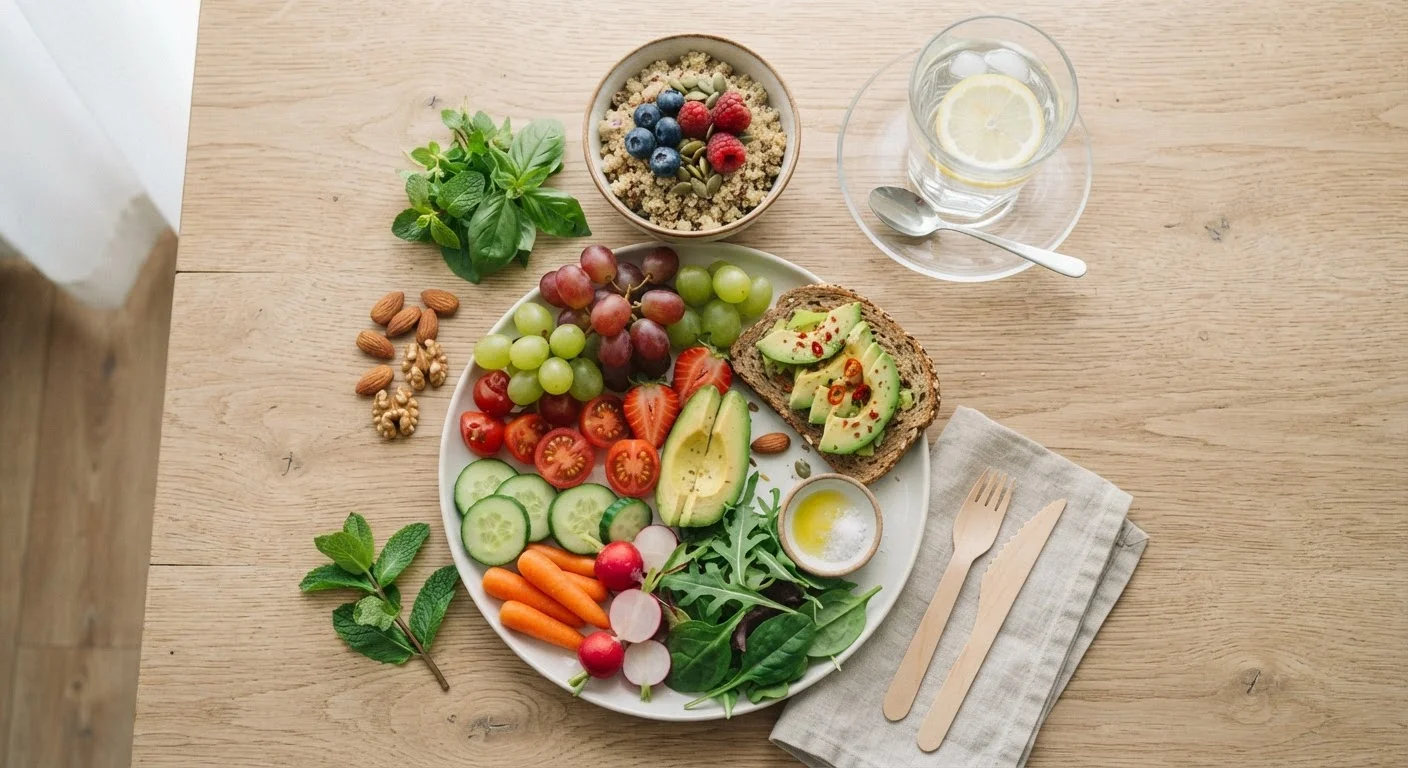
On the other side, water-rich foods - cucumbers, lettuce, citrus fruits, soups - contribute meaningfully to daily fluid intake and also bring fiber, vitamins, and minerals along for the ride. Shifting toward more whole-food sources of both nutrition and hydration creates a compounding benefit. This connects directly to patterns explored in our overview of global dietary patterns - many well-studied diets are naturally high in water-rich vegetables and low in sugary drinks.
Fluid Intake and Nutrient Absorption: The Mechanics
Water-soluble vitamins - including the B vitamins and vitamin C - rely on water as the carrier that moves them from the digestive tract into the bloodstream. Adequate hydration also supports the mucus lining of the gut, which plays a role in how efficiently nutrients are taken up through the intestinal wall.
Fiber, a nutrient that many Americans consume in insufficient amounts, depends heavily on water to function properly. Soluble fiber absorbs water to form a gel-like substance that slows digestion and supports blood sugar regulation. Without enough fluid, fiber can actually become a digestive burden rather than a benefit. For more on the relationship between fiber and digestion, see our article on why most Americans fall short on fiber.
Mineral absorption - including calcium, magnesium, and potassium - also depends on the fluid environment in the gut. Chronic under-hydration may subtly compromise the body's ability to extract these micronutrients from even a well-balanced diet.
This article is for general informational and educational purposes only and does not constitute medical or dietary advice. Individual nutrition and hydration needs vary. Consult a qualified healthcare professional or registered dietitian for guidance specific to your health situation.