

| Total essential vitamins | 13 (4 fat-soluble, 9 water-soluble) (National Institutes of Health, Office of Dietary Supplements) |
| Essential dietary minerals | At least 16 recognized as essential (National Academies of Sciences, Engineering, and Medicine) |
| Most common deficiency in the US | Vitamin D, followed by iron (CDC Second National Report on Biochemical Indicators of Diet and Nutrition) |
| Nutrient at-risk for plant-based eaters | Vitamin B12 (found almost exclusively in animal foods) (Academy of Nutrition and Dietetics) |
| Iron absorption tip | Pair plant-based iron with vitamin C to enhance absorption (NIH Office of Dietary Supplements) |
What Are Micronutrients - and Why Do They Matter?
Unlike carbohydrates, protein, and fat, micronutrients - vitamins and minerals - don't provide calories. What they do is arguably more complex: they regulate nearly every biochemical process that keeps you alive. Enzyme activity, immune defense, bone maintenance, nerve signaling, and red blood cell production all depend on a steady, adequate supply of these compounds.
Micronutrient deficiencies are far more common than most people realize. Even in a high-calorie food environment, diets heavy in ultra-processed foods can leave significant nutrient gaps. Understanding what each micronutrient does - and where to find it - is foundational to eating well.
Micronutrients
Vitamins and minerals required by the body in small amounts to support biological processes. Unlike macronutrients, they provide no calories but are essential for health.
Fat-Soluble Vitamins
Vitamins A, D, E, and K, which dissolve in fat and are stored in the body's fatty tissues and liver. Because they accumulate, excessive intake can lead to toxicity.
Water-Soluble Vitamins
Vitamins C and the eight B vitamins, which dissolve in water and are not stored in significant quantities. Excess amounts are excreted in urine, so regular dietary intake is necessary.
Trace Minerals
Minerals required in very small amounts - typically less than 100 mg per day - that are nonetheless essential for functions such as immune response, oxygen transport, and hormone production.
Bioavailability
The proportion of a nutrient that the body actually absorbs and uses from food or supplements. Bioavailability varies by nutrient form, food pairing, and individual physiology.
Daily Value (DV)
A reference figure set by the FDA used on Nutrition Facts labels to indicate how much of a nutrient a serving provides as a percentage of a general daily intake goal.
Key Vitamins: Functions and Food Sources
Vitamins are organic compounds the body cannot synthesize in sufficient quantities on its own. They are grouped by solubility, which determines how the body stores and transports them.
Fat-Soluble Vitamins (A, D, E, K)
- Vitamin A - Supports vision (especially night vision), immune function, and skin cell turnover. Found in liver, dairy, eggs, and as provitamin A carotenoids in orange and dark leafy vegetables.
- Vitamin D - Regulates calcium absorption and supports bone density, immune modulation, and muscle function. Synthesized through sun exposure; dietary sources include fatty fish, fortified dairy, and egg yolks.
- Vitamin E - Acts as an antioxidant protecting cell membranes from oxidative damage. Richest sources include sunflower seeds, almonds, wheat germ oil, and spinach.
- Vitamin K - Essential for blood clotting (K1) and bone metabolism (K2). K1 is abundant in leafy greens; K2 is found in fermented foods and some animal products.
Water-Soluble Vitamins (B Complex and C)
- B vitamins - A family of eight nutrients involved in energy metabolism, DNA synthesis, and nervous system function. Notably, B12 is found almost exclusively in animal foods, making it a concern for those following plant-based diets. Folate (B9) is critical during pregnancy for neural tube development.
- Vitamin C - Supports collagen synthesis, wound healing, iron absorption, and immune response. Citrus fruits, bell peppers, kiwi, and broccoli are excellent sources.
Essential Minerals: What Each One Does
Minerals are inorganic elements that serve structural and functional roles throughout the body. They are divided into macrominerals (needed in larger amounts) and trace minerals (needed in smaller quantities but still essential).
Macrominerals
- Calcium - The body's most abundant mineral. Critical for bone and tooth structure, muscle contraction, and nerve transmission. Found in dairy, fortified plant milks, tofu, and leafy greens like kale.
- Magnesium - Involved in over 300 enzymatic reactions, including energy production, protein synthesis, and blood pressure regulation. Legumes, whole grains, nuts, and dark chocolate are good sources.
- Potassium - Regulates fluid balance, nerve signals, and muscle contractions. Bananas, potatoes, beans, and avocados are rich sources.
- Sodium - Necessary for fluid balance and nerve function, though most Americans consume well above recommended levels through processed foods.
Key Trace Minerals
- Iron - Carries oxygen in hemoglobin. Heme iron (meat, poultry, fish) is more readily absorbed than non-heme iron (legumes, spinach, fortified cereals). Pairing plant sources with vitamin C improves absorption.
- Zinc - Supports immune function, wound healing, and taste and smell. Red meat, shellfish, seeds, and legumes supply zinc.
- Iodine - Required for thyroid hormone production, which governs metabolism and development. Iodized salt, seafood, and dairy are primary sources in the US.
- Selenium - Functions as an antioxidant and supports thyroid health. Brazil nuts, seafood, and whole grains are reliable sources.
Getting Micronutrients Through Food - and Knowing When to Ask a Professional
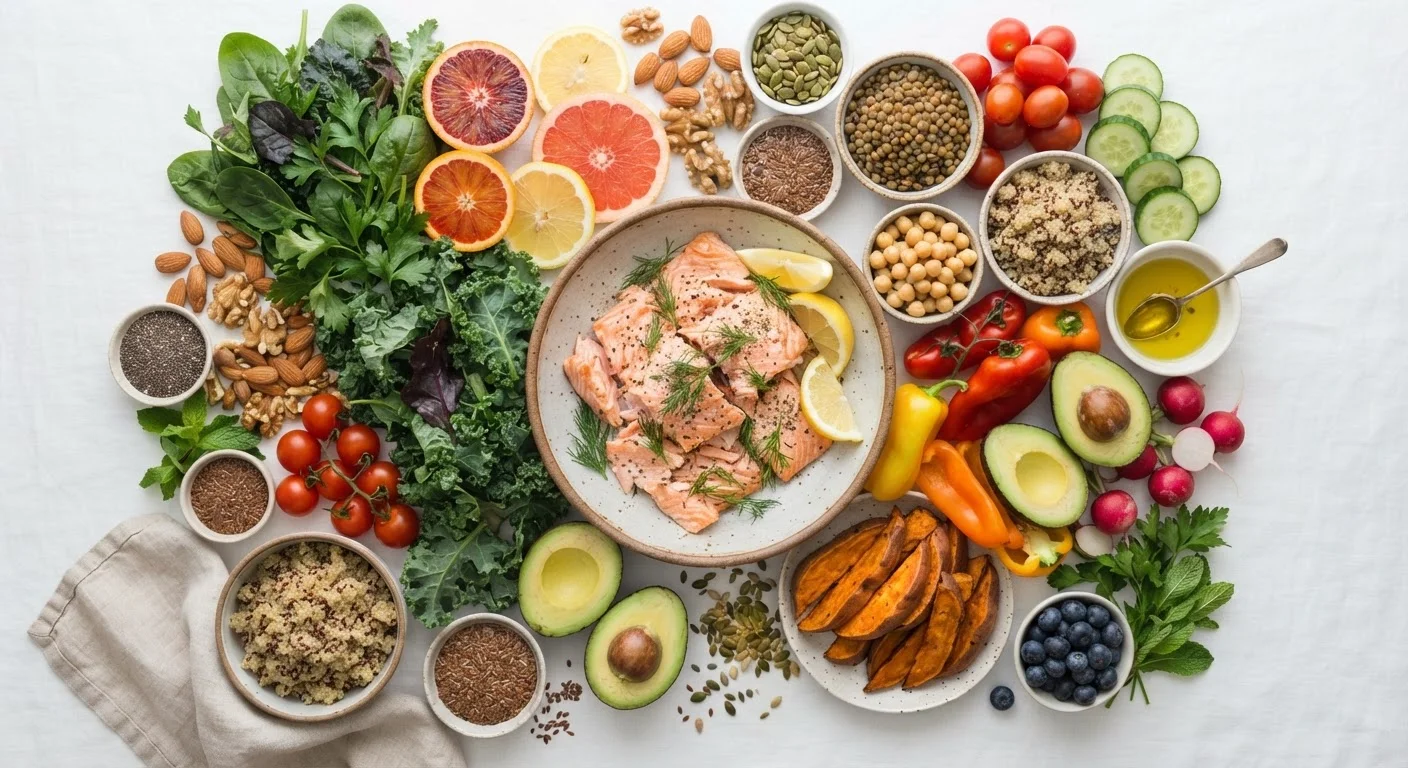
For most people, a diverse diet built around vegetables, fruits, whole grains, legumes, and lean proteins provides adequate micronutrients without supplementation. When you read a Nutrition Facts label, the % Daily Value column offers a quick gauge of how much of key nutrients a serving provides. Aim for variety across food groups rather than relying heavily on any single item.
Certain factors - including age, pregnancy, restrictive diets, gastrointestinal conditions, and specific medications - can affect how well the body absorbs or uses micronutrients. In these cases, gaps may develop that diet alone doesn't fully close. Common eating patterns can erode nutritional quality in ways that aren't always obvious.
Supplementation may be appropriate in some circumstances, but more is not always better - several micronutrients carry risks of toxicity at high doses, particularly fat-soluble vitamins. Always consult a registered dietitian or physician before starting supplements or making significant dietary changes.
This article provides general nutrition information and education only. It is not a substitute for personalized advice from a qualified healthcare professional. If you have concerns about your nutrient status or health, please speak with your doctor or a registered dietitian.