

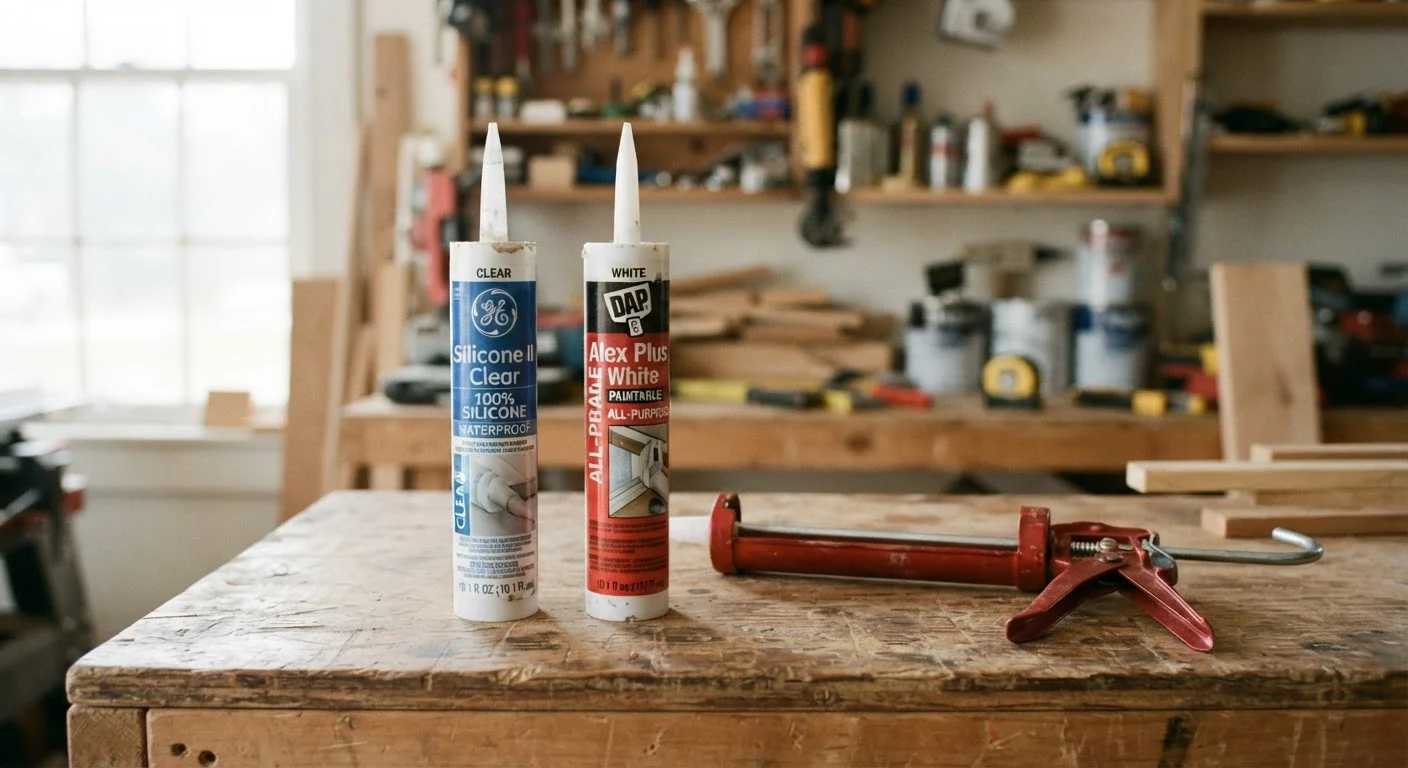
Key Takeaways
Option A
Silicone Caulk
The flexible, waterproof workhorse for wet and outdoor spaces.
Best for: Best for areas with constant moisture exposure, temperature swings, or movement - such as tubs, sinks, and exterior joints.
Option B
Latex Caulk
The paintable, easy-to-clean choice for interior gaps and trim.
Best for: Best for interior trim work, baseboards, crown molding, and drywall gaps where paintability and easy cleanup matter most.
If you're sealing around a bathtub, shower, or kitchen sink
Silicone Caulk
Silicone's waterproof bond and flexibility handle constant moisture and the subtle movement of fixtures far better than latex.
If you're filling gaps along baseboards, crown molding, or window trim
Latex Caulk
Latex accepts paint cleanly, blends seamlessly with trim finishes, and is easy to smooth with a damp finger or cloth.
If you're caulking exterior siding, window frames, or door surrounds
Silicone Caulk
Outdoor joints experience significant thermal expansion and UV exposure - silicone's elasticity and weather resistance hold up where latex typically fails.
If you're a first-time DIYer sealing interior gaps
Latex Caulk
Latex is forgiving to apply, easy to smooth with water, and straightforward to paint over - making it the more beginner-friendly option for low-moisture interior work.
What Makes Silicone and Latex Caulk Different
At the hardware store, silicone and latex caulk tubes look nearly identical. The real differences show up after application - in how each material bonds, flexes, and weathers over time.
Silicone caulk is made from a synthetic rubber compound. Once cured, it remains permanently flexible, which means it can stretch and compress as surfaces expand and contract with temperature changes or structural settling. It creates a waterproof bond that holds up against standing water, humidity, and UV exposure. The trade-off: silicone does not accept paint, is more difficult to tool neatly, and requires mineral spirits or a dedicated solvent for cleanup.
Latex caulk (also called acrylic latex or painter's caulk) is water-based and acrylic-modified. It's easier to apply, smooths out with a wet finger, and cleans up with soap and water. Most importantly for finish work, it can be painted over once cured. However, latex is less flexible than silicone and breaks down faster when exposed to prolonged moisture or outdoor conditions.
| Criterion | Silicone Caulk | Latex Caulk |
|---|---|---|
| Flexibility after cure | Highly flexible | Moderate flexibility |
| Water resistance | Excellent - fully waterproof | Moderate - not for wet zones |
| Paintable | No | Yes |
| Cleanup | Mineral spirits / solvent | Soap and water |
| Best interior use | Tubs, sinks, showers | Trim, baseboards, drywall |
| Best exterior use | Windows, doors, siding | Limited - cracks in extremes |
| Ease of application | Moderate - less forgiving | Easy - beginner-friendly |
| Mold resistance | High (especially bath formulas) | Lower in humid conditions |
Matching Caulk to the Right Location
The single most important factor in choosing caulk is where it's going. Here's how to think through common household applications:
Wet Areas: Bathrooms and Kitchens
Around tubs, showers, and sinks, silicone is the clear choice. These surfaces are constantly wet, and the joint between a tub and tile wall flexes slightly every time someone steps in. Latex caulk in these spots tends to peel or mold within a year or two. Pure silicone or a siliconized hybrid caulk formulated for kitchens and baths holds its bond significantly longer.
Interior Trim and Drywall
Baseboards, crown molding, window casings, and gaps where drywall meets trim are ideal candidates for latex caulk. These areas stay dry, don't move much, and will be painted - exactly the conditions latex handles well. Trying to paint over pure silicone in these spots leads to peeling paint down the road.
Exterior Applications
Window frames, door surrounds, and siding joints face temperature swings that can be dramatic - sometimes 60°F or more between seasons. Latex caulk becomes brittle and cracks under that stress. Silicone or a high-quality siliconized hybrid holds its elasticity and keeps the weatherproof seal intact. If you've had trouble with caulk cracking on exterior surfaces, see our guide to why caulk cracks for a deeper look at the causes.
Application Tips That Apply to Both Types
Regardless of which caulk you choose, a few best practices determine whether the repair lasts or fails quickly.
- Remove all old caulk first. Applying new caulk over old is one of the most common mistakes homeowners make. The new material won't bond properly to the existing layer, and you'll see failure much sooner.
- Clean and dry the surface. Both silicone and latex need a clean, dry substrate. Moisture or residue interferes with adhesion, especially for silicone.
- Cut the tube tip at a 45-degree angle to match the width of the joint. A smaller opening gives you more control.
- Tool the bead immediately. Latex can be smoothed with a wet finger; silicone is best tooled with a dry finger or a caulk-finishing tool before it begins to skin over.
- Allow full cure time before exposing to water. Silicone typically cures in 24-48 hours; latex can take longer in humid or cold conditions. Check the product label for specifics.
~2 years
Typical lifespan of latex caulk in wet areas
Industry guidance generally suggests latex caulk in high-moisture zones like tubs may begin failing within one to two years without proper surface prep.
20+ years
Potential lifespan of silicone in low-movement joints
When properly applied to a clean, dry substrate, silicone caulk can maintain an effective seal for two decades or more in stable conditions.
60°F+
Temperature swing exterior joints must handle
Many U.S. climates see seasonal temperature ranges that cause significant joint expansion and contraction, requiring flexible caulk to prevent cracking.