

Key Takeaways
Our Verdict
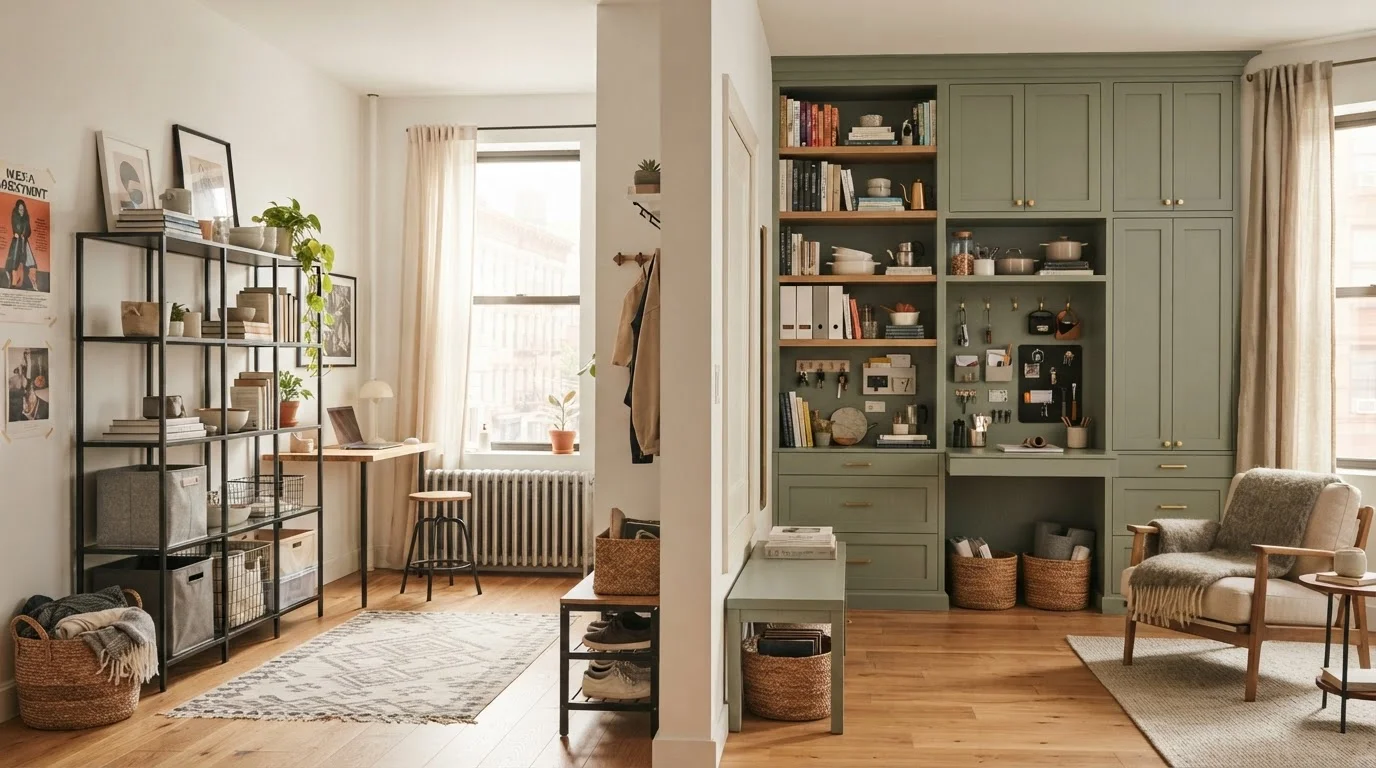
Neither renting nor owning is inherently better for achieving an organized home - the key is aligning your organizational investments with your actual constraints. Renters should lean into portable, modular solutions that adapt to changing spaces, while homeowners have the freedom to commit to permanent systems that grow with their needs. In both cases, the foundational work of decluttering and habit-building matters more than the tools you choose.
| Best for | Recommended |
|---|---|
| Those in short-term rentals or planning to move within a few years | Renter-focused portable and modular strategies |
| Long-term homeowners with stable space and layout | Homeowner-focused permanent built-in systems |
| Long-term renters who want more function without violating their lease | Non-destructive permanent-feel solutions (tension rods, freestanding shelving) |
Why Your Housing Status Changes Everything
When most people tackle home organization, they focus on systems, bins, and labels. What they often overlook is one of the most fundamental variables: whether they own or rent their space. That distinction shapes what you can physically alter, how much it makes sense to spend, and how permanent your solutions should be.
A homeowner can drill into studs, install built-in shelving, or remodel a closet without asking anyone's permission. A renter must work within lease restrictions, often returning the unit to its original condition when they leave. These aren't minor logistical details - they're the organizing framework for your entire strategy. Before you invest in any system, ask yourself two questions: How long will I be here? and What am I allowed to change? The answers should guide every decision that follows.
For a solid foundation regardless of your status, consider starting with the decluttering-first approach - reducing what you own before committing to any storage infrastructure.
Organizing as a Renter: Working Within Constraints
Renters face a fundamental tradeoff: the desire for a functional, organized home versus the reality that permanent changes are typically off-limits. The good news is that constraint breeds creativity, and there are genuinely effective approaches that don't require a single nail hole.
Lean Into Portability
Every organizational purchase you make as a renter should pass a simple test: Can this move with me? Freestanding shelving units, rolling carts, over-door organizers, and stackable bins are all portable assets. They serve you now and follow you to your next place - which means your investment compounds over time rather than getting left behind.
Use Vertical Space Without Damaging Walls
Tension-mounted poles, pressure-fit shelving systems, and adhesive hooks rated for smooth surfaces let you take advantage of vertical space without violating your lease. Read product specifications carefully and always stay within the stated weight limits. When in doubt, test adhesive solutions in an inconspicuous spot first.
Think in Zones, Not Rooms
Renters often can't reconfigure rooms structurally, but they can create functional zones within a room using furniture placement, rugs, and portable dividers. A bookshelf can serve as both storage and a room divider. A rolling kitchen cart can add counter prep space that disappears when needed.
Renter's Rule of Thumb for Purchases
Before buying any organizational product, ask: 'Will this work in a different-sized space?' If the answer is no, reconsider. Adjustable-width items, stackable units, and modular systems are almost always worth the small premium over fixed-dimension alternatives. This single habit can save you significant money and frustration across multiple moves.
For renters with small or awkward spaces, the comparison of vertical storage vs. drawer systems can help you choose between competing approaches without wasting money on the wrong solution.
Organizing as a Homeowner: Thinking Long-Term
Homeownership gives you a significant advantage in organization: permanence. When you know you'll be in a space for five, ten, or twenty years, it becomes rational to invest in systems that are built into the home itself. These aren't just aesthetic improvements - they're functional infrastructure that can make daily life measurably easier over the long run.
Built-Ins Earn Their Cost Over Time
Custom closet systems, garage wall storage, built-in mudroom benches, and kitchen cabinet organizers are all investments that pay dividends in daily convenience. Unlike freestanding furniture, they're calibrated exactly to your space. The upfront cost is real, but it's spread across years of use - and in many cases, well-designed built-ins can be a modest positive factor in resale value, though outcomes vary.
Invest in Infrastructure, Not Just Products
Homeowners often fall into the same trap as renters: buying containers and bins before addressing the underlying layout. Before spending on storage products, evaluate whether the space itself is working efficiently. Could a wall be opened up? Would a different cabinet configuration make more sense? These structural questions are available to you as an owner - take advantage of them.
The room-by-room home organization walkthrough is a useful resource for systematically evaluating each space in your home before committing to solutions.
Plan for Seasonal and Life-Stage Changes
Homeowners tend to accumulate more - tools, holiday decorations, sports equipment, children's belongings - and a good organizational strategy accounts for how storage needs will shift over time. Design systems with adjustable shelving and adaptable zones rather than rigid, single-purpose setups.
| Renters | Homeowners | |
|---|---|---|
| Wall modifications | Generally restricted by lease | Freely permitted |
| Best storage approach | Portable, freestanding, modular | Built-in, permanent, structural |
| Investment horizon | Short to medium term | Long term |
| Key flexibility tool | Mobility - systems move with you | Adaptability - systems grow with the home |
| Primary constraint | Lease terms and landlord approval | Budget and structural limitations |
| Decluttering priority | Critical - less space to absorb excess | High - prevents over-storage infrastructure |
Common Mistakes Both Renters and Homeowners Make
Regardless of housing status, several organizational missteps are nearly universal. Understanding them helps you avoid wasted effort and money.
- Buying storage before decluttering: Containers and shelving can't fix a volume problem. Reduce first, then organize what remains.
- Optimizing for appearance over function: A beautifully photographed pantry with matching labels is useless if the system collapses after one grocery run. Prioritize practical daily workflows.
- Over-investing in rigid systems: Life changes - family size, hobbies, work situations. Build in flexibility wherever possible.
- Ignoring habits: An organizational system only works if everyone in the household can and will use it. Simpler systems maintained consistently outperform elaborate ones that get abandoned.
For a deeper look at advice that backfires, the organization myths that make clutter worse article separates fact from popular fiction. And if you want to understand the methodology behind truly effective organizing, what professional organizers actually do differently is worth reading before you begin any major project.