

Key Takeaways
Start with a Strategy, Not a Shopping Cart
Most home organization attempts stall out because homeowners skip straight to buying bins and baskets before understanding what they actually need to store. Effective organization is a two-step process: declutter first, then organize what remains.
If you're new to the process, the beginner's guide to getting started explains how to build momentum from scratch. Before touching a single drawer, read through why the order of decluttering and organizing matters - skipping this step is the most common reason organized spaces don't stay that way.
The walkthrough below tackles each room with a zone-based approach: group items by how they're used, not just by category. This keeps daily routines smooth and reduces the time spent searching for things.
Audit Before You Organize
Before buying a single storage product, take a full inventory of what you own in each room. Many homeowners find they already have adequate storage - they just have too many items competing for that space. Use the whole-house declutter audit as a starting checklist.
Kitchen: Taming the Busiest Room
The kitchen sees more daily activity than any other room, which is why it collects clutter so quickly. Start near the stove and work outward. Cooking tools, oils, and spices belong within arm's reach of the cooktop. Baking supplies can live in a lower cabinet or pantry since they're used less frequently.
- Countertops: Keep only daily-use appliances out. Everything else earns cabinet space - or a donation box.
- The junk drawer: Contain it to one drawer with a simple tray divider. If an item doesn't fit a clear purpose, it probably doesn't belong in the kitchen.
- Pantry and cabinets: Group by meal type (breakfast, snacks, baking) and use clear containers for dry goods so you can see inventory at a glance.
- Under the sink: Use a tension rod to hang spray bottles; stack cleaning products by type on a small shelf riser.
Expired food and duplicate tools are the two biggest kitchen culprits. Pull everything out of one cabinet at a time so the task stays manageable.
25%
Of homes have a garage used mainly for storage
According to a U.S. Department of Energy survey, roughly one in four homes with a garage cannot fit a car inside due to stored items.
40%
Of housework eliminated by reducing clutter
Research from the National Soap and Detergent Association has suggested that reducing household clutter could eliminate a significant portion of routine cleaning tasks.
Bedrooms and Closets: Creating Calm Spaces
Bedrooms function best when they support rest - which means surfaces should stay clear and storage should be intuitive. Begin with the closet before addressing the room itself, since an overstuffed closet forces overflow onto chairs and floors.
Closet Organization
- Hang clothes by category (tops, bottoms, dresses) and within each category by color. This makes outfits easier to build and returns easier to put away.
- Fold and stack items like jeans, sweaters, and workout gear vertically in drawers rather than stacking them flat - you can see every item without disturbing others.
- Use shelf dividers for sweater stacks and stackable bins for accessories.
Bedroom Surfaces
A nightstand should hold only what you actually reach for at night: a lamp, phone charger, one book. Everything else is visual noise that disrupts sleep quality. Under-bed storage works well for seasonal items in low, flat bins - but label every bin clearly so you're not excavating in December.
For a thorough room-by-room audit, the whole-house declutter checklist provides a structured framework you can work through systematically.
Bathroom: Small Space, Big Impact
Bathrooms have limited square footage but tend to accumulate an outsized number of products. The goal is ruthless editing combined with vertical storage.
- Under the vanity: Use a two-tier shelf or pull-out organizer to maximize depth. Group by person or by category (hair care, skin care, first aid).
- Medicine cabinet: Purge expired medications regularly. Store medications safely and check with your local pharmacy about proper disposal programs for old prescriptions.
- Shower and tub area: A tension-rod caddy or corner shelf keeps products off the floor and tub ledge. Limit each person to their own basket if multiple people share the space.
- Towels and linens: Roll towels to save shelf space and make it easy to grab one without toppling a stack.
Don't Store What You Don't Use
One of the most common bathroom organization mistakes is creating elaborate systems around products that are rarely or never used. Before organizing, edit your collection honestly. Expired products, duplicates, and items you don't enjoy should be discarded or donated - not rearranged into a new bin.
Living Areas and Entryways: First Impressions
The entryway sets the tone for the whole home and is also the most likely place for clutter to accumulate because it's a transition zone. A few dedicated spots - a hook for keys, a tray for mail, a bench with shoe storage - can eliminate the daily chaos of searching for items on the way out.
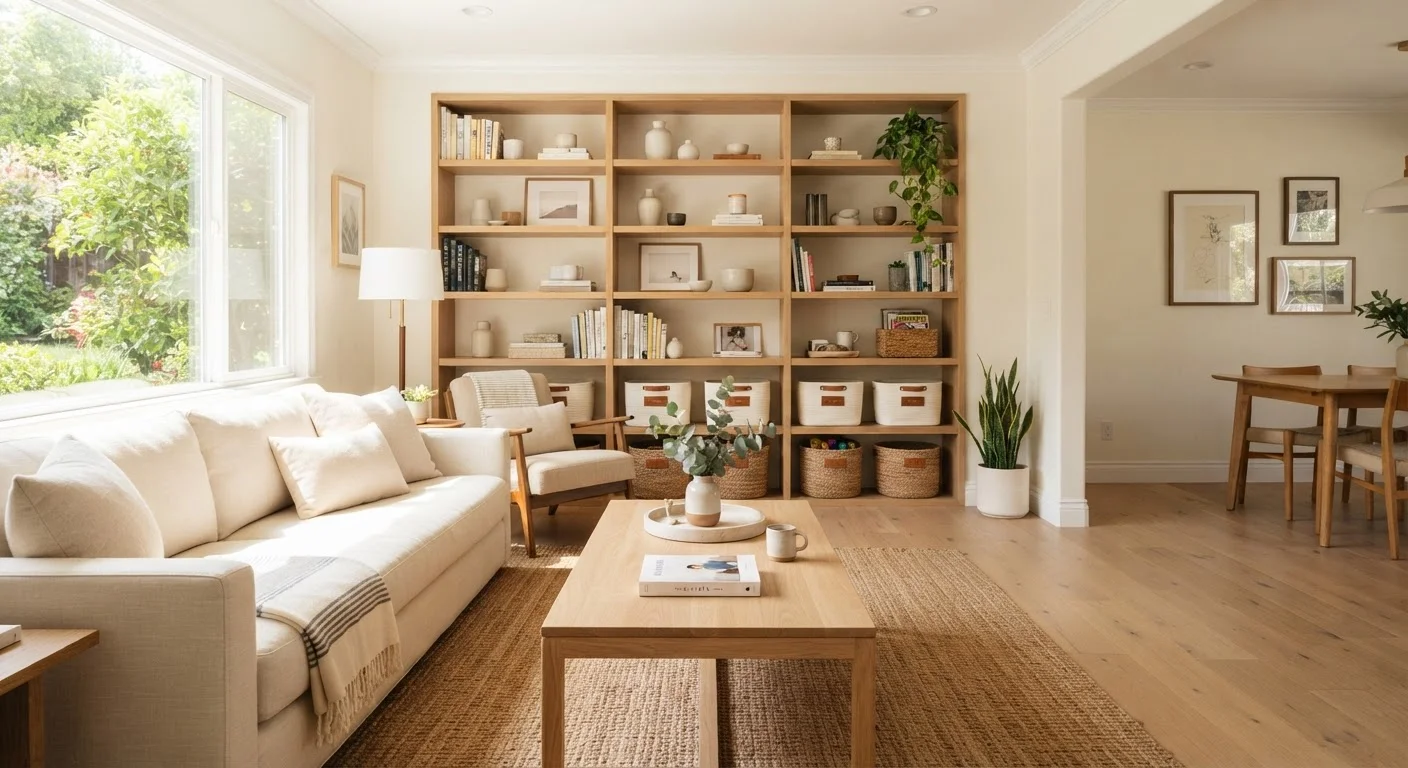
In the living room, think in activity zones: a media zone, a reading zone, and a conversation zone. Each zone should have nearby storage for the items it requires. Remotes live in a small tray by the couch. Books and magazines get a basket or shelf within reach of the reading chair. Toys, if applicable, belong in a dedicated bin that closes.
For households weighing whether to go minimal or invest in more storage furniture, consider reading about the trade-offs between minimalist and traditional storage approaches before purchasing anything new.
What professional organizers do differently often comes down to this: they assign every item a home before they put it back. That single habit, applied consistently in living areas, prevents the gradual drift back into disorder.
Garage and Storage Areas: The Final Frontier
The garage is typically the last room tackled and the hardest to maintain. It serves multiple functions - parking, workshop, seasonal storage - which is exactly why it needs deliberate zoning more than any other space.
Define zones before moving anything: automotive, lawn and garden, tools, sports equipment, seasonal items. Once zones are mapped, use wall space aggressively with pegboards, wall-mounted racks, and overhead platforms for rarely used items. Heavy items go on lower shelves; lighter bins go up high.
A detailed, step-by-step approach to the garage is covered in the garage organization walkthrough, which addresses sorting, zone planning, and long-term maintenance in depth.
Across all rooms, the single most powerful organizing habit is this: put things back in their designated spot every time. Organization isn't a one-time project - it's an ongoing practice. Start with one room, get it working well, and let that success carry you into the next.
When organizing any room, finish one complete zone - empty it, edit it, and return only what belongs - before moving to the next. Half-finished zones create more visual chaos than you started with.
Partial organization is one of the top reasons homeowners feel their efforts didn't work. Completing zones in full creates visible, motivating results.
Label everything, even if it feels obvious now. Categories that seem intuitive to you may not be clear to other household members, and labels are what make shared systems actually stick.
A system only works if everyone in the household can use it independently. Labels reduce friction and eliminate the 'where does this go?' question entirely.