

Key Takeaways
Start here
Why Most First Attempts at Organizing Fail
Next
Declutter First, Organize Second
Then
Choosing Your Starting Point
When you're ready
Basic Tools and Supplies Worth Having
Keep going
Building Habits That Actually Stick
Why Most First Attempts at Organizing Fail
Most people approach home organization backward. They feel motivated, grab a dozen storage bins, and start rearranging - only to end up with the same mess now sorted into labeled containers. The core problem isn't willpower or time. It's sequence.
Effective organization requires removing what doesn't belong before deciding where everything else should live. Skipping that step means you're just relocating the problem. Understanding this upfront will save you frustration and wasted effort.
A second common trap: trying to do too much at once. The ambition to "organize the whole house this weekend" rarely leads to a finished result. It more often leads to piles of displaced items, half-sorted rooms, and a project that gets quietly abandoned. Sustainable organization is built incrementally, not in a single sprint.
Decluttering
The process of removing items you no longer need, use, or want from your home - always done before organizing begins.
Zone
A defined area of your home - such as a single drawer, shelf, or room - that you organize as one discrete unit.
One-in-one-out rule
An organizing principle where one item leaves the home each time a comparable new item comes in, keeping quantity stable.
Nightly reset
A brief daily routine of returning items to their designated places to prevent small messes from accumulating into larger ones.
Designated spot
A specific, consistent location assigned to each item in your home so it always has a clear place to be returned to.
Declutter First, Organize Second
Before you arrange a single shelf or buy a single bin, go through what you own. The goal is to reduce the volume of items so that what remains genuinely earns its place in your home.
A simple sorting method: work through one area at a time and place items into four categories - keep, donate, discard, or relocate. Be honest. If you haven't used something in over a year and it holds no practical or meaningful value, it's a strong candidate for removal.
For a deeper look at why this order matters so much, see our guide on why decluttering before organizing is essential. Paper items deserve special attention - they accumulate quickly and are easy to ignore. Going paperless at home is one practical strategy worth considering early in the process.
Choosing Your Starting Point
Once you've committed to decluttering first, pick your first zone carefully. Choose somewhere small and self-contained - a bathroom cabinet, a kitchen junk drawer, or a hallway closet shelf. The purpose is to create a visible win that reinforces the process.
Avoid starting with emotionally loaded spaces like storage boxes of old photos or inherited items. Those categories require more decision-making energy and are better tackled once you've developed confidence with lower-stakes areas.
After you've worked through a few smaller zones, you'll be ready to scale up. Our room-by-room organization walkthrough is a natural next step, covering every major space in the home with practical strategies for each. If you're also weighing a minimalist approach against traditional storage, comparing the two philosophies can help you decide what fits your household.
Take a Before Photo of Each Zone
Snap a photo of a space before you touch it. Seeing the visual contrast once you're done is genuinely motivating - and it helps you evaluate what's working if you need to revisit a space later. It also holds you accountable to actually finishing each zone before moving on.
Basic Tools and Supplies Worth Having
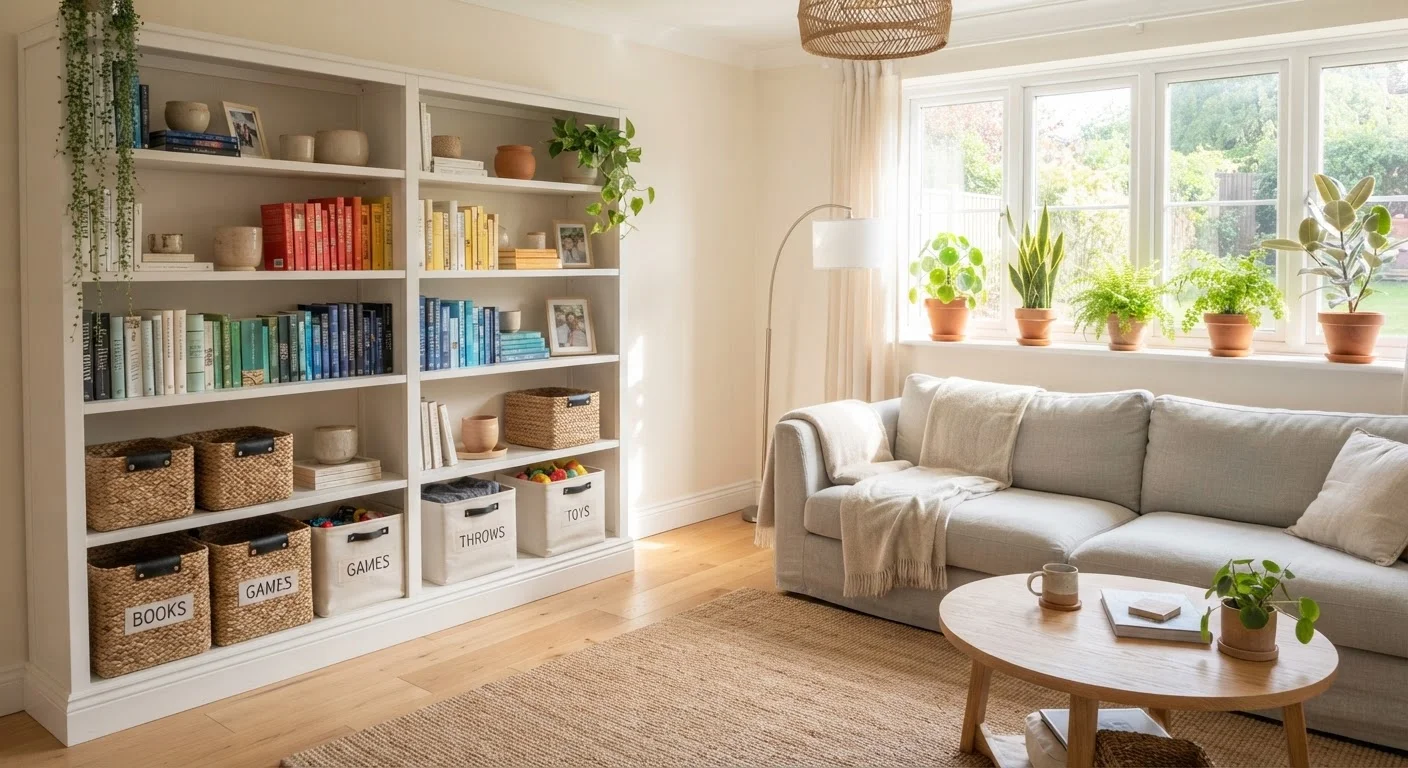
You don't need a large budget or a specialty store haul to get organized. A few functional supplies go further than a cart full of decorative containers.
- Clear bins or baskets in a few sizes - visibility helps you actually use a system.
- A label maker or adhesive labels - labeled homes are easier for every member of the household to maintain.
- Drawer dividers - especially useful in kitchens and bathrooms where small items tend to pile up.
- Hooks and over-door organizers - add storage without requiring tools or structural changes.
The rule of thumb: measure your spaces and assess what remains after decluttering before purchasing anything. Buying containers first is one of the most common and costly beginner mistakes.
Note that home organization doesn't have to strain your finances. If you're thinking carefully about household spending alongside your organizing project, a solid foundation in household budgeting can help you plan purchases intentionally.
Building Habits That Actually Stick
Setting up an organized space is only half the job. Keeping it that way requires small, repeatable habits woven into everyday routines.
A few practices that make a measurable difference:
- The one-in-one-out rule: When something new comes into the home, something comparable leaves. This prevents accumulation from undoing your work. For more organizing principles like this, see commonly used organizing concepts.
- A nightly reset: Spend 5-10 minutes returning items to their designated spots before bed. This prevents small messes from compounding overnight.
- Regular micro-sessions: A 20-minute tidy once or twice a week is more effective than waiting for things to spiral before intervening.
Maintaining specific spaces, like closets, benefits from a targeted approach. Keeping a closet organized after sorting it walks through the habits that prevent backsliding in one of the home's most frequently disrupted areas.
Starting from zero is never as daunting as it looks once you're in motion. Break it into small steps, follow the right sequence, and build on each small success - that's the foundation of a genuinely organized home.