

| Best rule for frequent shoppers | One-In-One-Out |
| Best rule for active decluttering | 20/20 Rule |
| Best principle for shared spaces | Zone Organization |
| Prevents accumulation by design | Container Constraint |
| Recommended starting approach | One rule, one area at a time |
What Organizing Principles Actually Are
Organizing principles are decision-making frameworks - repeatable rules that help you determine what to keep, where to put things, and how to maintain order over time. They're not brand-specific systems or one-size-fits-all prescriptions. Instead, they're mental shortcuts that make consistent organizing easier, especially when you're overwhelmed by too much stuff or too little space.
If you're new to tackling clutter, our guide on getting started with home organization covers the foundational habits before you dive into specific rules. Once you understand why these principles exist, applying them to any room becomes much more intuitive.
One-In-One-Out Rule
A guideline that requires removing one item from your home for every new item that comes in. It prevents gradual accumulation by keeping total possessions stable.
20/20 Rule
A decluttering heuristic suggesting that items replaceable for under $20 and within 20 minutes can be released without guilt. It reduces anxiety around letting go of rarely used possessions.
Zone Organization
A storage method that groups items by the activity they support rather than by object type alone. Everything needed to complete a task is kept together in one designated area.
Container Constraint
The principle that the physical size of a storage container defines your limit for that category. When the container is full, something must leave before anything new is added.
Like With Like
Storing all items of the same type together in one location, regardless of where they are used. This makes inventory visible and reduces duplicate purchases.
Decision Fatigue
The mental exhaustion that results from making too many choices. Good organizing systems reduce daily decisions by giving every item a predictable home.
Core Organizing Rules, Explained
The One-In-One-Out Rule
For every new item that enters your home, one comparable item leaves. Buy a new sweater? Donate an old one. Add a kitchen gadget? Remove one you rarely use. This rule prevents slow accumulation - the kind you barely notice until a closet won't close. It works best when applied consistently rather than only during big purges.
The 20/20 Rule
If you can replace an item for under $20 and in under 20 minutes, it's generally safe to let it go. This rule counters the common fear of getting rid of something you might someday need. It's particularly helpful for duplicates, obscure tools, and single-use gadgets that take up space year-round for occasional use.
Zone Organization
Zones group items by activity rather than by category alone. Your "bill-paying zone" holds stamps, envelopes, and pens together - not scattered between a desk drawer and a kitchen shelf. Zones reduce decision fatigue because everything needed for a task lives in one place. This principle underlies most effective kitchen and garage layouts.
Like With Like
Similar items are stored together, regardless of where you use them. All batteries in one drawer. All wrapping supplies in one bin. This makes inventory obvious - you know what you have before you buy more. It also makes restocking and tidying faster because everything has a defined home.
The Container Constraint
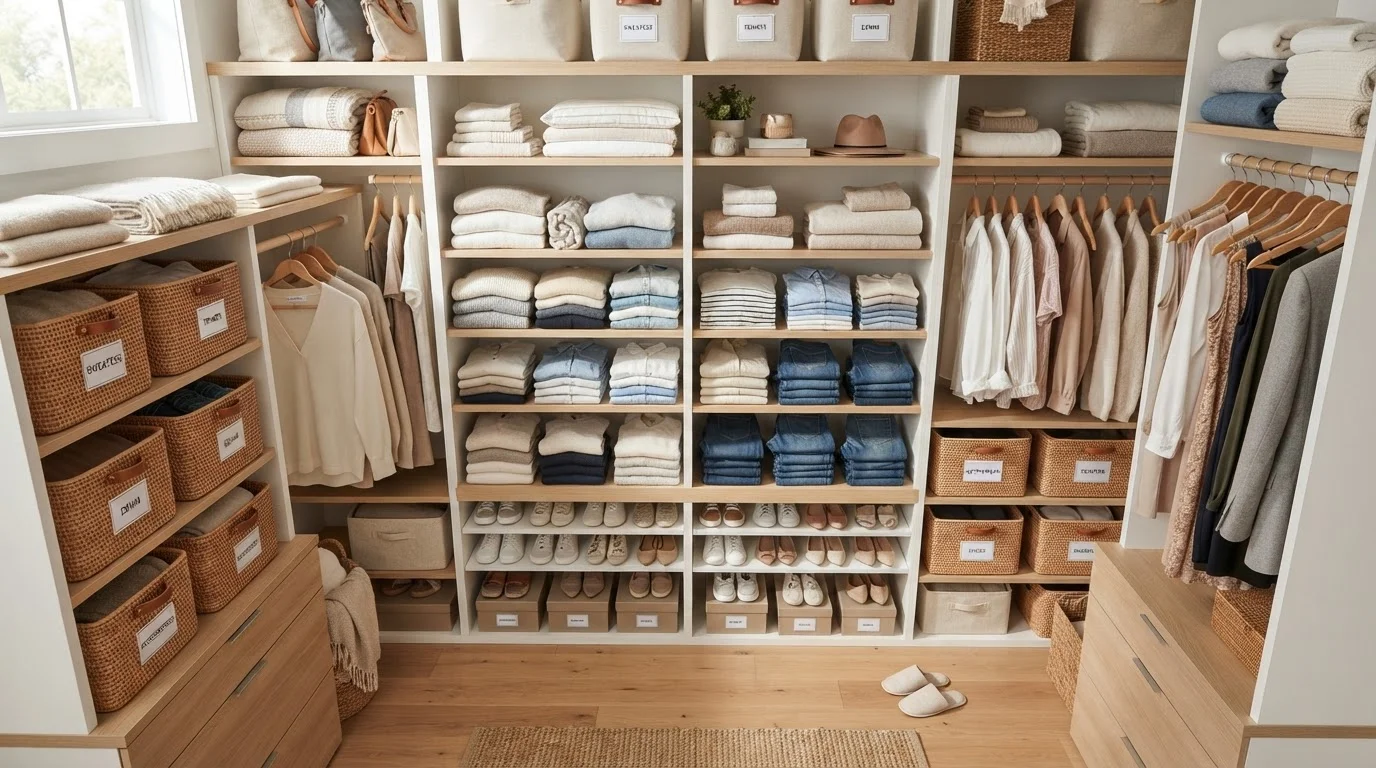
Your storage container sets the limit. If your linen closet shelf holds six towels, you own six towels. When a container is full, you must remove something before adding something new. This is the physical version of the one-in-one-out rule and prevents accumulation by design rather than willpower.
For a practical walkthrough of how these principles apply room by room, see our room-by-room home organization guide.
Choosing the Right Principle for Your Space
Not every rule suits every household. The one-in-one-out rule requires consistent follow-through - it works well for people who shop frequently but struggle during seasonal purges. Zone organization is most valuable in high-traffic shared spaces like kitchens, mudrooms, and home offices. The 20/20 rule is best used during active decluttering sessions when you're deciding what to release.
Before committing to any organizing philosophy, it's worth understanding why decluttering before organizing matters - skipping that step is one of the most common reasons systems fail. You can also explore how these principles compare across different approaches in our look at minimalist versus traditional organizing.
Start with one rule in one area. Consistency in a small space builds the habit more effectively than attempting a whole-home overhaul in a single weekend.