

Key Takeaways
Why Organized Closets Fall Apart
You spent a weekend sorting, folding, and finding a home for everything. Two months later, the closet looks worse than before. This is one of the most common frustrations homeowners face - and it's rarely about willpower or effort.
The root cause is almost always a missing maintenance system. A one-time organization session creates order but doesn't build the habits or structures that preserve it. Without those, a closet naturally drifts back toward chaos because everyday life is fast, attention is limited, and items get dropped rather than placed.
Understanding this distinction - between a tidy closet and a self-sustaining closet - is what separates a lasting result from a temporary fix. If you're just getting started with organizing your home more broadly, see our beginner's guide to home organization for foundational habits worth building from the start.
Best Practices for Long-Term Closet Maintenance
These proven approaches address the specific ways closets tend to unravel - and give you reliable systems to keep order intact.
Designate a specific home for every item before closing the closet after a sort.
Items without a fixed location always migrate to flat surfaces or the floor. When every object has an assigned spot, returning it requires no decision-making - which is the biggest barrier to consistent tidiness.
Apply a one-in, one-out rule whenever something new enters the closet.
Closets fill slowly, item by item, until capacity is exceeded and the system collapses. Limiting inflow keeps the space from overloading, which is the most common reason organized closets deteriorate.
Schedule a 15-minute monthly reset rather than waiting for disorder to build.
Small drifts - a misplaced shoe, a few unfolded items - are easy to fix in minutes but become overwhelming if left for months. Regular micro-resets prevent the accumulation that triggers full re-organization.
Rotate seasonal items to a secondary storage location twice a year.
Keeping off-season clothing in an active closet crowds the space and makes it harder to find everyday items quickly. When the closet only holds what's currently in use, it's far easier to maintain.
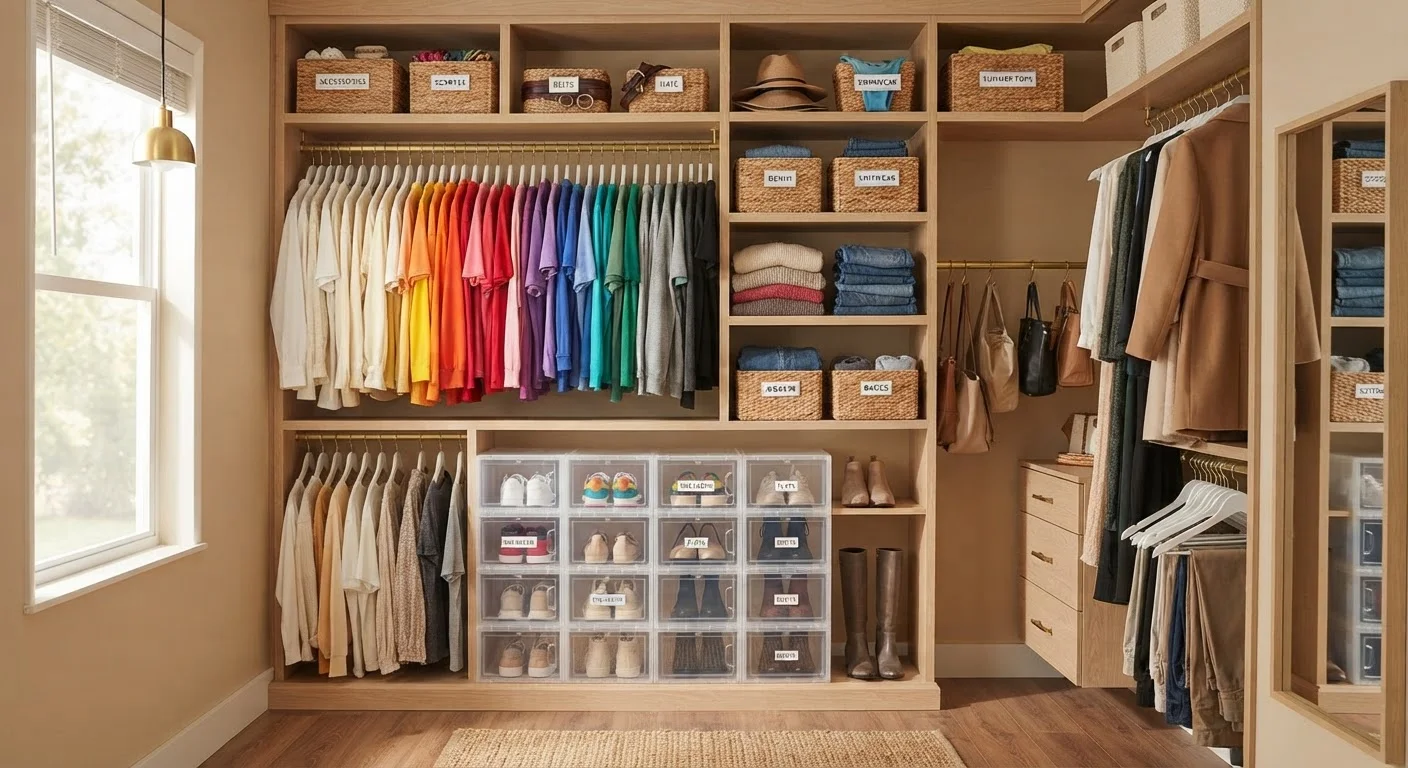
Use visual cues - uniform hangers, clear bins, consistent folding direction - to make disorder immediately obvious.
When everything looks intentional and consistent, a single out-of-place item stands out and gets corrected quickly. Visual uniformity lowers the threshold for noticing and addressing small messes before they grow.
Your Quick-Start Actions for Today
You don't need to overhaul anything to begin. These small moves, done today, will make the biggest difference in the weeks ahead.
Keeping the System Simple Enough to Stick
One of the most overlooked factors in closet maintenance is complexity. Elaborate systems - color-coded labels, detailed subcategories, specialty organizers for every item type - often fail because they demand too much mental energy at the moment of use. When you're tired at the end of the day, a complicated system loses to the floor every time.
Simple beats sophisticated. A zone system with three to four clearly defined areas (hanging clothes, folded items, shoes, accessories) is easier to maintain than a hyper-organized grid. Similarly, choosing the right storage format for your space reduces friction and makes putting things away feel like the path of least resistance.
Also worth noting: closets don't fail in isolation. They're often a symptom of broader household organization patterns. Our room-by-room organization walkthrough can help you apply the same maintenance thinking to every space in your home - reinforcing the habits you're building here.
This article is intended for general informational purposes. Results will vary based on household size, storage space, and individual routines.