

Key Takeaways
N-P-K Ratio
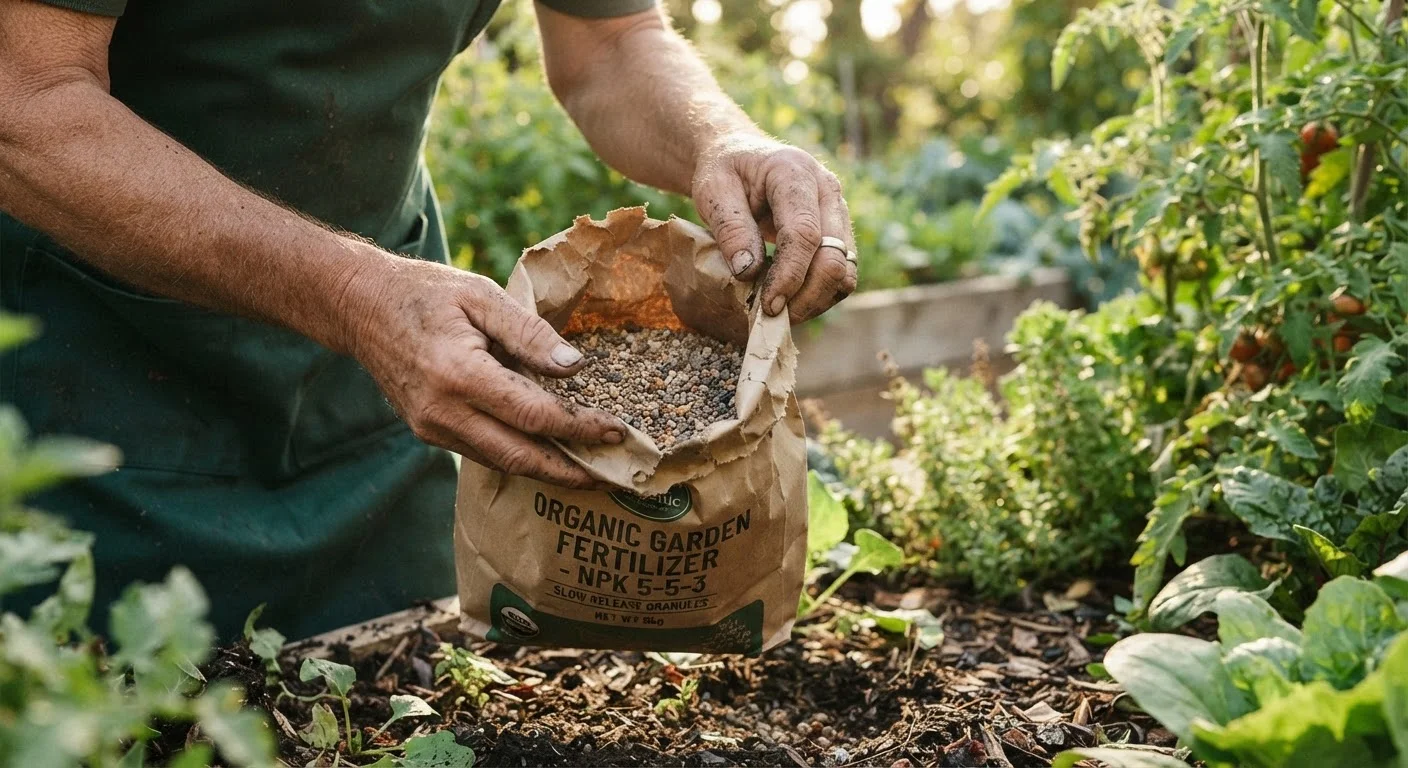
The N-P-K ratio is the set of three numbers printed on every fertilizer label, representing the percentage by weight of nitrogen (N), phosphorus (P), and potassium (K) in that product. For example, a bag labeled 10-5-5 contains 10% nitrogen, 5% phosphorus, and 5% potassium, with the rest being filler or carrier material. These three nutrients are the primary building blocks plants need to grow, root, and stay healthy.
Phosphorus and potassium on the label are expressed as their oxide equivalents - P₂O₅ and K₂O - rather than pure elemental form, which is a standard convention established by the fertilizer industry.
Why Those Three Numbers Exist
Walk down any garden center aisle and you'll see fertilizer bags stamped with number combinations like 10-10-10, 5-10-5, or 21-0-0. These aren't arbitrary codes - they're a standardized way to communicate the nutrient content of every fertilizer sold in the United States, regulated under state and federal labeling laws.
The three numbers always appear in the same order: nitrogen first, phosphorus second, potassium third. Each figure tells you the percentage of that nutrient by weight in the bag. A 100-pound bag of 10-5-5 fertilizer contains 10 pounds of nitrogen, 5 pounds of phosphorus compounds, and 5 pounds of potassium compounds. The remaining 80 pounds is inert filler that helps spread the nutrients uniformly.
Understanding this label is the first step toward feeding your plants effectively rather than guessing. Just as soil pH affects how well nutrients are absorbed, the ratio you choose determines which growth functions you're actually supporting.
What Each Nutrient Actually Does
Nitrogen (N) - the green-growth driver. Nitrogen is the nutrient most directly responsible for lush, leafy growth and the deep green color in healthy foliage. It's a core component of chlorophyll (the molecule plants use for photosynthesis) and is consumed quickly, which is why lawns and leafy vegetables tend to need it most frequently. A nitrogen deficiency typically shows up as yellowing leaves starting from the oldest growth.
Phosphorus (P) - the root and bloom builder. Phosphorus plays a central role in energy transfer within the plant, supporting root development, flowering, and fruit set. It's especially important during the early stages of a plant's life and when annuals or vegetables are transitioning from vegetative growth into blooming. Deficiency often causes purplish discoloration on leaf undersides.
Potassium (K) - the resilience mineral. Sometimes called potash, potassium regulates water uptake, strengthens cell walls, and helps plants resist disease, drought, and temperature extremes. It works more behind the scenes than nitrogen or phosphorus - you may not see dramatic visible changes from potassium alone, but plants with adequate levels tend to be sturdier and better equipped to handle stress.
3
Primary macronutrients every fertilizer label must list
U.S. fertilizer labeling law requires all three - N, P, and K - to be declared on the guaranteed analysis panel of every fertilizer product sold.
~46%
Nitrogen content in urea, a common fertilizer ingredient
Urea (46-0-0) is one of the most concentrated nitrogen sources available, illustrating how dramatically N-P-K numbers can vary across products.
70%+
Of U.S. lawns reported to receive fertilizer annually
According to estimates from the U.S. Environmental Protection Agency, most American lawns receive some form of fertilizer application each year, making label literacy especially important.
Matching Ratios to Real Garden Situations
Different plants at different life stages need different ratios - there's no universal formula. Here's a practical framework:
- Established lawns: A higher first number (nitrogen-forward) ratio like 30-0-4 or 20-5-10 supports the dense leafy growth that makes turf look full and green. Avoid high-phosphorus formulas on lawns unless a soil test confirms a deficiency.
- New seedings and transplants: A higher middle number promotes root establishment. Starter fertilizers with ratios like 5-10-5 are commonly used when setting out vegetable seedlings or overseeding bare lawn patches.
- Flowering plants and vegetables: As plants shift from growing leaves to producing flowers and fruit, they benefit from less nitrogen and relatively more phosphorus and potassium. Look for ratios where the second and third numbers are closer to or larger than the first.
- Trees and shrubs: Mature woody plants generally need modest, balanced nutrition. Over-fertilizing with nitrogen can push soft new growth that's vulnerable to pests and frost damage.
Test Before You Fertilize
Before choosing any fertilizer ratio, consider getting a basic soil test through your local cooperative extension service. Tests typically cost under $20 and reveal not just which nutrients are lacking, but also your soil's pH - which directly affects how well plants can absorb those nutrients. Fertilizing without this information is often guesswork.
When in doubt, a balanced formula like 10-10-10 is a reasonable all-purpose starting point - but a soil test will always give you more precise guidance than any general rule.
Getting It Right: Soil Testing and Safe Application
The single most useful thing you can do before buying fertilizer is get your soil tested. Many homeowners apply nutrients their soil already has in abundance, which wastes money and can actually harm plants by creating nutrient imbalances. Your local cooperative extension service - available in every state through land-grant universities - typically offers low-cost soil testing and will translate the results into plain-language recommendations for your region.
When applying fertilizer, always follow the label rate. More is not better: excess nitrogen, in particular, can burn grass and plant roots and contributes to water quality problems when it runs off into storm drains and waterways. Apply granular fertilizers when rain is expected (but not a heavy downpour) and water in liquid formulas promptly to move nutrients into the root zone.
Keep in mind that soil pH also affects how well plants can actually absorb the nutrients you apply - even a perfectly matched N-P-K ratio won't perform well in soil that's too acidic or too alkaline. See our guide on why soil pH matters for plant health to make sure your fertilizer investment isn't wasted.