

Key Takeaways
Soil pH
Soil pH is a measure of how acidic or alkaline your soil is, expressed on a scale from 0 to 14. A reading of 7.0 is neutral - numbers below that are acidic, and numbers above are alkaline. Most garden plants grow best somewhere between 6.0 and 7.0, where the widest range of nutrients is available to roots.
pH stands for 'potential of hydrogen' and measures the concentration of hydrogen ions in the soil solution. Even a one-unit shift on the scale represents a tenfold change in acidity or alkalinity.
Why pH Is the Hidden Driver of Plant Health
You've watered consistently, added fertilizer, and chosen healthy transplants - yet something in your garden still looks off. Yellowing leaves, stunted growth, and patchy lawn are frustrating, especially when the cause isn't obvious. In many cases, the real problem isn't what's on the surface; it's what's happening in the soil beneath your feet.
Soil pH governs a process called nutrient availability - the degree to which minerals like iron, nitrogen, phosphorus, and calcium can actually be absorbed by plant roots. Think of pH as a lock on a cabinet full of nutrients. Even if the cabinet is fully stocked, the wrong pH keeps it locked tight. That's why understanding your fertilizer's N-P-K ratios only tells part of the story - if pH is out of range, those nutrients may never reach the plant.
6.0-7.0
Optimal pH range for most vegetables and grasses
This range is widely cited by university extension services as the window where the broadest selection of nutrients remains plant-available in the soil solution.
10×
Change in acidity per one pH unit
Because the pH scale is logarithmic, a soil reading of 5.0 is ten times more acidic than a reading of 6.0 - small numerical shifts represent large chemical differences.
2-3 months
Typical time for lime to shift soil pH
Ground limestone requires consistent moisture and microbial activity to neutralize soil acidity; fall application is generally recommended for spring results.
The pH Scale and What It Means for Your Garden
The pH scale runs from 0 (extremely acidic) to 14 (extremely alkaline), with 7.0 as neutral. Soil in the 6.0-7.0 range is considered the sweet spot for most common vegetables, grasses, and flowering plants because the majority of essential nutrients remain soluble and accessible in that window.
Outside that range, specific nutrients begin to lock up:
- Too acidic (below 6.0): Phosphorus becomes less available; aluminum and manganese can reach levels that are toxic to some plants.
- Too alkaline (above 7.5): Iron, manganese, zinc, and boron become harder for roots to absorb, often causing chlorosis - the yellow leaf discoloration that many gardeners mistake for a watering problem.
A few plants, like blueberries and rhododendrons, genuinely prefer more acidic conditions around 4.5-5.5. If you're growing acid-lovers, matching soil pH to their preferences matters just as much as sun or water. You can read about other common plant care misconceptions in our guide to garden myths that don't hold up.
How to Test Your Soil and Interpret Results
No guesswork here: a soil test is the only reliable way to know your pH before spending money on amendments. Your local cooperative extension service (a university-based resource available in every U.S. state) typically offers low-cost testing that includes amendment recommendations tailored to your region.
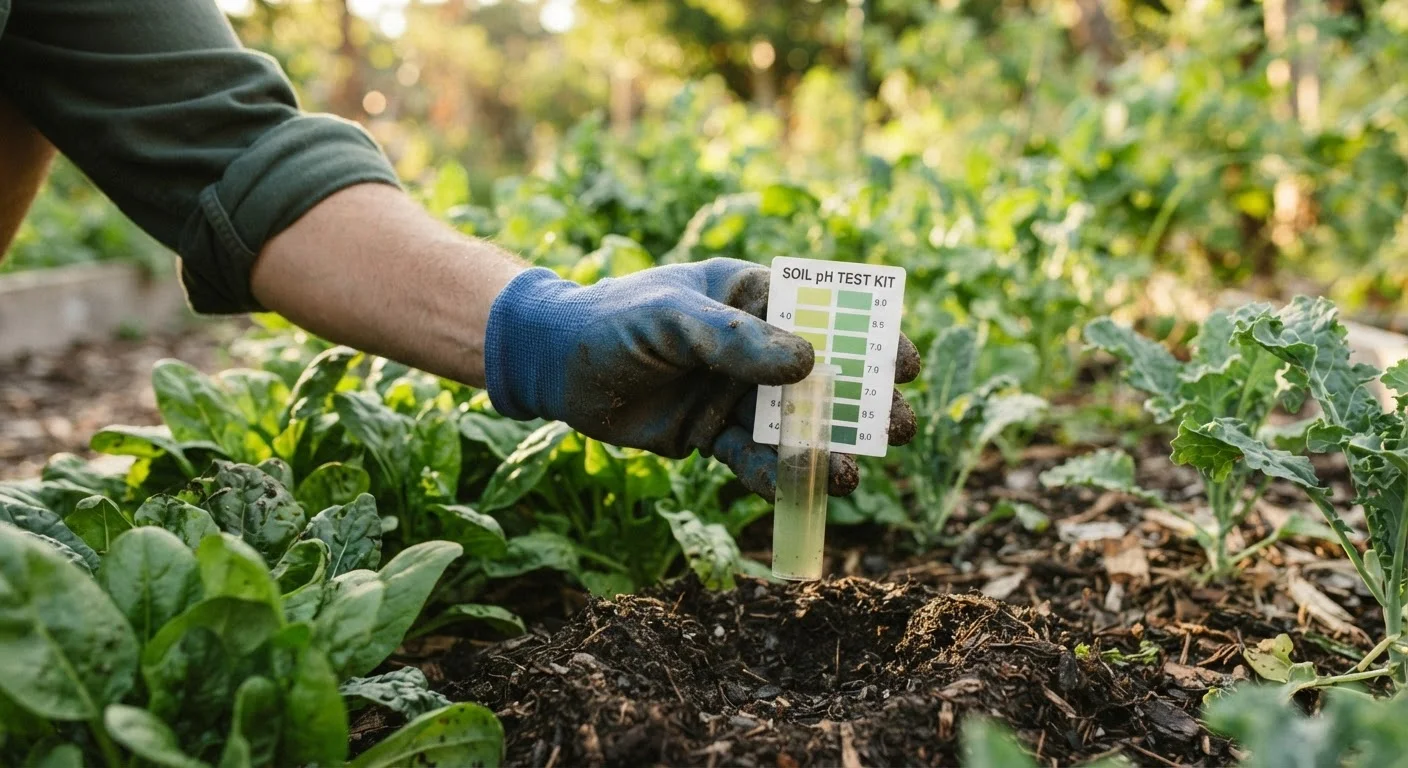
For a useful sample, dig 4-6 inches deep and collect soil from several spots in the area you want to test. Mix the samples together and let the combined soil dry before testing. Home test kits can give a general ballpark reading; lab testing via extension provides more precision and context.
Once you have your result, you can act with confidence rather than guessing. Bare patches and struggling grass, for instance, are sometimes misread as compaction or pest issues when pH is the real factor - a topic also worth exploring in our article on diagnosing lawn bare spots.
Test Before You Amend
Applying lime or sulfur without a soil test is a common and costly mistake. You may already have the pH your plants need, or you could dramatically overshoot your target. A soil test from your cooperative extension service typically costs under $20 and removes all the guesswork. Retest after amendments before applying another round.
Adjusting Soil pH: Practical Steps That Work
Once you know your pH, you can make targeted adjustments. Two primary amendments handle the majority of correction needs:
- To raise pH (make soil less acidic):
- Apply ground limestone (calcitic or dolomitic lime). Dolomitic lime also adds magnesium, which can be beneficial if your soil is deficient. Work it into the top few inches of soil and water thoroughly. Results develop over 2-3 months.
- To lower pH (make soil less alkaline):
- Apply elemental sulfur, which soil bacteria convert into sulfuric acid over time. This is a slower process than liming and may take a full season to show results. Acidifying fertilizers can also help maintain lower pH around acid-loving plants.
The amount you apply depends on your current pH, your target pH, and your soil's texture - clay soil requires more amendment than sandy soil to achieve the same shift. Always follow quantities recommended by a soil test rather than applying a standard amount and hoping for results. Overcorrection is a real risk and creates a new set of problems.
Good soil pH management pairs naturally with other consistent care routines. For example, avoiding common watering mistakes and maintaining appropriate pH together create the stable environment where grass and garden plants can actually thrive.