

Key Takeaways
Why Bare Spots Happen
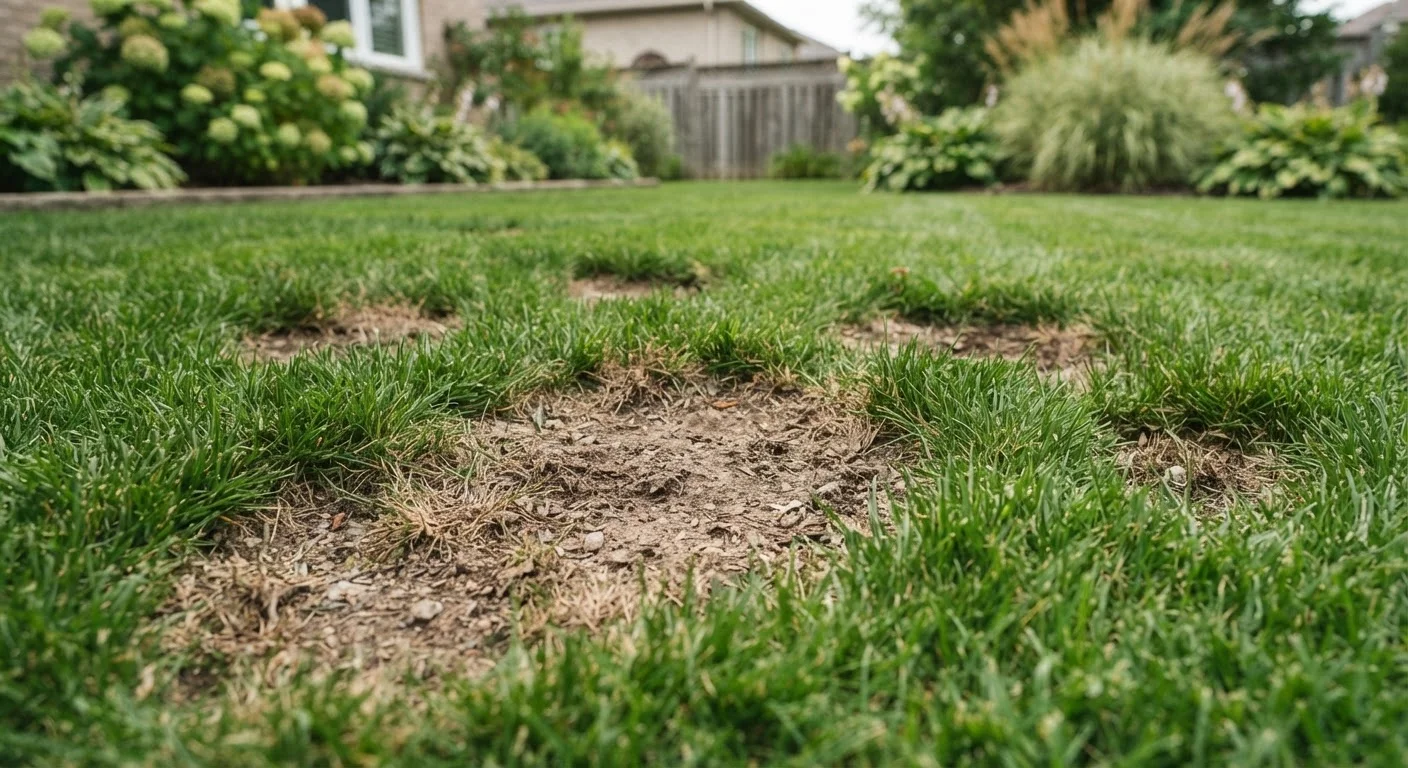
Not all bare spots are created equal. Before reaching for a bag of grass seed, it pays to understand what's actually happening beneath the surface. Reseeding over an unresolved problem is one of the most common lawn care mistakes - the patch simply dies again within a season.
The most frequent culprits include:
- Soil compaction: Heavy foot traffic or vehicle weight compresses soil particles, leaving little room for air, water, or roots. Grass thins out and eventually dies in these zones.
- Excessive shade: Most turf grasses need at least four to six hours of direct sun per day. Areas under dense trees or near structures that block light will struggle to hold grass.
- Pet urine: Dog urine is high in nitrogen and salts, which burn grass at concentrated doses. Spots tend to be roughly circular with a ring of darker, fertilized grass at the edges.
- Grubs and surface insects: White grubs (beetle larvae) feed on grassroots from below. You'll notice patches that pull up easily like loose carpet, often with bird activity nearby.
- Fungal disease: Dollar spot, brown patch, and similar diseases create irregular or distinctly patterned dead areas. Look for discolored lesions on individual grass blades before the turf dies entirely.
- Chemical spills or buried debris: Gasoline, fertilizer concentrations, or decomposing materials underground can create persistent dead zones.
Inspect the affected area carefully. Pull back dead grass with a gloved hand and examine the soil and any remaining roots. This quick assessment will guide the right repair approach. For lawns that seem to struggle broadly - not just in spots - it's worth checking whether soil pH could be limiting nutrient uptake.
When to Call a Professional
If bare spots are large (over 50 square feet), spreading rapidly, or reappearing in the same location each season, the underlying issue may require professional diagnosis. A lawn care specialist or your local cooperative extension service can test for soil problems, pest pressure, or disease that are difficult to identify by eye.
How to Repair Bare Spots: Step by Step
Once you've identified the likely cause, work through the following steps. Most repairs are straightforward enough for a weekend morning. The best windows for reseeding are late summer through early fall for cool-season grasses, and late spring for warm-season varieties.
Remove dead material and debris
Use a stiff rake to clear out dead grass, thatch, and any loose material from the bare area. Work a few inches beyond the visible edge of the damaged zone to ensure good contact between seed and healthy surrounding soil. If you suspect buried debris or a chemical spill, remove and replace the affected soil entirely before proceeding.
Address the underlying cause
Treat the root problem before adding seed:
- Compaction: Loosen the soil to a depth of 2-3 inches with a garden fork or hand aerator.
- Grubs: Apply an appropriate grub control product according to label directions before reseeding.
- Fungal disease: Allow the lawn to dry out and improve air circulation; consult a local cooperative extension service if the pattern is unusual or spreading.
- Shade: Choose a shade-tolerant grass seed variety and consider trimming nearby vegetation.
Loosen and amend the soil
Break up the top 2-3 inches of soil with a rake or hand cultivator. Mix in a thin layer of compost or topsoil to improve structure and organic matter content. Smooth the surface so it sits slightly below the surrounding lawn level - this allows the new soil and seed to settle flush with the rest of the turf once established.
Select and apply the right grass seed
Match the seed variety to your existing lawn type and regional climate. Using a mismatched variety creates a patchy, two-tone lawn even after the grass establishes. Apply seed evenly across the prepared area using a hand spreader or by hand, following the seeding rate printed on the packaging. Rake lightly to press seeds into contact with the soil.
Cover lightly and water consistently
Apply a thin layer of straw mulch or seed-starter mat over the seeded area to retain moisture and protect seeds from birds and wind. Water gently and lightly - enough to keep the top inch of soil consistently moist without washing seeds away. Continue this routine until germination is well underway, typically 7-21 days depending on species and temperature.
After seeding, keep the repaired area consistently moist - light watering once or twice a day - until seeds germinate and the new grass reaches about two inches tall. Avoid heavy foot traffic on the area for at least four weeks. Understanding the difference between shallow and deep watering will help you build habits that support the new grass as it establishes deeper roots over time.
Preventing Bare Spots From Coming Back
Repairs are only as durable as the conditions you create around them. A few consistent practices go a long way toward keeping bare spots from reappearing.
- Aerate annually: Core aeration - using a machine that pulls small plugs of soil - relieves compaction and improves water and nutrient penetration. Fall is the ideal time for cool-season lawns. See our fall lawn prep checklist for a full seasonal overview.
- Improve drainage: Low spots that collect standing water suffocate roots. Topdressing with compost or regrading problem areas reduces prolonged saturation.
- Manage shade: Trim lower tree branches to increase light penetration, or overseed shaded areas with shade-tolerant grass varieties rather than fighting the conditions.
- Redirect pet activity: Train dogs to use a designated bathroom area, or rinse spots with water immediately after urination to dilute the salts before damage sets in.
- Mow at the right height: Cutting grass too short stresses the turf and reduces its ability to outcompete weeds and recover from drought. Keep mowing height appropriate for your grass type - generally 2.5 to 4 inches for most cool-season varieties.
- Water appropriately: Common watering errors - overwatering, watering at night, and frequent shallow watering - weaken grass over time and create conditions where disease and bare spots thrive.
For a broader framework on keeping your lawn healthy across all four seasons, the year-round lawn maintenance guide covers everything from spring green-up to late fall dormancy prep.