

Key Takeaways
Why Seasonal Lawn Care Matters
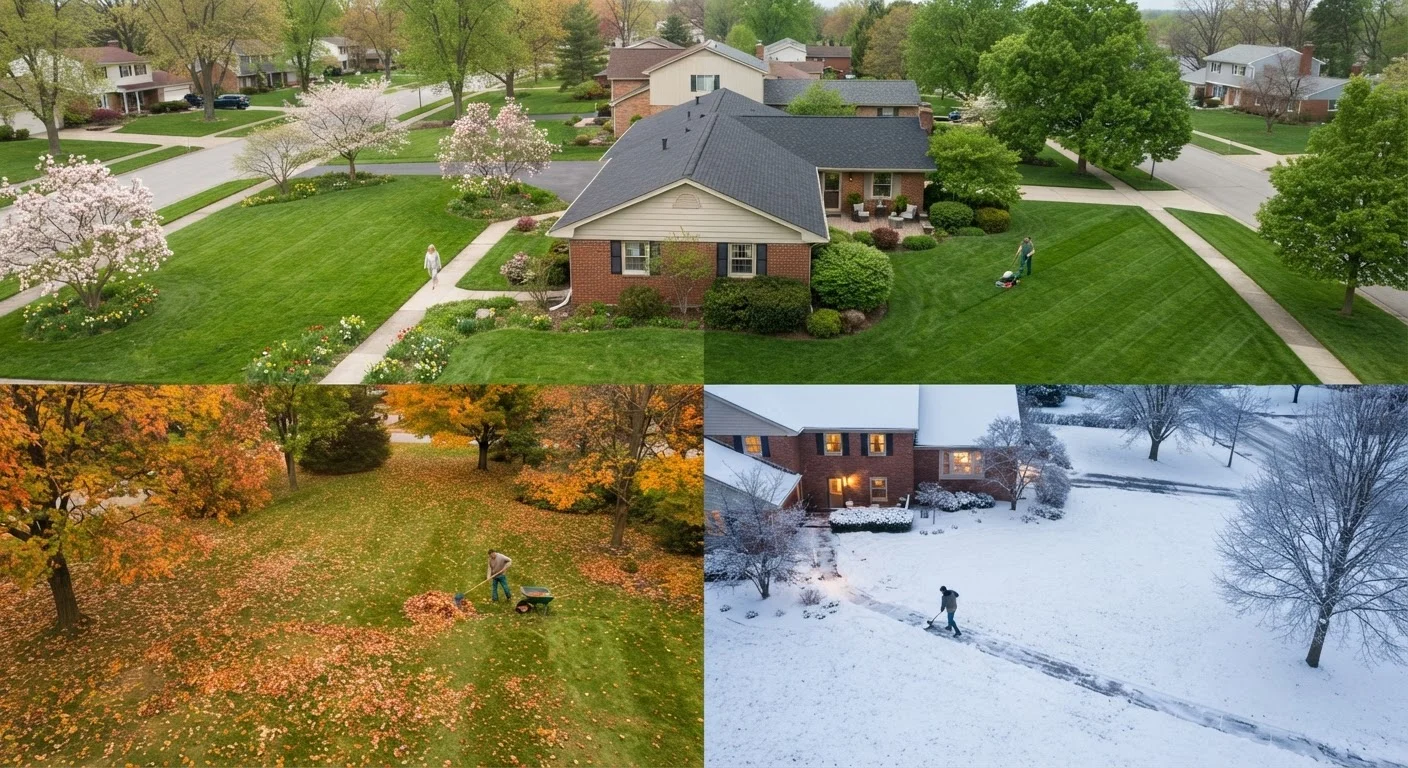
Grass is a living ecosystem that responds to soil temperature, daylight length, rainfall, and ambient heat. Treating your lawn the same way in July as in October almost guarantees problems - whether thin, patchy growth, disease pressure, or weed invasions. A seasonal approach aligns your inputs (water, fertilizer, mowing frequency) with what the grass actually needs at each stage of its growth cycle.
Cool-season grasses like Kentucky bluegrass and tall fescue thrive in spring and fall. Warm-season varieties like Bermuda and zoysia hit peak growth in summer. Knowing your grass type is the first step to applying the right care at the right time. If you are also coordinating other home upkeep, see the seasonal home maintenance checklist to layer yard tasks into a broader seasonal routine.
Spring: Waking Up Your Lawn
Once soil temperatures consistently reach 50°F - typically March through April across much of the U.S. - cool-season grasses break dormancy and warm-season grasses begin stirring. This window is your most important for setting up the rest of the year.
- Rake and dethatch: Remove winter debris and matted thatch (the spongy layer of dead grass above the soil). More than half an inch of thatch blocks water and nutrients.
- Aerate compacted areas: Core aeration pulls small plugs from the soil, improving oxygen flow and root depth. Focus on high-traffic zones and clay-heavy soils.
- Apply a starter or balanced fertilizer: A light application supports green-up without triggering excessive top growth that outpaces root development.
- Overseed bare patches: Spring seeding works well for warm-season grass; cool-season grass typically patches better in fall.
- Set your mower height: Never remove more than one-third of the blade length in a single mow. Begin with slightly higher settings (3-4 inches for most cool-season varieties).
Test your soil before applying any fertilizer in spring. An accurate pH reading tells you whether nutrients can actually be absorbed - lime or sulfur adjustments often matter more than fertilizer brand.
Soil pH directly controls nutrient availability. Applying fertilizer to pH-imbalanced soil wastes money and can even harm grass by encouraging salt buildup.
Water your lawn in the early morning - ideally between 5 a.m. and 9 a.m. - to minimize evaporation and reduce the risk of overnight fungal growth.
Evening watering leaves grass blades wet for hours, creating conditions that favor common lawn diseases like brown patch and dollar spot.
Weeds are aggressive in spring. Hand-pull or spot-treat early before they set seed, rather than applying a blanket pre-emergent that can also inhibit grass seed germination.
Summer: Protecting Grass Under Stress
Heat and drought are your lawn's main adversaries from June through August. The goal shifts from promoting growth to maintaining health and minimizing stress damage.
- Water deeply and infrequently: Most established lawns need roughly one inch of water per week, including rainfall. One or two deep sessions train roots to grow downward. For more detail, see watering habits that harm lawns.
- Raise the mowing height: Taller grass (3.5-4.5 inches) shades the soil surface, reducing moisture loss and weed germination.
- Limit fertilizer on cool-season grass: Pushing growth during heat stress invites disease. Hold off on high-nitrogen applications until temperatures cool.
- Watch for grubs and fungal issues: Brown irregular patches that don't respond to watering often signal grub activity or fungal disease. Inspect the soil before treating.
If your lawn browns during a drought, don't panic - most established lawns can survive four to six weeks of dormancy without permanent damage, provided they are not subjected to heavy foot traffic.
Fall: Building Resilience Before Dormancy
Fall is arguably the most productive season for lawn investment. Cooler temperatures, more reliable rainfall, and reduced weed competition create near-ideal conditions for root development.
- Aerate again if needed: A second aeration pass in early fall dramatically improves overseeding and fertilizer uptake.
- Overseed cool-season lawns: September through mid-October is the prime window. Soil is still warm enough for germination while air temps are mild.
- Apply a winterizer fertilizer: A higher-potassium formulation in late fall strengthens root systems and improves cold hardiness without triggering top growth.
- Keep mowing until growth stops: Avoid leaving grass too long heading into winter - long blades mat down and encourage snow mold.
- Clear leaves promptly: A thick leaf layer blocks light and traps moisture, inviting fungal disease.
For a detailed seasonal checklist, the fall lawn prep guide covers aeration, overseeding, fertilizing, and cleanup in depth.
Time Your Fall Overseeding Carefully
Aim to overseed cool-season lawns at least 45 days before your region's first expected frost date. This gives new seedlings enough time to establish before cold halts growth. Seeding too late produces weak plants that won't survive winter.
Winter: Low-Input Care and Planning
Once grass enters full dormancy, active maintenance largely stops - but winter is far from wasted time for an attentive homeowner.
- Stay off frozen or frost-covered turf: Foot traffic on frozen blades crushes cell walls, creating brown tracks that linger into spring.
- Service your equipment: Sharpen mower blades, change the oil, clean the deck, and replace spark plugs. Sharp blades make cleaner cuts that heal faster and resist disease.
- Plan ahead: Assess which areas need overseeding, soil amendments, or drainage improvements. Order seed and supplies before the spring rush.
- Limit de-icing salt near lawn edges: Road salt and sidewalk de-icers cause significant soil sodium buildup. Use sand or non-chloride alternatives where possible near turf.
If you prefer a less intensive approach altogether, low-maintenance landscaping strategies such as native ground covers and perennial beds can reduce seasonal workload considerably.
Year-Round Fundamentals That Never Change
Regardless of season, three foundational practices deliver consistent returns:
- Soil health first: Conduct a soil test every two to three years. pH imbalances (outside the 6.0-7.0 range for most lawn grasses) limit nutrient availability no matter how much fertilizer you apply. Lime raises pH; sulfur lowers it.
- Mow with sharp blades: Dull blades tear grass rather than cut it cleanly, stressing plants and opening them to disease.
- Consistent observation: Walk your lawn weekly. Early detection of thinning areas, pest damage, or disease spots is almost always cheaper and easier to address than a full renovation.
Seasonal lawn care doesn't require professional equipment or an advanced horticulture degree. It requires consistency, attention to timing, and the willingness to adjust based on what you observe. Applied season by season, these practices build the kind of dense, resilient turf that resists weeds, recovers from stress, and looks its best year-round.