

Key Takeaways
Why Low-Maintenance Landscaping Matters
Most homeowners don't want to spend every weekend battling weeds, adjusting sprinklers, or replacing plants that didn't survive the summer. Low-maintenance landscaping isn't about neglecting your yard - it's about designing smarter from the start so the landscape largely takes care of itself once established.
The approaches below won't eliminate all yard work, but they can meaningfully compress how much time and water you invest each season. Some involve upfront planning; others are simple habit shifts. All of them are grounded in how plants actually grow, rather than in the kind of advice that experienced gardeners have stopped believing.
Plant natives suited to your region
Native plants have evolved alongside your local climate, soil, and rainfall patterns. Once established - typically after one to two full growing seasons - most require little to no supplemental watering, minimal fertilizer, and far fewer pesticide interventions than non-native ornamentals.
Beyond maintenance savings, natives support local pollinators and wildlife in ways that many ornamentals cannot. For a deeper look at how the two compare ecologically, see our piece on native plants vs. ornamentals and biodiversity. Contact your local cooperative extension service to find a plant list specific to your hardiness zone and soil type.
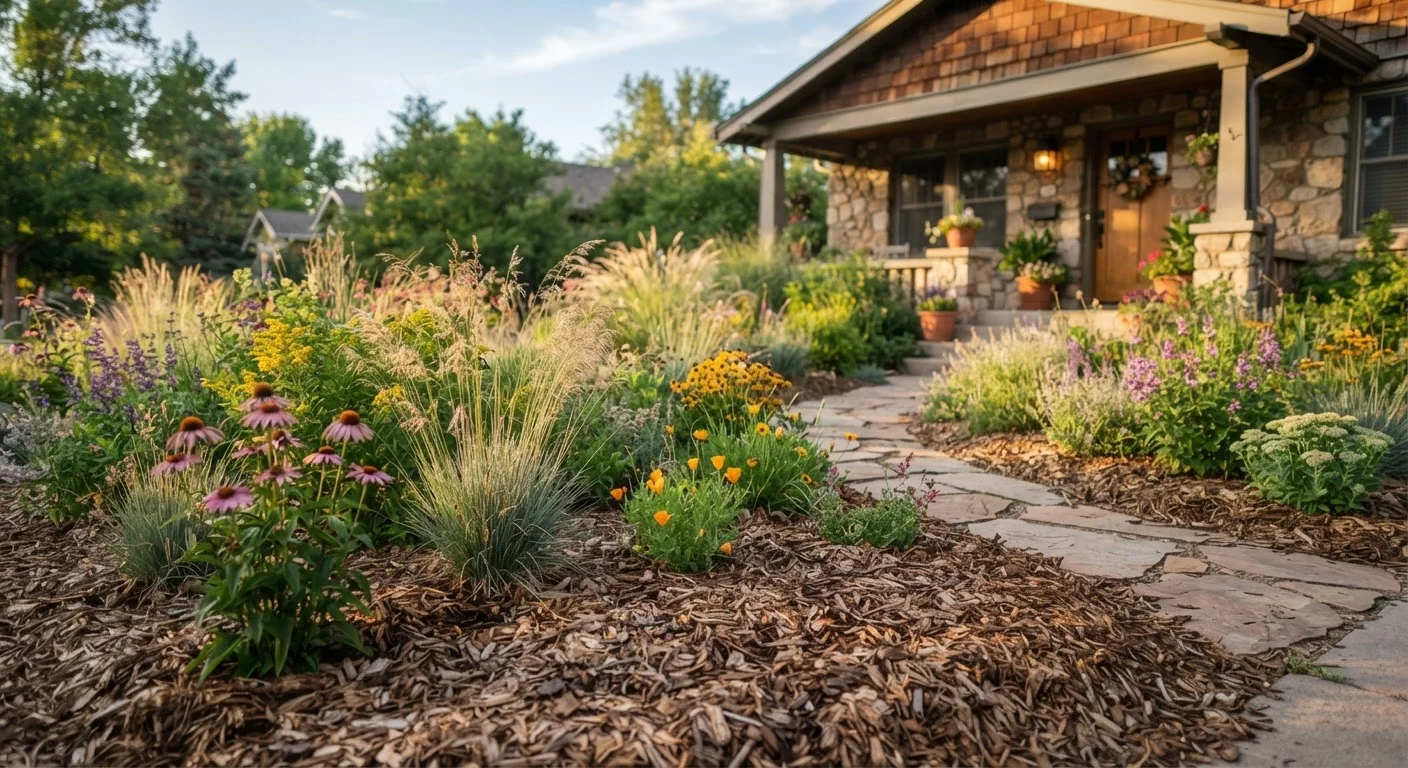
Once established, native plants typically need little supplemental watering or fertilizer.
Apply mulch consistently and generously
A 2-3 inch layer of organic mulch - shredded bark, wood chips, or straw - does several jobs simultaneously: it suppresses weed germination, retains soil moisture, moderates soil temperature, and breaks down over time to improve soil structure. Beds that are well-mulched require far fewer hours of weeding and watering than bare-soil beds.
Refresh mulch annually, especially after it compacts or thins. Keep it a few inches away from plant stems and tree trunks to prevent moisture-related rot. For a side-by-side comparison of mulch and living ground cover options, our guide on choosing the right weed barrier walks through the trade-offs.
A consistent 2-3 inch mulch layer suppresses weeds, retains moisture, and improves soil over time.
Group plants by water needs (hydrozoning)
Hydrozoning means clustering plants that share similar irrigation requirements together, rather than mixing drought-tolerant specimens with thirsty annuals in the same bed. This simple design principle prevents both overwatering of drought-adapted plants and underwatering of moisture-loving ones.
In practice, it also makes irrigation far more efficient. You can set zones on a timer or drip system to match what each group actually needs, rather than compromising across the whole yard. Poor watering habits - including applying water too shallowly or too frequently - remain one of the top sources of plant stress; see common lawn watering mistakes for patterns to avoid.
Grouping plants by water need prevents overwatering some while underwatering others.
Shift from annuals to perennials
Annual flowers and vegetables require replanting each season, which means recurring labor, seed or transplant costs, and time spent preparing beds. Perennials, by contrast, return year after year from the same root system, expanding gradually to fill their space and suppress weeds on their own.
A perennial-heavy border still requires occasional dividing, deadheading, and cleanup - but nothing close to the seasonal reset that an annual bed demands. Combining perennials with a few well-chosen annuals for seasonal color gives you flexibility without making replanting your primary spring task. Pay attention to soil health as perennials establish; soil pH imbalances are a common hidden cause of perennial underperformance.
Perennials return each year from the same roots, drastically cutting replanting labor and cost.
Reduce or replace high-maintenance turf areas
Traditional lawns - especially cool-season grass grown in hot or dry climates - demand more water, fertilizer, mowing, aeration, and weed management than almost any other landscape element. Replacing even a portion of your turf with ground covers, gravel paths, native meadow plantings, or mulched beds can substantially reduce weekly maintenance time.
If you want to keep some lawn for recreational use, focus maintenance effort on that functional area and let the rest of the yard work harder for you. For those who do maintain turf, a structured approach helps: our year-round lawn maintenance guide covers what to prioritize in each season without over-treating.
Reducing turf area is often the single biggest step toward a genuinely lower-maintenance yard.
Build soil health to reduce ongoing inputs
Healthy soil - rich in organic matter, well-structured, and biologically active - grows more resilient plants that need less intervention. When soil drains well but retains adequate moisture, plants are less susceptible to drought stress, root disease, and nutrient deficiencies. That translates directly to fewer problem-solving tasks throughout the growing season.
Composting is one of the most practical ways to improve soil over time. Kitchen scraps, yard trimmings, and leaf litter can all be converted into a free soil amendment. Our guide to home composting covers what to add, what to avoid, and how to maintain a productive pile.
Healthy soil grows more resilient plants - and resilient plants need far less ongoing intervention.
Building a Yard That Works With You
Low-maintenance landscaping is cumulative. Each strategy below compounds the others: native plants need less water, mulch keeps that water in the soil longer, and hydrozoning ensures your irrigation delivers it only where needed. Start with one or two changes and layer in more over time.
If you're weighing whether to try a different format for growing vegetables or herbs, our overview of raised bed trade-offs can help you decide whether that structure fits your goals. And because even the best-designed landscape still needs occasional watering, understanding deep, infrequent watering principles will help you water smarter rather than more often.
Start Small, Then Expand
If overhauling your entire yard feels overwhelming, pick one bed or one corner and apply these principles there first. A single mulched, native-planted border will show you clearly how much less work it demands compared to a conventional planting. Once you see the difference, expanding the approach becomes much easier to justify.