

Personal Finance

Spending Audit: A Room-by-Room Look at Where Your Money Actually Goes

Share
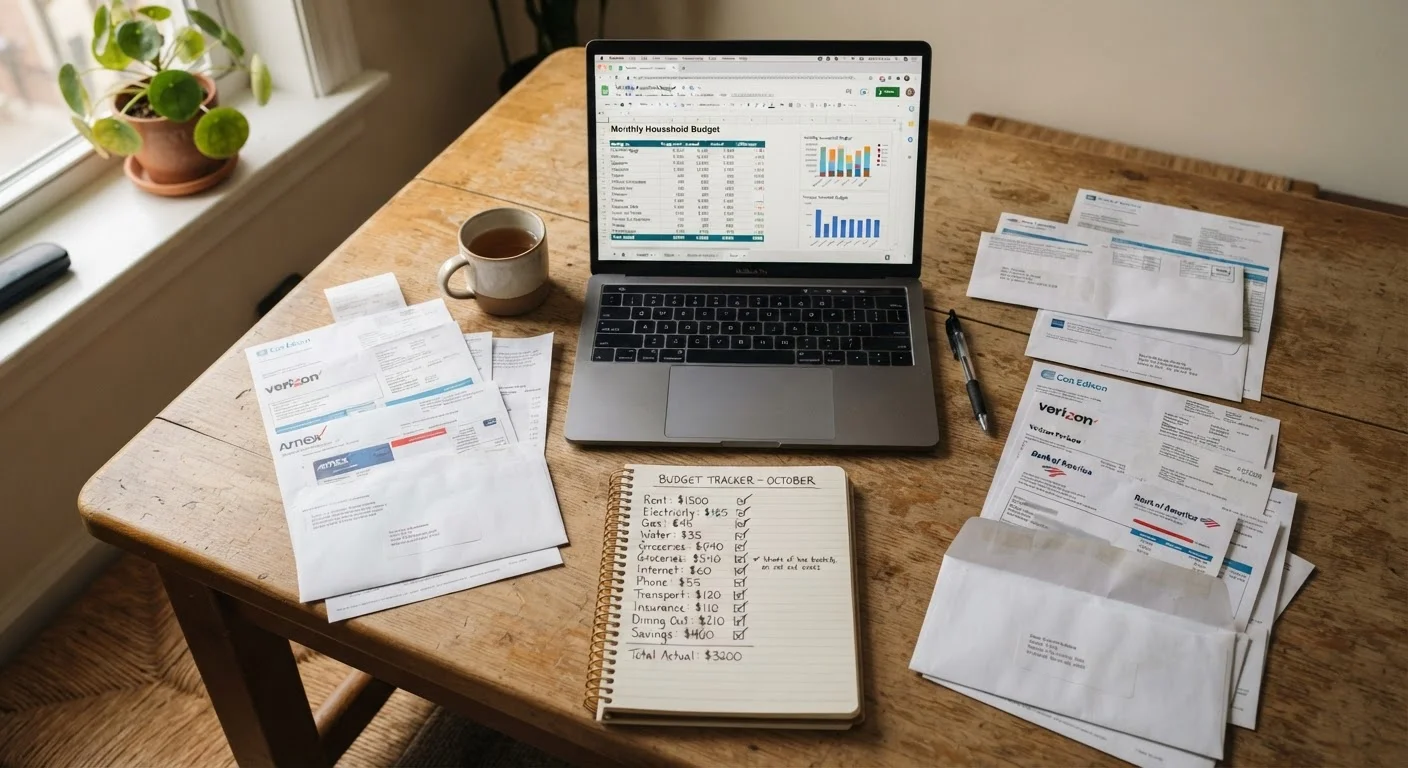
Kitchen table with household bills, a laptop spreadsheet, and a notepad listing expense categories.

Key Takeaways

Most households have at least two or three forgotten subscriptions quietly draining their accounts each month.
Utility bills often hide inefficiencies that can be reduced with simple behavioral changes.
Grocery and dining spending is frequently underestimated when cash and card purchases aren't tracked together.
A spending audit is the essential first step before building or revising any household budget.
Recording actual spending — not estimated spending — gives you the accurate baseline a budget requires.
30–60 min

Summary

24 items · 30–60 minutes

Why a Spending Audit Beats Guessing

Most Americans underestimate what they spend each month — sometimes by hundreds of dollars. It's not carelessness; it's the nature of modern spending. Charges trickle in from apps, auto-renewals, and card transactions that never get a second glance. A spending audit forces you to confront the actual numbers rather than relying on an impression of where your money goes.

Think of this checklist as a room-by-room walkthrough of your financial life. You'll pull real statements, check recurring charges, and categorize expenses before a single budget line gets written. If you're new to budgeting altogether, this ground-up household budgeting guide explains how to use what you find here to build your first plan. Already have a budget but keep overspending? these common overspending gaps are worth reviewing alongside your audit results.

Set aside 30 to 60 minutes, gather the last two to three months of bank and credit card statements, and work through each section below systematically.

What You'll Need Before You Start

Gathering the right materials before you begin prevents backtracking and makes the process faster and more accurate.

Required

Bank and credit card statements (last 3 months)

Your primary source of actual spending data across all categories.

Required

Spreadsheet or budgeting notebook

Used to categorize and total expenses as you work through each checklist group.

Required

Calculator

Needed to sum totals and calculate category percentages of total spending.

Optional

Email inbox or digital receipt folder

Helps surface subscription confirmations and auto-renewal notices that may not appear clearly on statements.

Optional

Annual income or pay stubs

Allows you to compare monthly spending against actual take-home pay for a realistic picture.

If your spending involves travel or currency exchange, note that foreign transaction fees and ATM charges can silently inflate costs — this guide to carrying money abroad breaks down how those charges work.

The Spending Audit Checklist

Work through each group in order. Flag anything surprising with a sticky note or a highlight — you'll review those flagged items when you build your monthly budget. For a comprehensive look at budgeting methods and long-range financial planning, see The Complete Guide to Household Budgeting.

Preparation

Pull the last three months of statements from every bank account and credit card you use. Must
Download or print a simple expense-tracking spreadsheet or open a fresh notebook page with category columns. Must
Note your total take-home income for the same three-month period so you can compare spending against earnings. Must
Check your email inbox for digital receipts and subscription confirmation emails that may not appear on statements clearly. Should

Subscriptions & Digital Services

List every streaming, music, news, and entertainment subscription you're currently paying for. Must
Search your statements for charges from app stores (Apple, Google) and note any in-app purchases or recurring memberships. Must
Identify any subscriptions you haven't actively used in the past 30 days and mark them for cancellation review. Must
Check for annual subscriptions that auto-renewed without your active decision — note the renewal dates. Should
Review whether you're paying for duplicate services (e.g., two cloud storage plans, overlapping streaming libraries). Should

Utilities & Home Operating Costs

Record your electricity, gas, and water bills for each of the past three months and calculate the average. Must
Review your internet and phone plan charges and compare them against the plan you originally signed up for — look for fee creep. Must
Check whether your home insurance premium has changed since last renewal and verify coverage hasn't quietly shifted. Should
Note any seasonal spikes in utility bills that may need a dedicated budget line rather than being averaged out. Should
Review whether a home maintenance issue is driving recurring costs — catching problems early often reduces long-term expenses. See seasonal home maintenance tips for a practical checklist. Nice to have

Groceries & Dining

Add up all grocery store charges across statements — include both card and cash purchases if you use both. Must
Total your restaurant, takeout, and food-delivery app charges separately from grocery spending. Must
Calculate what percentage of your total food spending goes to dining out versus home cooking. Should
Identify whether food delivery service fees and tips are being tracked — they often make the true cost 25–35% higher than the menu price. Should

Transportation

Record fuel costs for each month and note whether costs vary significantly — seasonal driving patterns affect this. Must
List any rideshare, parking, tolls, or public transit charges and add them to a transportation total. Must
Check whether auto insurance premiums, registration fees, or loan payments have changed and are accurately reflected in your running budget. Should

Miscellaneous & Irregular Spending

Identify any charges you can't immediately recognize and research each one before marking it as resolved. Must
Note irregular or one-time expenses (gifts, medical co-pays, home repairs) and decide whether they need a dedicated savings buffer. Should
Review cash withdrawals and assign them to spending categories based on what you typically use cash for. Should
Flag any charges that appear to be errors, unauthorized, or from services you've previously cancelled — dispute these promptly with your bank or card issuer. Must

Don't Estimate — Use Real Numbers

The single most common mistake in a spending audit is substituting guesses for actual statement data. Estimating grocery spending, for example, typically results in figures 20–30% lower than reality. Every figure in this checklist should come directly from a bank statement, credit card statement, or confirmed receipt. If you can't document it precisely, note it as an estimate and revisit it with the next month's statement.

Once you've completed the audit, your flagged items become the first candidates for reduction. From there, you can move into saving and investing strategies to put reclaimed dollars to work, or address any debt and credit concerns the audit surfaces.

This article is for general informational and educational purposes only and does not constitute personalized financial advice. Consult a qualified financial professional for guidance specific to your situation.

Personal Finance Editorial Team is the collective byline for our editorial team and contributor network. Articles published under this byline or an editorial pen name are researched, written, and reviewed according to our editorial standards for clarity, consistency, and independence before publication.

View all articles by Personal Finance Editorial Team →
Disclaimer: The content provided on our blog site traverses numerous categories, offering readers valuable and practical information. Readers can use the editorial team’s research and data to gain more insights into their topics of interest. However, they are requested not to treat the articles as conclusive. The website team cannot be held responsible for differences in data or inaccuracies found across other platforms. Please also note that the site might also miss out on various schemes and offers available that the readers may find more beneficial than the ones we cover.