

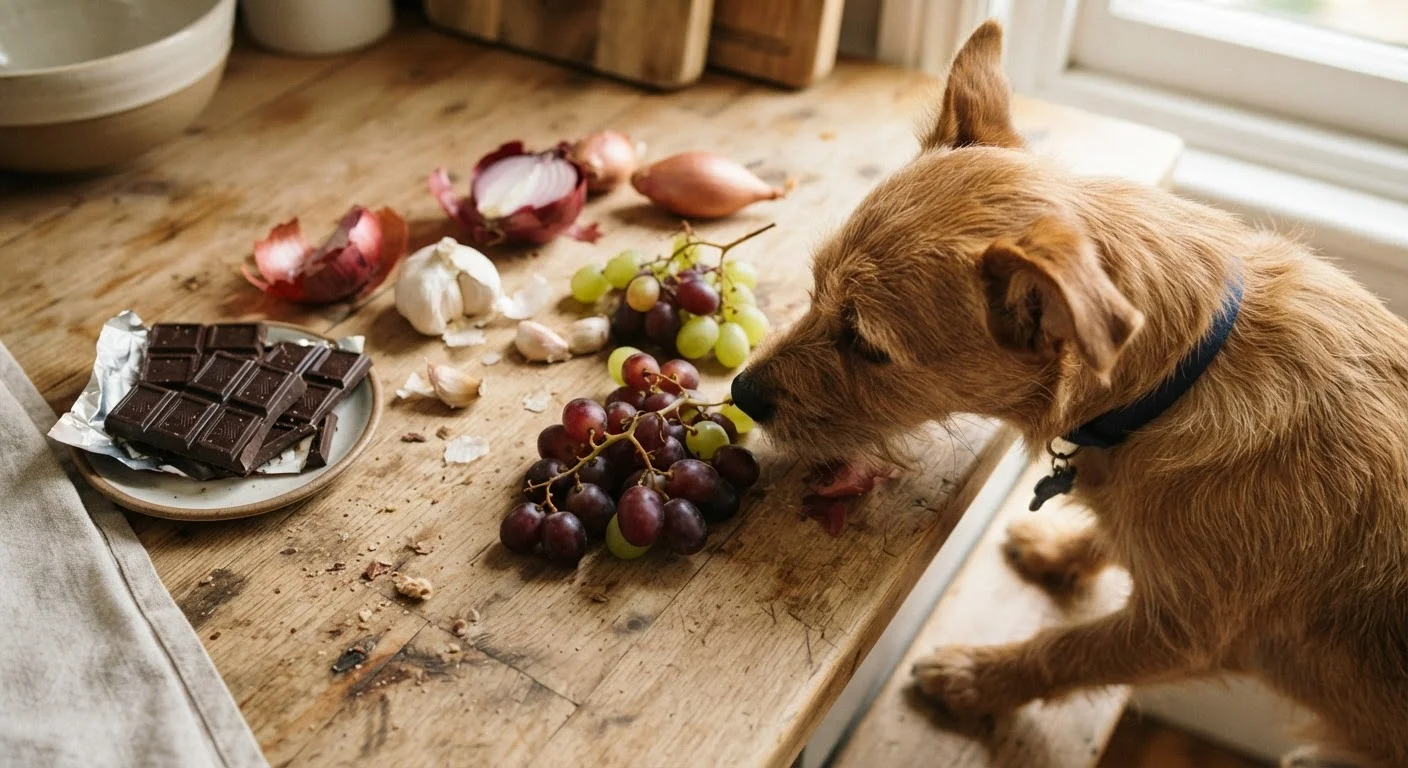
Key Takeaways
Why Common Foods Are More Dangerous Than Most Owners Realize
Many pet owners assume that if a food is safe for humans, it's safe for their dog or cat. Unfortunately, that assumption can lead to accidental poisoning. Animals metabolize compounds differently than we do - substances that pass harmlessly through our digestive system can trigger kidney failure, neurological damage, or worse in pets.
The danger isn't always obvious. A small piece of grape or a bite of sugar-free gum may seem trivial, but for certain pets, even modest amounts of specific foods can cause severe harm. Understanding which foods carry real risk is one of the foundational steps in responsible pet ownership - and it complements other preventive measures covered in our guide to common preventive care mistakes.
Below, we've compiled the foods that veterinary professionals flag most consistently as dangerous - including some that regularly surprise pet owners.
Grapes and Raisins
Grapes and raisins are among the most acutely dangerous foods for dogs. Even small amounts have been associated with sudden kidney failure in some dogs, though the exact toxic compound has not been definitively identified by researchers. Cats appear to be at risk as well, though reports are less common.
What makes this especially concerning is the unpredictability - some dogs have consumed grapes without apparent harm while others have experienced serious kidney damage from just a few. Because there is no established safe dose, grapes, raisins, currants, and foods containing them (such as certain breads or trail mixes) should be kept entirely out of reach.
There is no established safe dose of grapes or raisins for dogs - treat them as off-limits entirely.
Xylitol (Found in Sugar-Free Products)
Xylitol is a sugar substitute found in sugar-free gum, some peanut butters, certain baked goods, dental products, and even some medications. In dogs, xylitol triggers a rapid release of insulin that can cause a dangerous drop in blood sugar (hypoglycemia). At higher doses, it can cause liver failure.
Symptoms can appear within 30 minutes of ingestion and include weakness, vomiting, loss of coordination, and seizures. Always check ingredient labels on any human food before allowing your pet near it - this is especially important with products marketed as "sugar-free" or "natural."
Xylitol can trigger life-threatening hypoglycemia in dogs within 30 minutes of ingestion.
Onions, Garlic, and Related Alliums
Onions, garlic, leeks, shallots, and chives - whether raw, cooked, powdered, or dehydrated - contain compounds called organosulfoxides that damage red blood cells in both dogs and cats, leading to a condition called hemolytic anemia. Cats are particularly sensitive, but dogs are also at meaningful risk, especially with repeated or large exposures.
Garlic powder and onion powder are especially concentrated and appear in many prepared foods and broths. Feeding pets table scraps from dishes seasoned with these ingredients is a common and underappreciated route of exposure. Review your treat and table-scrap habits if this is a regular practice in your household.
Garlic powder is far more concentrated than fresh garlic - even small amounts in seasoned food can be harmful.
Chocolate and Caffeine
Chocolate contains theobromine and caffeine - stimulants that dogs and cats cannot metabolize efficiently. Dark chocolate and baking chocolate contain the highest concentrations and pose the greatest risk, but milk chocolate and white chocolate are not safe either. Effects include vomiting, diarrhea, increased heart rate, tremors, and in severe cases, seizures.
The level of risk depends on the type of chocolate, the amount consumed, and the pet's size. A small dog that eats a significant quantity of dark chocolate is in a genuinely critical situation. Coffee grounds, caffeinated drinks, and energy products containing caffeine carry similar risks and should be stored securely.
Dark and baking chocolate contain the highest theobromine concentrations - a serious risk even in small amounts for dogs.
Macadamia Nuts
Macadamia nuts are known to cause toxicity in dogs, though the specific mechanism is not yet fully understood by researchers. Even relatively small amounts can produce weakness, hyperthermia (elevated body temperature), vomiting, tremors, and difficulty walking - particularly affecting the hind legs. Symptoms typically appear within 12 hours and generally resolve within 48 hours, but veterinary monitoring is still advisable.
Macadamia nuts often appear in cookies and baked goods, so it's worth checking ingredient lists carefully. If chocolate is also present - as in chocolate macadamia cookies - the combination elevates the concern significantly.
Macadamia nuts can cause hind-leg weakness and tremors in dogs, with symptoms appearing within 12 hours.
Raw Yeast Dough
Unbaked bread dough containing live yeast poses a two-part danger. First, yeast continues to ferment in the warm environment of a pet's stomach, causing the dough to expand and potentially leading to bloating and painful gastric distension. Second, the fermentation process produces ethanol (alcohol), which can be absorbed into the bloodstream and cause alcohol poisoning.
Symptoms include vomiting, disorientation, weakness, and in severe cases, respiratory depression. Raw dough should never be left unattended on a counter where a curious dog or cat can reach it. This is a hazard that many owners overlook precisely because bread itself seems so benign.
Yeast dough expands inside a pet's stomach and produces alcohol as it ferments - both serious risks.
What to Do If Your Pet Eats Something Harmful
If you believe your pet has consumed a toxic food, act quickly but calmly. Do not wait for symptoms to appear - some toxic reactions, such as kidney failure from grapes, may not show visible signs until significant damage has already occurred.
Act First, Research Second
If your pet has eaten a potentially toxic food, don't spend time searching online to assess severity - contact a veterinary professional right away. Time is often a critical factor in limiting harm. Have the food packaging available when you call so you can report the exact ingredients and quantities involved.
Keep the ASPCA Animal Poison Control Center number (888-426-4435) saved in your phone, and note that your veterinarian may also recommend the Pet Poison Helpline. These services operate around the clock and can guide you on whether immediate emergency care is needed. Do not attempt to induce vomiting unless explicitly directed to do so by a veterinary professional, as this can worsen some types of poisoning.
For a broader look at ingredients that commonly appear in home kitchens but are hazardous to pets, see our reference guide to toxic household ingredients. And if you're reviewing your pet's overall diet, our rundown of common pet feeding myths is a useful complement.
This article is for general informational purposes only and does not constitute veterinary medical advice. Always consult a licensed veterinarian for guidance specific to your pet's health.