

| Most acutely toxic sweetener | Xylitol (sugar alcohol) (ASPCA Animal Poison Control) |
| Affects both dogs and cats | Allium vegetables (onions, garlic, chives) (Veterinary toxicology consensus) |
| Kidney risk from grapes/raisins | Can cause acute kidney failure in dogs (ASPCA, peer-reviewed case reports) |
| Highest theobromine concentration | Baking chocolate and dark chocolate (Veterinary toxicology reference) |
| Emergency contact (US) | ASPCA Animal Poison Control: (888) 426-4435 (Fee may apply; available 24/7) |
Why Human Food Can Be Dangerous for Pets
Dogs and cats metabolize food differently than people do. Compounds that human bodies handle without difficulty can overwhelm a pet's liver, kidneys, or nervous system - sometimes in surprisingly small amounts. This reference guide covers the most common toxic foods found in American kitchens, explains how each affects pets, and outlines when to contact a veterinarian or poison control line.
For a broader look at what goes into your pet's diet, see our guide on reading a pet food label - understanding ingredients is the first step to safer feeding overall. And if you're questioning habits around snacks and table scraps, treat feeding habits that can quietly undermine a pet's diet covers how even small indulgences add up.
This article is general educational information, not veterinary medical advice. If you believe your pet has ingested a toxic substance, contact your veterinarian or the ASPCA Animal Poison Control Center immediately.
| Most acutely toxic sweetener | Xylitol (sugar alcohol) (ASPCA Animal Poison Control) |
| Affects both dogs and cats | Allium vegetables (onions, garlic, chives) (Veterinary toxicology consensus) |
| Kidney risk from grapes/raisins | Can cause acute kidney failure in dogs (ASPCA, peer-reviewed case reports) |
| Highest theobromine concentration | Baking chocolate and dark chocolate (Veterinary toxicology reference) |
| Emergency contact (US) | ASPCA Animal Poison Control: (888) 426-4435 (Fee may apply; available 24/7) |
The Most Dangerous Offenders: A Room-by-Room Reference
Produce Drawer
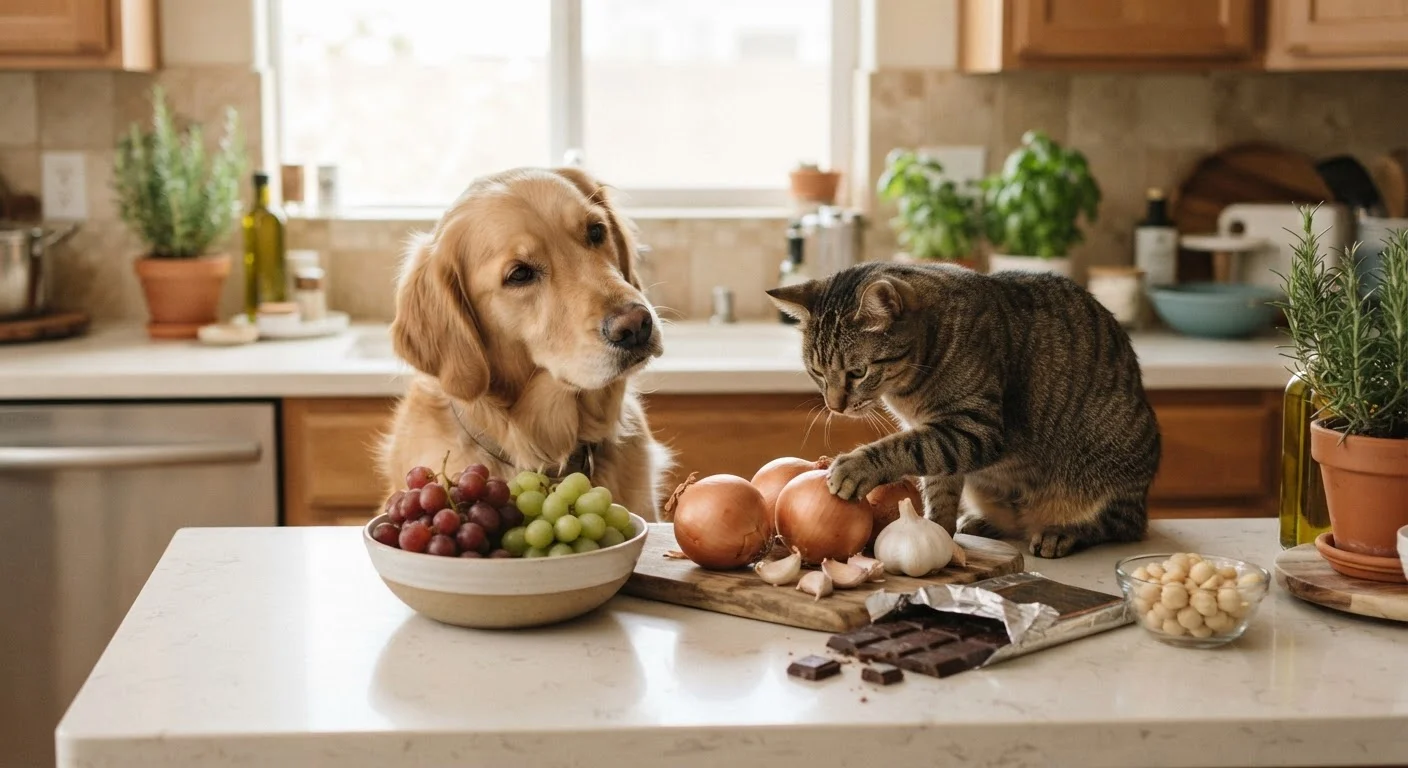
- Grapes and raisins: Even small amounts can cause acute kidney failure in dogs. The exact toxic compound is still under investigation, but the risk is real and well-documented. Cats are likely vulnerable too, though dogs are more commonly affected.
- Onions, garlic, leeks, and chives: All members of the Allium family damage red blood cells in both dogs and cats, leading to hemolytic anemia - a condition where the body destroys its own red blood cells faster than it can replace them. Cooked forms are equally dangerous.
- Avocado: Contains persin, a fungicidal toxin that can cause vomiting and diarrhea in dogs and cats. The pit also poses a choking and intestinal obstruction hazard.
Pantry and Baking Shelf
- Xylitol: This sugar alcohol is found in sugar-free gum, some peanut butters, baked goods, and candy. In dogs, it triggers a rapid release of insulin, causing dangerous hypoglycemia (low blood sugar) and, in higher doses, liver failure. It is one of the most acutely toxic substances a dog can encounter in a household.
- Chocolate: Contains theobromine and caffeine, both methylxanthines that dogs and cats cannot metabolize efficiently. Dark chocolate and baking chocolate contain far higher concentrations than milk chocolate, but all forms carry risk. Symptoms include vomiting, tremors, elevated heart rate, and seizures.
- Macadamia nuts: Cause weakness, hyperthermia, vomiting, and tremors in dogs. The mechanism is not fully understood, but even a small amount can produce noticeable symptoms within 12 hours.
- Raw yeast dough: Expands in a warm digestive tract, causing painful bloating. Fermenting dough also produces ethanol, which can lead to alcohol toxicity.
Refrigerator and Coffee Station
- Alcohol (ethanol): Pets are far more sensitive to alcohol than humans. Even small amounts can cause respiratory depression, low blood sugar, and in severe cases, coma.
- Caffeine: Coffee grounds, tea bags, energy drinks, and some medications all contain caffeine. Toxicity signs in pets mirror those of chocolate poisoning - restlessness, rapid breathing, muscle tremors.
- Dairy in large amounts: Cats and dogs are generally lactose-intolerant after weaning. While not acutely toxic, large quantities of milk or cheese can cause significant gastrointestinal upset. This is a common pet feeding myth worth dispelling.
Methylxanthines
A class of compounds that includes theobromine and caffeine. Dogs and cats lack efficient enzymes to break these down, making chocolate, coffee, and tea potentially toxic to them.
Hemolytic Anemia
A condition in which red blood cells are destroyed faster than the body can produce new ones. In pets, Allium vegetables like onions and garlic are a known dietary trigger.
Xylitol
A sugar alcohol used as a low-calorie sweetener in many human products. In dogs, it causes a rapid and dangerous drop in blood sugar and can lead to liver failure.
Persin
A natural fungicidal toxin found primarily in avocado leaves, skin, and flesh that can cause gastrointestinal upset in dogs and cats.
Hypoglycemia
Abnormally low blood sugar. In dogs, this can be triggered by xylitol ingestion and requires urgent veterinary care.
Bones and Table Scraps
- Cooked bones: Splinter easily and can cause internal lacerations or obstructions. Raw bones carry their own risks and should only be considered after consulting a veterinarian.
- Salty snacks in excess: High sodium intake can cause excessive thirst, urination, and in severe cases, sodium ion poisoning - with signs including tremors and seizures.
What to Do If Your Pet Eats Something Toxic
Speed matters. If you suspect ingestion of any toxic food, do not wait for symptoms to appear before seeking help. Gather whatever information you can - the food involved, the estimated amount eaten, and your pet's approximate weight - and contact your veterinarian or a veterinary poison control hotline right away. Do not attempt to induce vomiting unless specifically instructed to do so by a professional, as this can cause additional harm in some situations.
Recognizing early warning signs is part of responsible pet ownership. Symptoms like sudden lethargy, vomiting, pale gums, or abnormal behavior after a pet has accessed the kitchen should always be treated seriously. For a broader look at physical signs that something in your pet's diet or health may be off, see signs your pet's diet may not be meeting their nutritional needs. Our Pet Health Basics hub also covers the core practices every pet owner should have in place before an emergency arises.
Prevention remains the most effective strategy: keep toxic foods secured, educate household members and guests, and review the full list of dangerous foods for pets for additional hazards that are less commonly discussed.