

Key Takeaways
Dramatically reduced exposure to infectious disease
Indoor cats have very limited contact with other cats, which sharply reduces transmission risk for FeLV, FIV, and common upper respiratory viruses.
Far lower risk of traumatic injury
Vehicle strikes, animal attacks, and accidental poisoning are among the leading causes of injury and death in outdoor cats - hazards that are effectively eliminated indoors.
Easier to monitor diet and body weight
Controlled feeding means owners can track caloric intake accurately, which is important for preventing obesity and managing chronic conditions like diabetes.
Minimal parasite burden without prevention products
Indoor cats have very low flea, tick, and intestinal parasite exposure, reducing both health risk and the frequency of preventive treatments needed.
Generally associated with longer average lifespans
While individual outcomes vary, indoor cats as a population tend to live considerably longer than free-roaming cats, reflecting the cumulative effect of reduced hazard exposure.
Higher risk of obesity and related conditions
Without the movement demands of outdoor life, indoor cats can become sedentary. Excess weight contributes to diabetes, joint disease, and urinary problems.
Behavioral issues from under-stimulation
Boredom and lack of environmental complexity can lead to overgrooming, inter-cat aggression in multi-pet homes, or anxiety-driven behaviors like excessive vocalization.
Stress from inadequate territory and control
Cats are territorial animals; a small or poorly arranged space can create chronic low-grade stress, which may suppress immune function over time.
Significantly elevated infectious disease risk
Free-roaming cats encounter many other cats and wildlife, increasing exposure to FeLV, FIV, ringworm, and respiratory pathogens that spread through direct contact.
High risk of traumatic injury or death
Vehicle strikes and predator encounters are common causes of serious injury or death in outdoor cats, particularly in suburban and urban environments.
Greater parasite management demands
Outdoor cats require more rigorous and consistent flea, tick, and intestinal parasite prevention, along with more frequent fecal screening at veterinary visits.
Our Verdict
Neither lifestyle is risk-free, but the evidence generally supports indoor living as the safer baseline for most cats, particularly in urban or suburban settings. The key is actively compensating for what indoor cats miss - mental stimulation, physical activity, and environmental variety. For cats with outdoor access, rigorous parasite prevention, vaccination, and regular checkups become even more critical.
Pet owners who want to make a genuinely informed, health-focused decision about their cat's lifestyle rather than defaulting to habit or convenience.
Why This Question Matters More Than It Seems
The indoor-versus-outdoor debate is one of the most common - and most consequential - decisions cat owners make. It shapes your cat's exposure to disease, injury, stress, and even lifespan. Yet many owners settle into a routine without fully weighing the health implications on either side.
This isn't about judging anyone's approach. It's about giving you a clear-eyed look at what each lifestyle actually involves so you can make the best call for your specific cat and circumstances. Understanding your cat's behavior can also inform this decision - see our guide to reading your cat's body language for cues that signal stress or contentment.
The Case for Keeping Cats Indoors
Indoor living removes a long list of physical hazards that outdoor cats routinely encounter. Road traffic, predatory animals, territorial fights with other cats, and accidental poisoning from garden chemicals or antifreeze are all effectively eliminated. Studies have consistently found that indoor cats tend to live significantly longer on average than cats with outdoor access, though exact figures vary by environment and individual health.
Dramatically reduced exposure to infectious disease
Indoor cats have very limited contact with other cats, which sharply reduces transmission risk for FeLV, FIV, and common upper respiratory viruses.
Far lower risk of traumatic injury
Vehicle strikes, animal attacks, and accidental poisoning are among the leading causes of injury and death in outdoor cats - hazards that are effectively eliminated indoors.
Easier to monitor diet and body weight
Controlled feeding means owners can track caloric intake accurately, which is important for preventing obesity and managing chronic conditions like diabetes.
Minimal parasite burden without prevention products
Indoor cats have very low flea, tick, and intestinal parasite exposure, reducing both health risk and the frequency of preventive treatments needed.
Generally associated with longer average lifespans
While individual outcomes vary, indoor cats as a population tend to live considerably longer than free-roaming cats, reflecting the cumulative effect of reduced hazard exposure.
Indoor cats also benefit from controlled nutrition - owners know exactly what their cat eats and can monitor weight, which is an important factor in managing conditions like diabetes and joint disease. Veterinary visits are easier to schedule and follow-through on, and parasite exposure is dramatically reduced.
That said, the indoor environment has to be actively managed. A cat confined to a sparse apartment with no enrichment, no vertical space, and minimal interaction is not living well - they're just living safely. Obesity is a genuine concern for sedentary indoor cats, and boredom can manifest as overgrooming, anxiety, or destructive behavior.
The Risks and Realities of Outdoor Access
Outdoor access gives cats opportunities to express natural behaviors: hunting, climbing, patrolling territory, and engaging with changing sensory environments. For cats who have always lived outdoors, abrupt confinement can itself cause significant psychological stress.
Higher risk of obesity and related conditions
Without the movement demands of outdoor life, indoor cats can become sedentary. Excess weight contributes to diabetes, joint disease, and urinary problems.
Behavioral issues from under-stimulation
Boredom and lack of environmental complexity can lead to overgrooming, inter-cat aggression in multi-pet homes, or anxiety-driven behaviors like excessive vocalization.
Stress from inadequate territory and control
Cats are territorial animals; a small or poorly arranged space can create chronic low-grade stress, which may suppress immune function over time.
Significantly elevated infectious disease risk
Free-roaming cats encounter many other cats and wildlife, increasing exposure to FeLV, FIV, ringworm, and respiratory pathogens that spread through direct contact.
High risk of traumatic injury or death
Vehicle strikes and predator encounters are common causes of serious injury or death in outdoor cats, particularly in suburban and urban environments.
Greater parasite management demands
Outdoor cats require more rigorous and consistent flea, tick, and intestinal parasite prevention, along with more frequent fecal screening at veterinary visits.
However, the hazard list for outdoor cats is substantial. Infectious diseases - including feline leukemia virus (FeLV), feline immunodeficiency virus (FIV), and upper respiratory infections - spread through contact with other cats. Intestinal parasites, fleas, and ticks are far more prevalent. Traumatic injury from vehicle strikes is a leading cause of death in free-roaming cats. In some regions, predation by coyotes, birds of prey, or even dogs poses a real threat.
10-15 yrs
Typical indoor cat lifespan
The American Veterinary Medical Association notes that indoor cats commonly live 10-15 years or more, while free-roaming cats often have considerably shorter lives.
~1-5 yrs
Estimated free-roaming cat lifespan
Various wildlife and veterinary sources estimate that unowned or free-roaming cats have a substantially shorter average lifespan due to accumulated environmental risks.
1 in 3
Cats affected by obesity in the US
The Association for Pet Obesity Prevention has found that roughly a third of US cats are classified as overweight or obese - a condition closely linked to sedentary indoor lifestyles.
Outdoor cats also have a measurable ecological impact, particularly on local bird and small mammal populations - a consideration that increasingly factors into community-level discussions about feline management, even if it's separate from the individual health question.
Finding a Middle Ground: Enriched Indoor Living and Supervised Outdoors
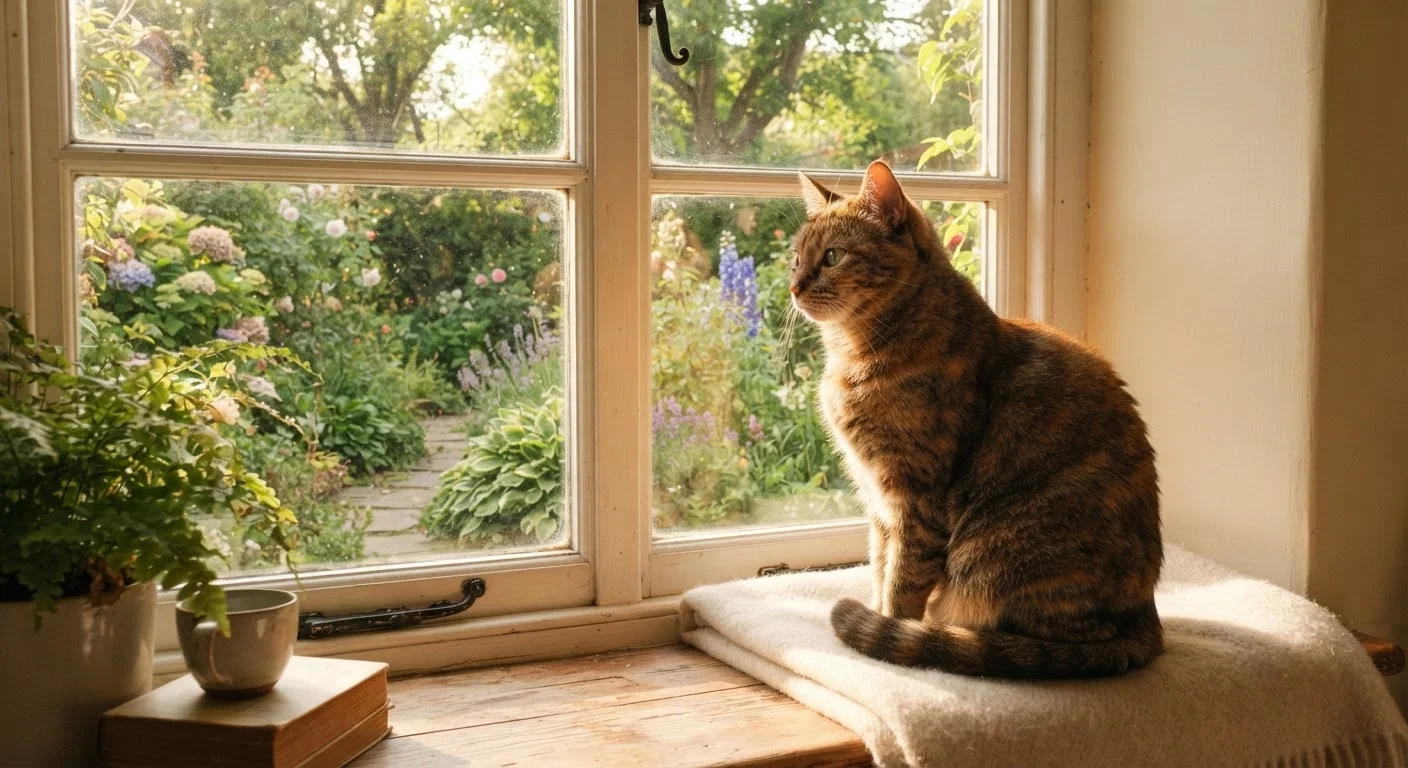
For many owners, the most practical path isn't a binary choice. Enriched indoor environments - with puzzle feeders, climbing structures, window perches, and daily interactive play - can address the behavioral and physical needs that outdoor access would otherwise fulfill.
The Catio Option: Worth Considering
Catios - screened or mesh-enclosed outdoor structures - have become a practical compromise for owners who want to provide outdoor enrichment without free-roaming risk. They can range from small window boxes to large walk-in enclosures. While setup involves some cost and effort, many veterinarians view them favorably as a way to support behavioral health while maintaining the safety profile of indoor living. Check local building rules if you're planning a permanent structure.
Leash training, while not suited to every cat, is increasingly popular and allows supervised outdoor exploration without free-roaming risk. Enclosed 'catios' (outdoor enclosures attached to windows or doors) offer fresh air, natural light, and sensory stimulation while keeping the cat physically contained and safe.
Whichever approach you choose, consistent veterinary care remains non-negotiable. Outdoor cats typically need more frequent parasite screening, broader vaccination coverage, and closer monitoring for injuries or illness. Indoor cats still require annual wellness exams and weight management. Nutrition also plays a role in supporting either lifestyle - our overview of cat nutrition across life stages covers how dietary needs shift over time and can inform feeding choices for active versus less active cats.
This article is for general informational purposes only and does not constitute veterinary advice. Always consult a licensed veterinarian regarding your individual cat's health needs and lifestyle decisions.