

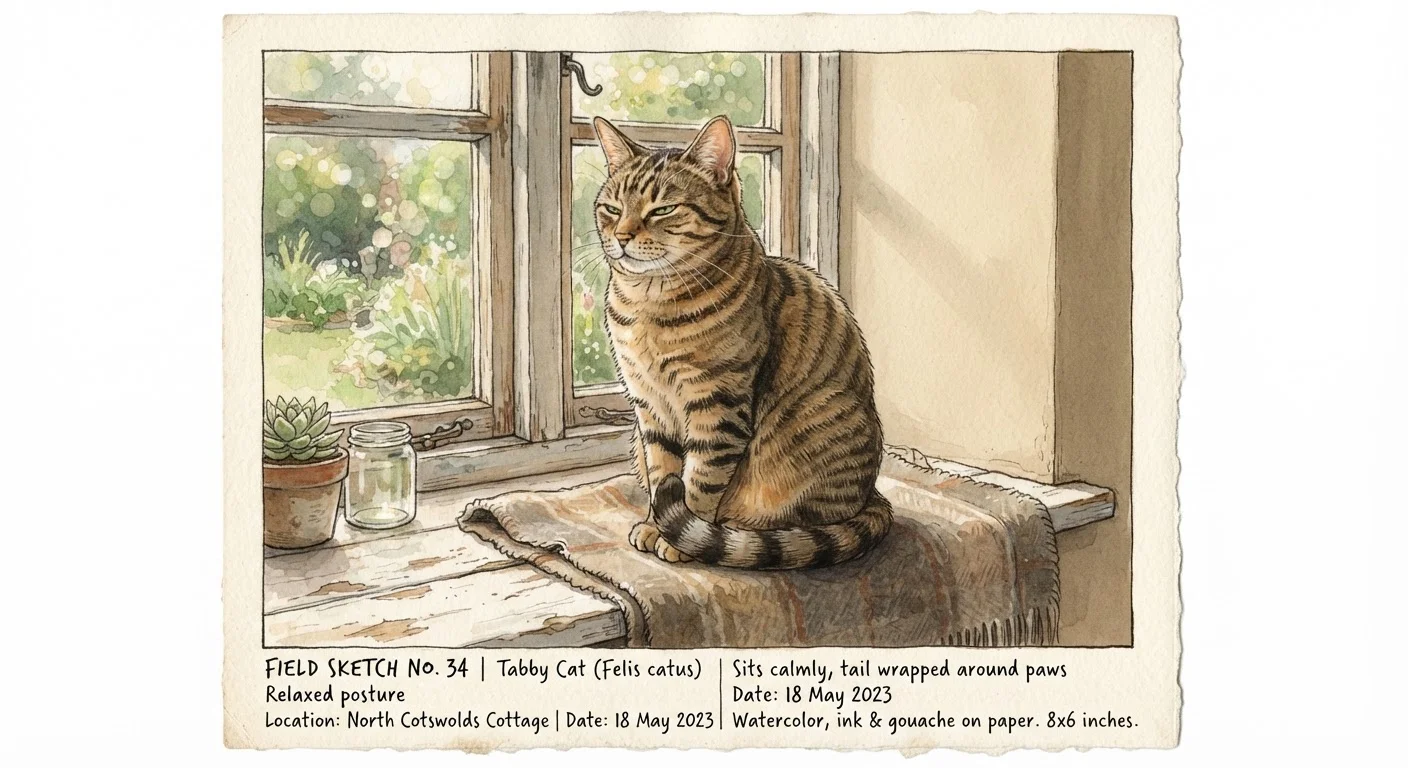
| Primary communication channel | Body posture, tail position, and facial expression (not vocalizations) |
| Tail-high greeting | Confident, friendly approach - a positive social signal |
| Flattened ears meaning | Fear, aggression, or pain - a high-stress indicator |
| Slow blink significance | Trust and non-threat - can be reciprocated by owners |
| Rapid tail lashing | Irritation or overstimulation - a pre-bite warning signal |
| Belly-up posture | Trust display, not always an invitation to touch |
Why Cat Body Language Is Worth Learning
Cats communicate constantly - they just don't use words. Every flick of the tail, angle of the ear, and shift in posture is a signal. The challenge for most owners is that cat body language is subtle, context-dependent, and easy to misread. A wagging tail, for example, means something very different in a cat than it does in a dog.
Learning to read these cues accurately helps you respond appropriately, avoid unnecessary conflict, and build a stronger bond with your cat. It also puts you in a better position to notice when something is off. Many early signs of illness or discomfort show up as behavioral shifts before physical symptoms become obvious - see our guide on signs of pain and discomfort in pets for more on that distinction.
This field guide breaks down the key body parts to watch and what each signal typically means, so you can build a working vocabulary of feline communication.
The Tail: Your Cat's Emotional Antenna
The tail is one of the most expressive parts of a cat's body. Here's a quick reference for what different positions usually indicate:
- Tail held high, tip slightly curved: Confidence and contentment. This is a greeting posture - your cat is happy to see you.
- Tail puffed out (piloerection): Fear or agitation. The cat is trying to appear larger in response to a threat.
- Tail tucked under the body: Submission, anxiety, or illness.
- Slow, low tail swish: Focused concentration - common during hunting or play.
- Rapid tail lashing: Irritation or overstimulation. This is a warning: back off before a bite or scratch follows.
- Tail wrapped around another cat or person: Affection and social bonding.
Always read the tail alongside the rest of the body. A high tail paired with flattened ears tells a very different story than a high tail with relaxed, forward ears.
Piloerection
The involuntary raising of fur along a cat's tail and spine, making the animal appear larger. It typically signals fear or high arousal and is triggered by the nervous system.
Bunting
When a cat presses its head or face against a person, object, or other animal. It deposits scent from facial glands and is generally a sign of affection and social bonding.
Slow blink
A deliberate, unhurried closing and reopening of the eyes directed at another individual. In cats, it signals trust, relaxation, and non-threatening intent.
Overstimulation
A state reached when petting or play exceeds a cat's comfort threshold. Signs include skin rippling, tail lashing, and sudden biting or scratching - the cat's way of saying "enough."
Kneading
A rhythmic pushing motion made with alternating front paws, often against soft surfaces. It originates from nursing behavior in kittens and typically signals contentment in adult cats.
Ears, Eyes, and Whiskers: Reading the Face
A cat's facial signals are the most nuanced - and often the most overlooked. Pay attention to these three areas together:
Ears
- Forward-facing, slightly upright: Alert and curious.
- Rotated back or sideways ("airplane ears"): Uncertainty or mild irritation.
- Flat against the skull: Fear, aggression, or pain. This is a serious stress signal.
Eyes
- Slow blink: Arguably the best-known friendly cat signal. A slow, deliberate blink toward you is a sign of trust. You can return the gesture - many cats respond positively.
- Dilated pupils in low light: Normal. In bright light, dilated pupils can signal excitement, fear, or discomfort.
- Constricted pupils with a hard stare: Aggression or intense focus.
- Half-closed eyes: Relaxation and comfort.
Whiskers
- Fanned forward: Curious or excited.
- Pulled back flat against the face: Fear or defensiveness.
Whole-Body Posture and What It Signals
Context and full-body posture complete the picture. A single signal in isolation can be ambiguous - posture helps confirm the emotional state.
| Posture | Likely State |
|---|---|
| Loaf position (paws tucked, eyes half-open) | Relaxed and comfortable |
| Belly exposed, lying on back | Trust - but not necessarily an invitation to touch; many cats dislike belly rubs |
| Crouched low, body tight to the floor | Fear, submission, or stalking prey |
| Arched back, fur raised | Defensive threat display |
| Slow, deliberate head-butt (bunting) | Affection and scent-marking - this is a social compliment |
| Kneading ("making biscuits") | Contentment; a comfort behavior rooted in kittenhood |
Understanding indoor versus outdoor environments also affects how a cat expresses stress or comfort - the indoor vs. outdoor lifestyle tradeoffs article explores how environment shapes feline wellbeing more broadly.
For a broader foundation on feline health signals and care, the Pet Health Basics hub is a useful starting point.
This article is for general educational purposes only and does not constitute veterinary advice. If you notice sudden or persistent changes in your cat's behavior or posture, consult a licensed veterinarian.