

Key Takeaways
Our Verdict
Group classes and private training sessions are not competing options so much as complementary tools. Group settings excel at building social confidence and basic obedience at lower cost, while private sessions provide the focused, customized guidance that complex behavioral challenges demand. For most dog owners, the best outcome comes from understanding which format suits the specific goal - and sometimes using both.
| Best for | Recommended |
|---|---|
| Puppies and dogs needing socialization and basic manners | Group Classes |
| Dogs with fear, reactivity, aggression, or specialized behavioral concerns | Private Training Sessions |
| Owners working within tighter budget constraints | Group Classes |
| Owners who want a customized training plan and direct feedback | Private Training Sessions |
What Each Format Actually Offers
When evaluating training options for your dog, it helps to understand what each format is actually designed to do - rather than assuming one is simply better than the other.
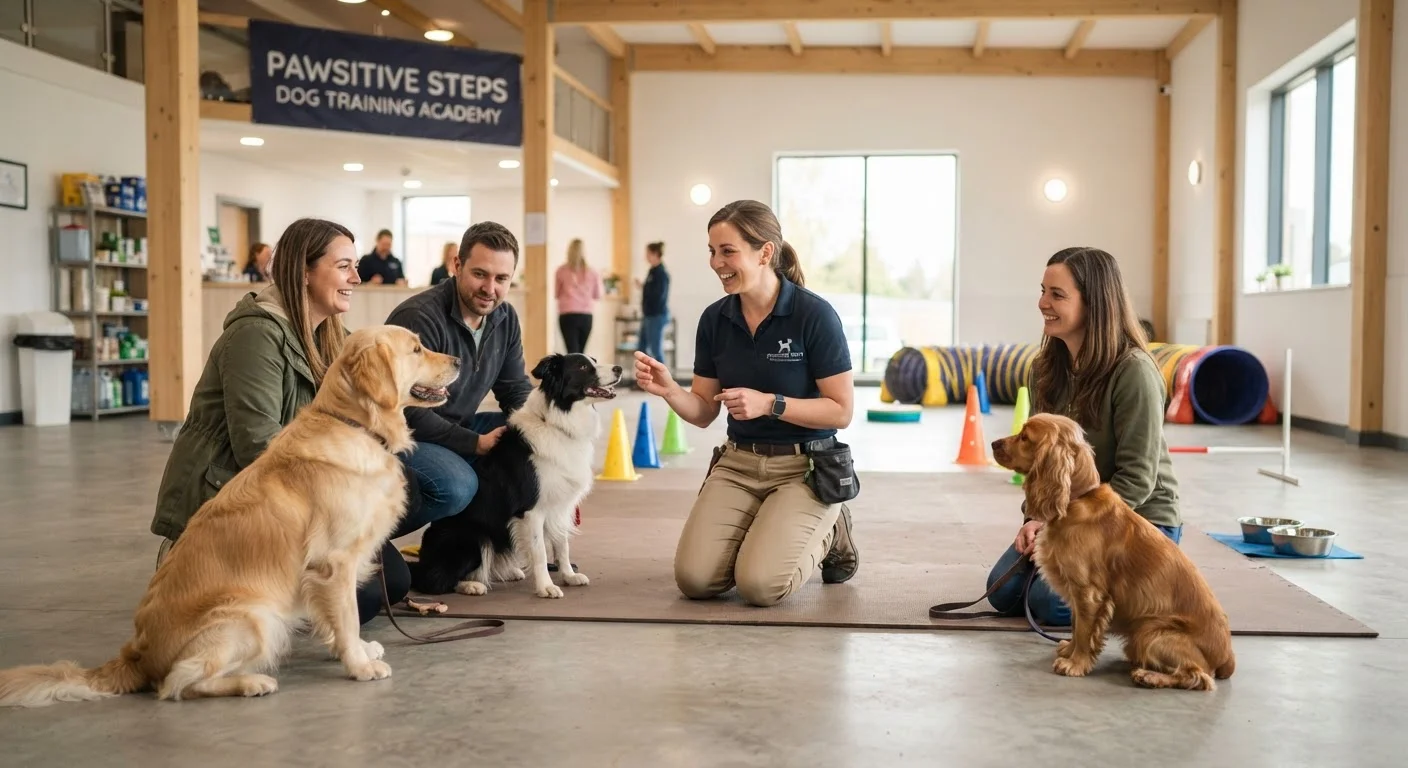
Group classes typically bring together several dogs and their owners in a structured environment, often at a pet supply store, training facility, or community center. A single instructor leads the session, guiding all participants through the same exercises simultaneously. This format naturally introduces your dog to distractions - other dogs, unfamiliar people, varied sounds - which is genuinely useful for building focus and social tolerance.
Private sessions pair you and your dog one-on-one with a trainer, either in your home, a training facility, or another location of your choosing. The trainer's full attention is on your dog's specific behavior patterns, learning pace, and your handling technique. There's no shared curriculum - the session is built around your goals.
Understanding these structural differences makes it much easier to match the format to your actual situation. See also our training session readiness checklist for tips on setting the right conditions before any session begins.
Key Trade-Offs Side by Side
Neither format wins on every dimension. The comparison below maps out where each one leads and where it falls short.
| Group Classes | Private Sessions | |
|---|---|---|
| Cost per session | Lower (shared cost) | Higher (dedicated time) |
| Trainer attention | Divided among all dogs | Fully focused on your dog |
| Socialization value | High - dogs and people present | Low to none by default |
| Curriculum flexibility | Fixed group curriculum | Fully customized to your dog |
| Best for behavior issues | Not ideal for complex cases | Well-suited for targeted problems |
| Schedule flexibility | Set class times | Arranged around your availability |
| Pace of learning | Group-determined pace | Adapts to your dog's pace |
Cost is often the first factor owners notice. Group classes are generally priced per multi-week course, making per-session costs lower. Private sessions carry a higher per-hour rate but may require fewer total sessions if the issue is specific and well-defined.
Trainer attention is the sharpest difference. In a group of six dogs, your dog receives a fraction of the instructor's time. In a private session, corrections, praise, and technique guidance are delivered in real time, specific to what your dog is actually doing.
When Group Classes Make More Sense
Group training is particularly well-suited to puppies learning foundational behaviors - sit, stay, come, leash manners - who also need structured exposure to other dogs and people. The distractions in a group environment aren't just unavoidable; they're part of the educational value. A puppy that can hold a sit while another dog walks past is developing genuine reliability.
Dogs that are socially confident and motivated by their environment often thrive in group settings. The group dynamic can also keep owners engaged and accountable across a multi-week course.
Ask About Class Size Before Enrolling
A group class with twelve dogs offers very different dynamics from one with four or five. Smaller classes allow the instructor more time to observe and correct individual dogs. When evaluating a group class, ask the trainer about their typical enrollment and the ratio of dogs to instructors. Six or fewer dogs per trainer is a reasonable benchmark to look for.
If your dog has already completed basic obedience training and you're looking to maintain skills or introduce agility or nosework concepts, group classes in those specialty formats can be an excellent and affordable next step. For technique questions that come up in group class, our article on reward timing and common training concepts can help fill in the gaps.
When Private Sessions Are the Better Fit
Private training is often the more appropriate choice when a dog's behavior presents safety concerns, significant distress, or complexity that doesn't fit a group curriculum. Reactivity toward other dogs or strangers, resource guarding, separation anxiety, and fear-based behaviors all benefit from the detailed behavioral assessment a private trainer can provide.
Similarly, if your dog has had limited socialization or a difficult early history, placing them in a group class before they're ready can actually set back progress. A private trainer can work systematically to build the foundational confidence needed before group exposure becomes productive.
Owners who are new to dog training or who are working through specific technique challenges - timing of rewards, proper leash handling, reading their dog's body language - also tend to get more from private sessions, where feedback is immediate and personalized. If you have an older dog with ingrained habits, training an older dog requires some adjusted expectations - a private trainer familiar with adult learners can tailor the approach accordingly.
Combining Both Formats Strategically
Many experienced trainers recommend a sequenced approach: start with private sessions to address any foundational issues or behavioral concerns, then transition into a group class once the dog can handle the environment productively. This sequence tends to produce faster, more durable results than either format alone.
The reverse is also reasonable for straightforward cases - complete a beginner group course to build basic skills and social experience, then add a few private sessions to refine specific behaviors or tackle challenges that emerged in class.
Regardless of which format you choose, the most important factor remains consistent: what happens between sessions. Daily reinforcement of learned behaviors at home is what moves skills from the training floor into real life. Neither group classes nor private sessions can substitute for the time and patience you invest outside of them.
This article is for general educational purposes. For behavioral concerns that involve safety risks or significant distress, consult a certified professional trainer or a veterinary behaviorist for an individualized assessment.