

Key Takeaways
Why Most Travel Budgets Fall Short
Most travelers underestimate trip costs not because they're bad at math, but because they only price the obvious line items - flights and hotels. Everything surrounding those anchors tends to get glossed over during the excitement of planning. The result: a gap between what you expected to spend and what actually left your account.
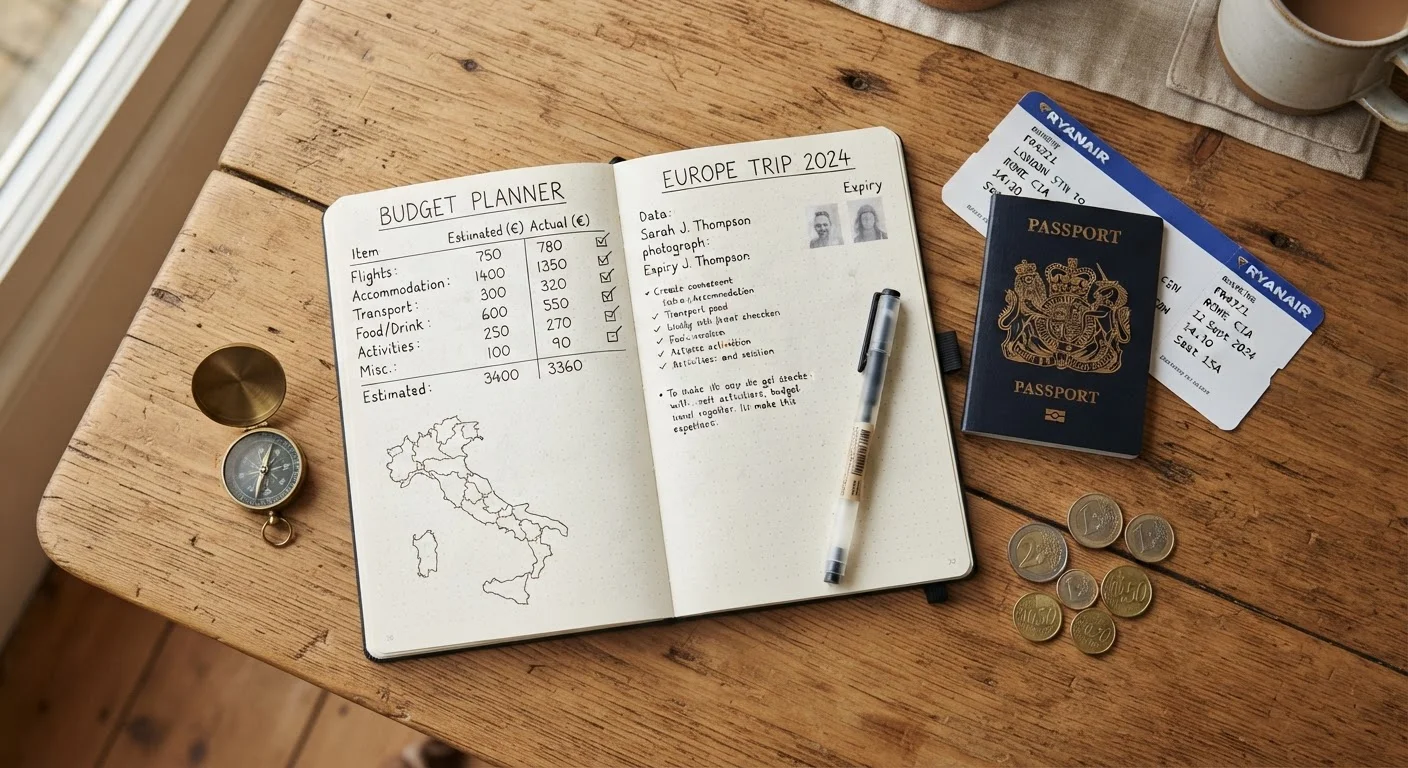
As this breakdown of where travel money actually goes shows, flights are often a smaller slice of total costs than people assume. Ground transport, daily meals, entrance fees, and incidentals collectively rival - or exceed - the cost of airfare on many trips.
A travel budget that holds up has to account for all of it, and it has to be treated as a living document you update right through your return home. Here's how to build one that does exactly that.
What you will need
The Six Budget Categories You Need
Rather than one undifferentiated number, structure your travel budget around six distinct categories. This makes it far easier to spot where estimates are shaky and where you have room to flex.
- Transportation: Flights or driving costs, airport transfers, trains, buses, rideshares, and car rentals. Don't forget parking, tolls, and fuel if you're road-tripping. Our road trip route planning guide covers the transport variables worth pricing before you commit.
- Accommodation: Nightly rates are just the start. Factor in taxes, resort fees (common at US and Caribbean properties), and parking fees at the hotel.
- Food and drink: A common rule of thumb is to estimate at least three tiers - a quick breakfast, a sit-down lunch, and a proper dinner - then multiply by trip days. Add a modest buffer for drinks and snacks.
- Activities and experiences: Museum admissions, guided tours, theme parks, excursions. Check official attraction websites for current pricing rather than relying on outdated travel blogs.
- Administrative and logistics costs: Visa application fees, travel insurance premiums, checked baggage fees, currency conversion costs (see how currency exchange and ATM fees affect your spending), and any required vaccinations or health documentation.
- Contingency reserve: Build in at least 10-15% of your subtotal as an unallocated buffer. This covers rebooking fees, medical co-pays, an unexpected night's stay, or simply a spontaneous experience you didn't plan for.
Price Your Itinerary, Not Just Your Trip
A well-structured daily itinerary makes budgeting dramatically more accurate. When you know roughly what you'll do each day, you can price activities and meals with much less guesswork. See what a solid travel itinerary should include for a practical framework that pairs directly with budget planning.
Building the Budget Step by Step
Define your trip parameters first
Before any number goes on paper, nail down the fundamentals: destination, travel dates, duration, and the number of travelers. Vague parameters produce vague budgets. Decide whether you're pricing a solo city break, a family beach week, or an international adventure - each has a completely different cost profile.
Research real prices for each category
Spend time on actual pricing rather than assumptions. Look up current flight routes, browse accommodation listings for your specific dates, and check official websites for attraction admission costs. For international destinations, note whether prices are in local currency and factor in the current exchange rate.
If you're weighing whether to book components separately or as a package, understanding the trade-offs between flights and packages can help you decide which approach saves you more overall.
Add every administrative cost line by line
List out every ancillary cost you can identify: visa fees, passport renewal (if needed), travel insurance, baggage fees for each flight leg, transportation from and to your home airport, and any required health documentation. These items are frequently omitted and collectively add up fast.
Add your contingency buffer and set the total
Total your six category subtotals, then add a contingency reserve of 10-15%. This is your working budget ceiling - the number that should live in a dedicated travel savings account rather than your everyday checking account. Make sure your travel itinerary is aligned with this figure before you start booking.
Track spending daily during the trip
Log every purchase the same day it happens. Group expenses into your pre-set categories so you can compare actuals to estimates at a glance. A simple shared note or a travel-expense app works well - the tool matters far less than the consistency of using it every day.
Once your categories are priced, set a per-day spending target by dividing your non-fixed costs (food, activities, incidentals) by the number of travel days. That single daily figure is easier to track on the ground than a complex spreadsheet. If you've never built a personal budget before, the principles in this household budgeting walkthrough translate directly to travel planning - the categories are just different.
Keep your travel budget separate from your monthly household budget so a big trip doesn't obscure your regular fixed expenses. This is especially worth noting if you're working with a variable income; strategies for budgeting on irregular income can help you carve out a dedicated travel savings line regardless of how your paycheck fluctuates.
Tracking and Adjusting While You Travel
A budget is only as good as the tracking behind it. Logging expenses in real time - a simple notes app works fine - lets you see by day two or three whether you're trending over or under in any category. If food costs are running higher than estimated, you know to dial back an activity or two rather than discovering the problem when you're home.
Group trips add a layer of complexity because money moves between people constantly. Clear financial agreements made before departure prevent the friction that sours shared experiences. Strategies for group trip planning include practical approaches to splitting costs fairly and keeping everyone aligned on the budget from day one.
When you return home, reconcile what you actually spent against each category. This isn't an exercise in guilt - it's data. Those real figures become the foundation of every travel budget you build after this one, and each trip you take, your estimates will get sharper.
This article provides general budgeting information for educational purposes and is not personalized financial advice. For guidance specific to your financial situation, consider consulting a qualified financial professional.