

Key Takeaways
Significantly lower nightly cost than cabin rentals
Most developed national park campsites cost between $20 and $35 per night, making multi-night stays far more affordable for budget-minded travelers.
Deeper immersion in the natural environment
Sleeping outdoors puts you directly in the park experience - natural sounds, night skies, and morning wildlife are all part of the stay in a way cabins can't match.
More site locations spread across the park
Campgrounds are often distributed near trailheads and scenic areas, giving campers more convenient access to the features they came to see.
Flexible trip length without high per-night costs
Because nightly fees are low, extending a camping trip by a day or two doesn't significantly strain a travel budget the way cabin rates can.
Requires substantial gear investment upfront
A quality tent, sleeping bags, cooking setup, and bear canister can represent a significant initial expense for those who don't already own camping equipment.
Weather exposure can derail the trip
Rain, unexpected cold snaps, or extreme heat in a tent makes for a genuinely uncomfortable experience, particularly at higher elevations or during shoulder seasons.
Shared or limited bathroom facilities
Many campgrounds offer pit toilets or shared bathhouses rather than private facilities, which can be a dealbreaker for some travelers, especially families with young children.
Food storage and bear safety add complexity
Most national parks require food to be stored in bear boxes or certified canisters, adding logistical steps that cabin guests don't need to think about.
Our Verdict
Tent camping rewards those who want full immersion in nature at a lower cost, while cabin rentals offer a more comfortable, weather-proof experience that's easier on families or first-time park visitors. Both are legitimate ways to experience a national park, and neither delivers a lesser trip - just a different one.
Tent camping suits budget-conscious, gear-equipped adventurers; cabin rentals are ideal for families, older travelers, or anyone prioritizing comfort and convenience over roughing it.
Setting the Scene: What Each Option Actually Involves
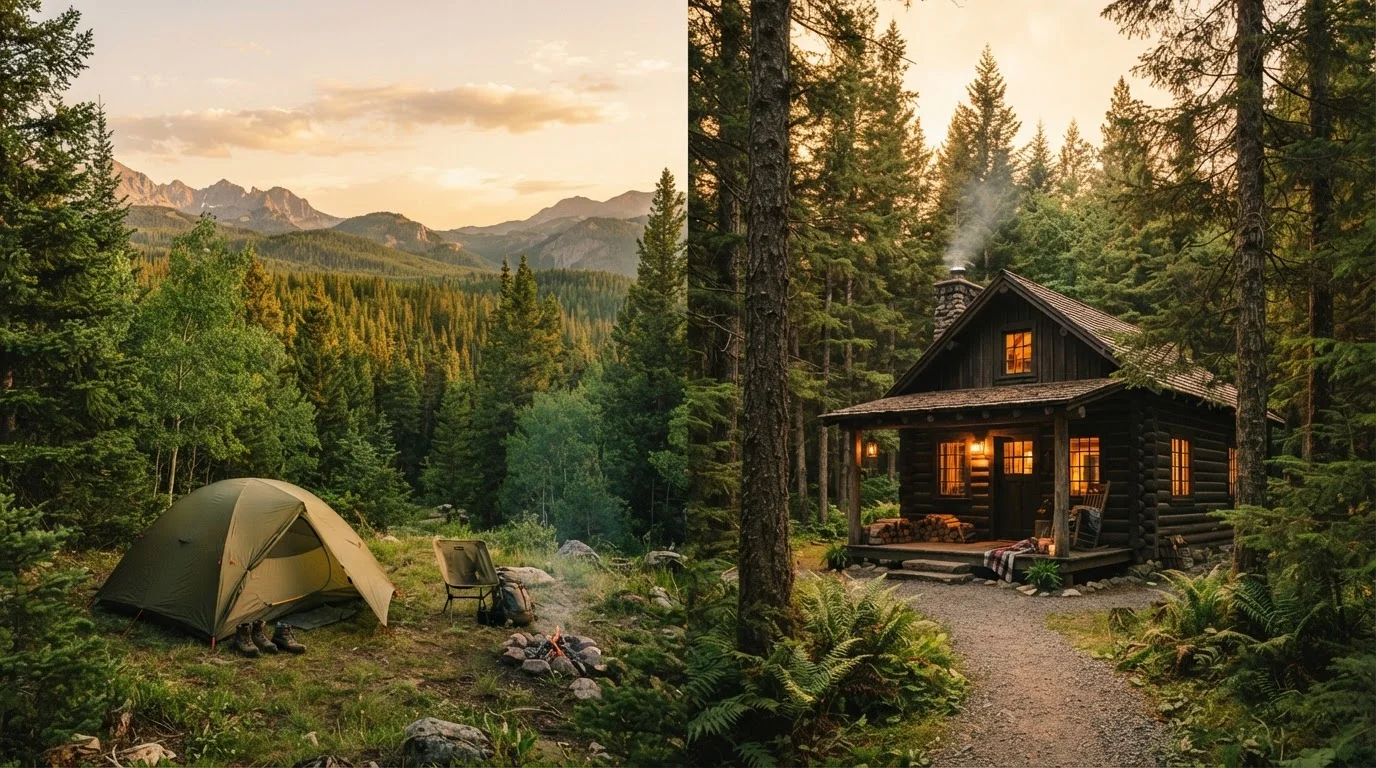
Staying overnight in a national park generally comes down to two mainstream choices: pitching a tent at a designated campsite or booking a cabin - either within or just outside park boundaries. These two experiences overlap in setting but diverge sharply in almost everything else.
Tent camping means sleeping on the ground (or on a sleeping pad), cooking over a camp stove or fire grate, sharing bathhouse facilities if available, and living close to the elements. Cabin rentals - whether managed by the National Park Service, concessioners, or private operators nearby - typically include beds, electricity, climate control, and often a private bathroom or kitchenette.
Understanding those structural differences upfront makes the rest of the decision easier. For deeper context on planning around park fees and passes, see our guide on national park passes vs. paying per entry.
The Case for Tent Camping
Camping connects you to the park in a way a cabin simply can't replicate. Wake up to birdsong outside your tent door, step out into the morning mist, and you're already inside the experience. For many visitors, that immediacy is the whole point.
Significantly lower nightly cost than cabin rentals
Most developed national park campsites cost between $20 and $35 per night, making multi-night stays far more affordable for budget-minded travelers.
Deeper immersion in the natural environment
Sleeping outdoors puts you directly in the park experience - natural sounds, night skies, and morning wildlife are all part of the stay in a way cabins can't match.
More site locations spread across the park
Campgrounds are often distributed near trailheads and scenic areas, giving campers more convenient access to the features they came to see.
Flexible trip length without high per-night costs
Because nightly fees are low, extending a camping trip by a day or two doesn't significantly strain a travel budget the way cabin rates can.
Cost is another major draw. A standard developed campsite at a national park typically runs between $20 and $35 per night - a fraction of what cabin lodging costs. For multi-night trips or groups on a budget, those savings add up fast. Campsites also tend to be more widely distributed across a park, putting you closer to trailheads and natural features than most lodges.
That said, camping does require investment upfront - quality sleeping bags, a tent rated for the season, and a reliable cooking setup. If you don't own the gear, rental or purchase costs can narrow the price gap considerably.
The Case for Renting a Cabin
Cabins eliminate the logistical complexity of camping while keeping you close to the park. You don't need to pack a tent, sleeping pads, or a stove. You show up, unlock the door, and settle in - which matters a lot when you're traveling with young kids, older family members, or anyone with physical limitations.
Requires substantial gear investment upfront
A quality tent, sleeping bags, cooking setup, and bear canister can represent a significant initial expense for those who don't already own camping equipment.
Weather exposure can derail the trip
Rain, unexpected cold snaps, or extreme heat in a tent makes for a genuinely uncomfortable experience, particularly at higher elevations or during shoulder seasons.
Shared or limited bathroom facilities
Many campgrounds offer pit toilets or shared bathhouses rather than private facilities, which can be a dealbreaker for some travelers, especially families with young children.
Food storage and bear safety add complexity
Most national parks require food to be stored in bear boxes or certified canisters, adding logistical steps that cabin guests don't need to think about.
Weather unpredictability is where cabins really shine. A tent in a sudden cold snap or rainstorm can turn a romantic trip into a miserable one. A cabin stays warm and dry regardless. Many park-area cabins also offer full kitchens, letting you prepare meals and avoid paying lodge restaurant prices every night.
The tradeoff is cost - cabin rates near popular parks can range from $150 to well over $300 per night depending on size and amenities. Availability is also tighter; in-park lodging especially books out months in advance. Planning your full trip as early as possible is critical. Our trip planning tips hub covers reservation strategies worth reviewing before you commit.
How to Decide: Key Questions to Ask Yourself
Rather than defaulting to whichever option sounds more appealing, work through a few practical questions:
- How experienced is your group? First-time campers may struggle with setup, food storage, and bear-safety protocols. Cabins remove that learning curve.
- What's the season? Summer camping at lower elevations can be comfortable and predictable. High-elevation or shoulder-season camping carries more risk; a cabin provides a reliable buffer.
- How long is your stay? A one-night camping trip may feel rushed once you factor in setup and breakdown. Cabins suit shorter stays where you want to maximize hiking time, not camp chores.
- Who's in your group? Families with toddlers or anyone with mobility considerations often find cabins dramatically more practical.
Don't Overlook Middle-Ground Options
Several national parks and nearby state parks offer alternatives beyond tents and traditional cabins - including yurts, glamping setups, and hike-in shelters. These can bridge the comfort-immersion gap nicely. Check recreation.gov and each park's official site for the full inventory of overnight options. Our guide to US state parks is also worth consulting, since state parks sometimes offer more varied lodging with less competition for reservations.
It's also worth noting that some national parks offer middle-ground options - glamping tents, yurts, and hike-in cabins - that blend accessibility with immersion. Check each park's official recreation.gov listing for the full range of overnight options available.
If you're undecided on which type of destination fits your group's style overall, our guide to coastal vs. mountain vacations can help you think through broader preferences before locking in logistics.