

Key Takeaways
Slow Travel
Slow travel is an approach to exploring a destination by spending more time in fewer places rather than rushing through a checklist of attractions. It prioritizes depth over breadth - lingering long enough to absorb a place's landscape, culture, and rhythm. In the context of the American Southwest, it means resisting the urge to hit every landmark in a single road trip and instead letting the terrain unfold at a pace that actually makes sense for it.
Slow travel is a philosophy, not a fixed itinerary style - it can apply equally to a 5-day trip and a 3-week journey, depending on how destinations are chosen and paced.
What Slow Travel Actually Means in This Context
Slow travel isn't about moving at a crawl or skipping the highlights. It's about resisting the itinerary logic that treats a destination as a sequence of checkboxes rather than an experience to absorb. In the American Southwest - a region spanning towering canyon systems, ancient pueblo ruins, high desert plateaus, and a living mosaic of Indigenous cultures - that distinction matters more than almost anywhere else in the country.
Many travelers arrive with a list: Zion, Bryce, Grand Canyon, Antelope Canyon, Monument Valley. Hit them all in eight days, drive between them overnight, and feel satisfied with the photographs. That approach isn't wrong, exactly - but it leaves the most extraordinary parts of the Southwest largely untouched. The region's depth only becomes visible when you slow down enough to notice it.
If you're rethinking how you plan trips in general, it's worth examining the assumptions underneath your itinerary. Common trip planning myths can quietly push travelers toward rushed schedules that don't actually serve them.
Why Scale and Geology Demand Patience
The Southwest's landforms are not backdrop - they are the experience. The Colorado Plateau alone covers roughly 130,000 square miles across four states. Driving through it at highway speed produces a kind of sensory overload that paradoxically numbs you to it: everything looks vast, everything looks red, and then it's behind you.
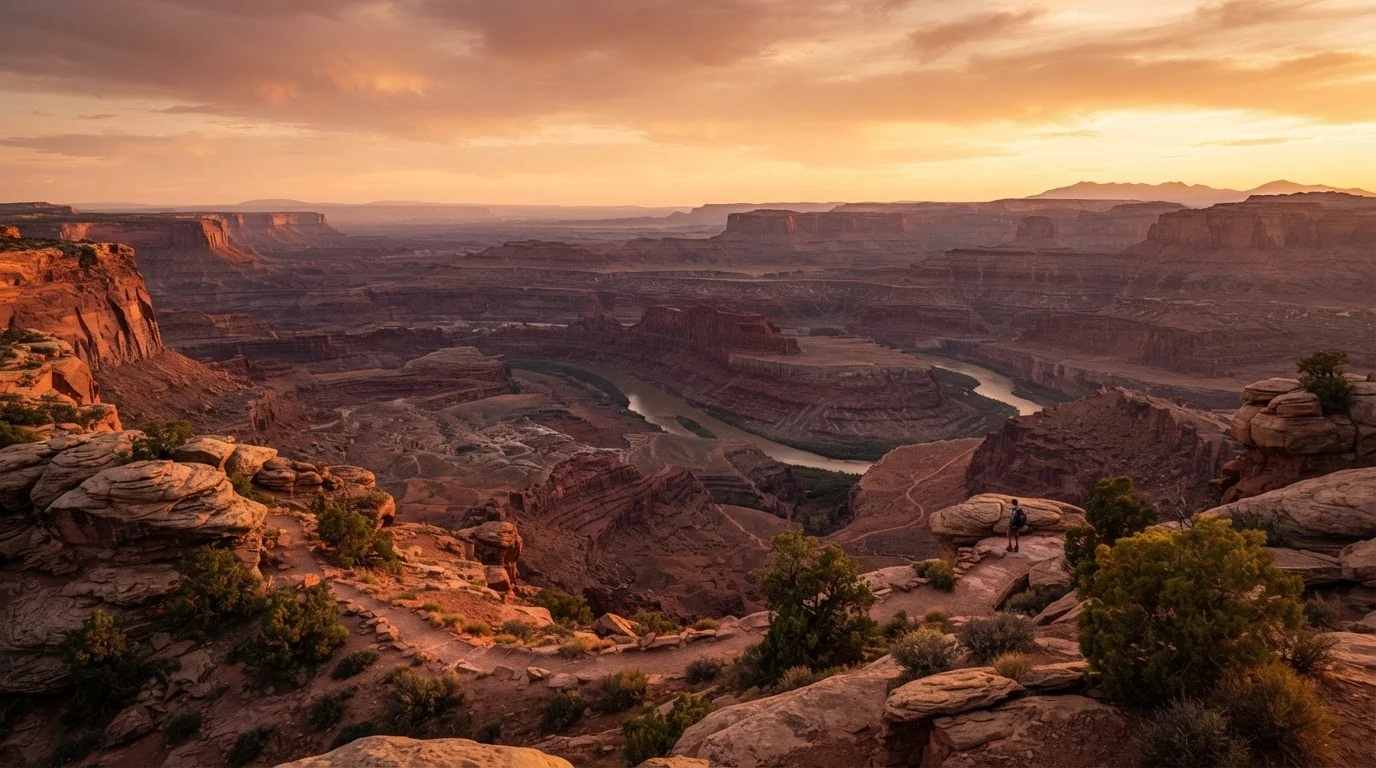
Stopping changes that completely. An hour sitting at the rim of a canyon at different times of day reveals what no photograph fully captures: the way morning light turns alcoves purple, how midday flattens the same wall to orange-pink, how sunset fires the whole formation. That single canyon vista contains more visual information than most entire destinations in other parts of the country.
The same principle applies to hiking. Many of the Southwest's most celebrated trails - the Narrows in Zion, Angels Landing, the canyon loops around Bryce - are undermined by crowds pushing through them on a tight schedule. Choose a less-trafficked hour, or a less-trafficked trail entirely, and the landscape opens up in ways that feel genuinely private.
84M+
Annual visitors to the US National Park System
According to the National Park Service, visitation to US national parks has grown substantially over the past decade, with Southwest parks among the most visited.
130,000 sq mi
Area of the Colorado Plateau
The Colorado Plateau covers parts of Utah, Arizona, Colorado, and New Mexico - one of the most geologically distinctive regions on Earth.
22
Federally recognized tribes in Arizona alone
Arizona has more federally recognized tribes than any other US state, according to the Arizona Department of Administration.
Building your route thoughtfully - balancing driving time, rest, and real stops - makes the difference between a memorable trip and an exhausting one. Our guide to road trip route planning covers the practical side of getting that balance right.
Culture, Community, and What Rushing Past Costs You
The American Southwest is home to 22 federally recognized tribes, many of which maintain living cultural traditions, govern their own lands, and welcome respectful visitors on their own terms. Navajo Nation - the largest Native American territory in the US - alone covers over 17 million acres across Arizona, Utah, and New Mexico. Many of its most significant sites are accessible only through guided tours operated by Navajo-owned businesses.
A traveler rushing through will tick a box at a scenic overlook. A traveler who slows down, books a guided experience, and spends time in communities like Kayenta, Chinle, or Shiprock begins to understand why this land carries the weight it does. That's not something a day-trip produces.
“The land is not just scenery. It is story, memory, and identity - and it takes time to begin to read it.”
— N. Scott Momaday, Pulitzer Prize-winning author and member of the Kiowa Nation, known for writing on Native American land and identity
Small towns throughout the region - Moab, Springdale, Sedona, Taos - are often treated as mere gateways. But the communities themselves, with their art scenes, local histories, and long relationships to the surrounding landscape, are destinations in their own right. Underrated small towns throughout the US often reward exactly this kind of slower attention.
When to Go - and Why Timing Amplifies Everything
Peak summer in the low desert brings temperatures that make extended outdoor time genuinely dangerous. Slow travel in the Southwest means thinking about timing as part of the experience, not just logistics. Spring and fall offer cooler air, softer light, and landscapes punctuated by wildflowers or changing cottonwood leaves along canyon floors.
Visiting in shoulder season - particularly October and early November - also means dramatically smaller crowds at the region's most visited parks. That translates to trailhead parking you can actually find, campsite availability, and an experience of the landscape that feels proportional to its actual scale rather than the human gridlock layered on top of it. For a fuller picture of what shoulder season travel trades and gains, our breakdown of shoulder season travel is worth reading before you commit to dates.
The Southwest is a region that rewards being present in it - not just passing through. Give it the time it deserves, and it tends to return the favor in ways that stick with you long after you're home.