

Key Takeaways
Start here
What a Balanced Plate Actually Means
Next
The Four Food Groups on Your Plate
Then
How to Build the Plate Without Counting Calories
Watch out for
Common Pitfalls and How to Avoid Them
Apply it
Making It Work for Real Life
What a Balanced Plate Actually Means
A balanced plate is not a rigid formula - it is a visual framework grounded in decades of nutrition research. Rather than fixating on exact calorie counts or macronutrient grams, it uses the space on your plate as a practical guide for proportioning the foods your body needs at each meal.
The USDA's MyPlate model, along with similar frameworks endorsed by institutions like the Harvard T.H. Chan School of Public Health, consistently points to the same core principle: most of your plate should be vegetables and fruits, with meaningful but smaller portions of protein and grains. This approach supports adequate fiber, micronutrient, and protein intake without requiring specialized tools or nutrition training.
It is worth noting that this content is general nutrition education - not personalized medical or dietary advice. Individual needs vary, and a registered dietitian is the right resource for guidance tailored to your specific health situation.
Non-starchy vegetables
Vegetables that are relatively low in carbohydrates and calories, such as leafy greens, broccoli, and peppers. They are rich in fiber, vitamins, and minerals.
Whole grains
Grains that retain all three parts of the original kernel - the bran, germ, and endosperm - providing more fiber and nutrients than refined grains like white bread or white rice.
Macronutrients
The three main categories of nutrients the body uses for energy and structure: carbohydrates, protein, and fat. A balanced meal includes all three in appropriate proportions.
Healthy fats
Unsaturated fats found in foods like olive oil, avocados, nuts, and seeds. They support heart health and help the body absorb certain vitamins, unlike saturated and trans fats which should be limited.
Dietary fiber
A type of carbohydrate found in plants that the body cannot fully digest. It supports digestive health, helps with satiety, and is associated with lower risk of several chronic conditions.
Visual portioning
Using visual cues - like the size of your hand or sections of a plate - to estimate appropriate serving sizes without weighing or measuring food precisely.
The Four Food Groups on Your Plate
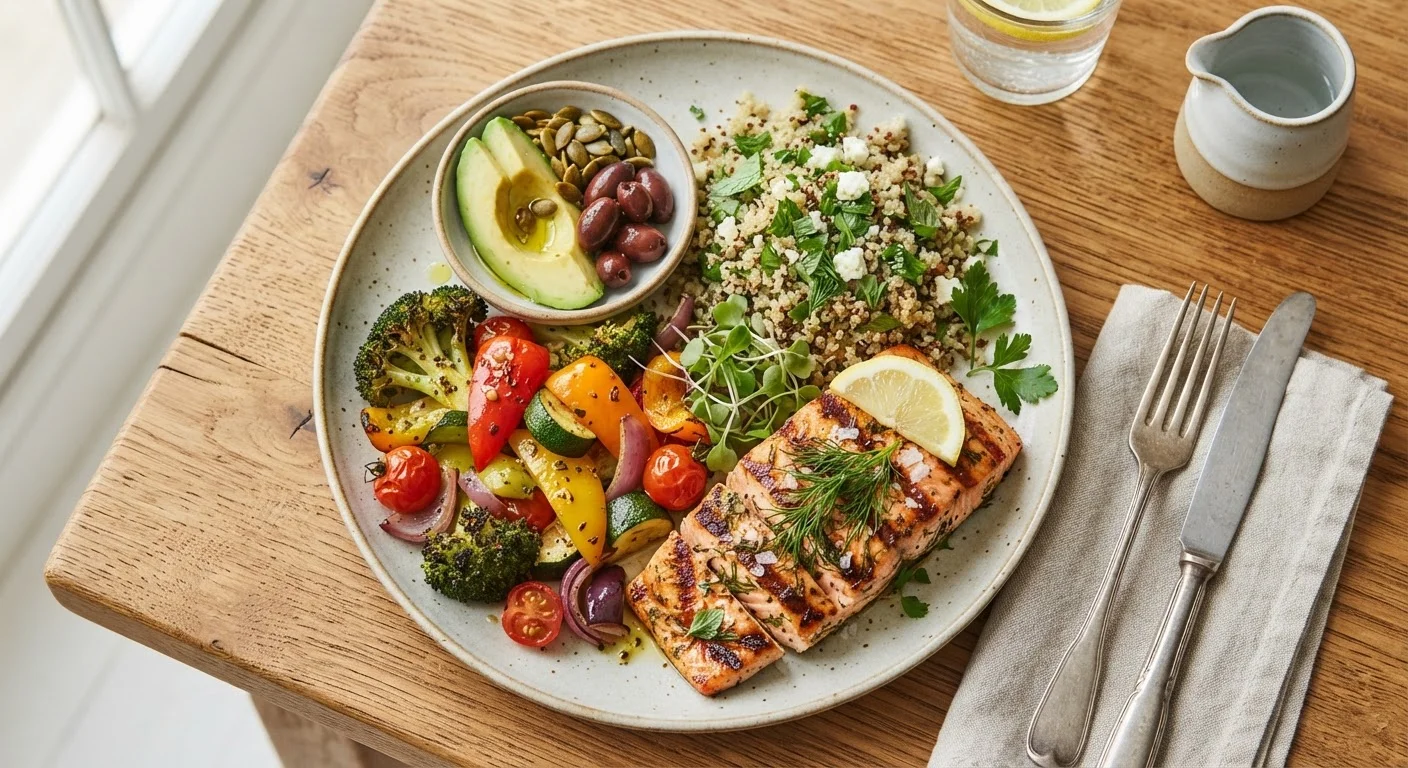
Think of your plate as divided into four broad zones, each serving a distinct nutritional purpose:
- Non-starchy vegetables (roughly half the plate): Leafy greens, broccoli, peppers, cucumbers, tomatoes, and similar foods provide fiber, vitamins, minerals, and antioxidants with relatively few calories. Prioritizing this zone is one of the most consistent findings across dietary research.
- Quality protein (roughly one quarter): Eggs, fish, poultry, legumes, tofu, and lean meats supply amino acids essential for tissue repair, immune function, and satiety. The source matters less than including a meaningful portion at each meal.
- Whole grains or starchy vegetables (roughly one quarter): Brown rice, quinoa, oats, sweet potatoes, and whole-grain bread provide sustained energy through complex carbohydrates and additional fiber. Minimally processed options are generally preferable to refined grains.
- Healthy fats (a supporting role): Olive oil, avocado, nuts, and seeds provide essential fatty acids and support absorption of fat-soluble vitamins. These are energy-dense, so they complement - rather than dominate - the meal.
Hydration deserves mention too: water, unsweetened tea, or similar low-sugar drinks pair naturally with this framework and are often overlooked.
How to Build the Plate Without Counting Calories
Visual portioning removes the mental overhead of tracking numbers. A few reliable techniques make this straightforward at any meal:
- The hand method: A cupped hand approximates a serving of grains; a palm-sized portion represents protein; two cupped hands correspond to a generous vegetable serving. Because hand size scales roughly with body size, this approach naturally adjusts across individuals.
- The plate division method: Draw an imaginary line across the middle of a standard 9-inch dinner plate. Fill one half with vegetables. Divide the remaining half into two quarters - one for protein, one for grains. Add a thumb-sized portion of fat-rich food.
- The eyeballing rule for mixed meals: For dishes where components are combined - pasta with vegetables and chicken, for example - mentally estimate whether the vegetable proportion is the largest, with protein and grains roughly equal behind it.
Start with one meal, not three
If overhauling every meal at once feels overwhelming, pick just one - typically dinner - and apply the plate framework there first. Once that feels natural, extend it to lunch and then breakfast. Gradual change is more sustainable than attempting an overnight overhaul.
Once the habit forms, this kind of proportioning becomes intuitive rather than effortful. If you are ready to extend this to weekly planning, our guide on meal planning fundamentals is a natural next step.
Common Pitfalls and How to Avoid Them
Even well-intentioned eaters run into predictable obstacles when shifting toward more balanced meals:
- Overcrowding the grain quarter: Pasta, bread, and rice are easy to over-portion because they are filling and familiar. Keeping the grain section to roughly a quarter of the plate - and choosing whole-grain versions when possible - addresses this without eliminating them.
- Underestimating liquid calories: Sugary beverages, heavy sauces, and full-fat dressings added on top of an otherwise balanced plate can significantly shift the nutritional profile. Opting for vinegar-based dressings or eating dressings on the side is a simple adjustment.
- Treating protein as optional: Skipping or minimizing protein at meals is linked to increased hunger later in the day. Including a protein source at each sitting - even something simple like a hard-boiled egg or a handful of edamame - is worth the effort.
- All-or-nothing thinking: One imbalanced meal does not undo a pattern of better choices. Consistency over time is what nutrition research consistently points to as meaningful.
If budget is a consideration alongside nutrition, the strategies in our eating well on a budget article offer evidence-backed approaches to building balanced plates affordably.
Making It Work for Real Life
Balanced eating does not require cooking elaborate meals from scratch every night. The plate framework is flexible enough to apply to takeout, cafeteria food, and quick weeknight dinners alike. The key is returning to the same proportioning principles regardless of the setting.
A few practical habits reinforce the approach over time:
- Keep pre-washed vegetables or pre-cut produce on hand so the vegetable half of the plate is the path of least resistance.
- Cook grains and proteins in batches so assembly at mealtime is fast. Our meal planning guide covers batch strategies in detail.
- Use smaller plates if portion creep is a recurring issue - research in behavioral nutrition suggests plate size influences how much people serve themselves.
For those interested in growing some of their own vegetables, starting a vegetable garden from scratch is a practical introduction that pairs naturally with a whole-foods approach to eating.
The balanced plate is a starting point, not a ceiling. As your awareness of nutrition grows, you can refine and adapt the framework. If you have a specific health condition, are pregnant, or are caring for someone with complex dietary needs, working with a registered dietitian ensures the guidance you follow is appropriate for your circumstances.
This article is for general informational and educational purposes only and does not constitute medical or dietary advice. Always consult a qualified healthcare provider or registered dietitian before making significant changes to your diet, especially if you have an existing health condition.