

Key Takeaways
Why Weekly Meal Planning Works
Most people don't struggle with nutrition because they lack willpower - they struggle because food decisions are made too frequently under conditions of hunger and time pressure. Research in behavioral nutrition consistently shows that planning meals in advance leads to more varied, balanced diets and less reliance on highly processed convenience foods.
A weekly planning cycle works well for most households because it aligns with typical grocery shopping rhythms and provides enough structure to be useful without locking you into a rigid schedule. If you're also trying to manage household finances, pairing your meal plan with a grocery list directly supports your food budget - see practical budget-conscious eating strategies for complementary guidance.
Start Simpler Than You Think You Should
First-time meal planners often try to plan every meal for every day and burn out by week two. Start by planning dinners only, then add lunches once the habit is established. A sustainable, imperfect plan beats an elaborate one you abandon after one week.
What You'll Need Before You Start
Effective meal planning doesn't require special equipment, but a few basics make it much easier to execute consistently.
What you will need
Once you have these in place, you're ready to build your first week's plan.
Step-by-Step: Building Your Weekly Meal Plan
Follow these steps each week - ideally on the same day, such as Saturday or Sunday - to create a practical, nutritious plan that holds up through real life. If your week is unpredictable, the flexible weekly routine strategies article offers useful principles that apply equally well to meal planning.
Take a Weekly Inventory Before Planning
Before writing a single meal down, check your refrigerator, freezer, and pantry. Note what needs to be used first - proteins near their use-by date, vegetables starting to soften, or grains already cooked from last week. Building your plan around what you already have reduces waste and lowers your grocery bill.
Map Out the Week's Structure
Look at your upcoming week's schedule before assigning meals. Identify which evenings are busy (requiring quick meals under 20 minutes), which days allow more cooking time, and when you might eat out or have social commitments. Assign meal complexity to match available time - simple stir-fries or sheet-pan meals on hectic nights, and more involved recipes on relaxed evenings.
Build Meals Around Nutritional Balance
For each main meal, aim to include a source of lean protein (eggs, legumes, poultry, fish, tofu), a fiber-rich carbohydrate (whole grains, starchy vegetables), at least one non-starchy vegetable, and a small amount of healthy fat (olive oil, avocado, nuts). This structure, consistent with guidance from the Dietary Guidelines for Americans, helps ensure meals are satisfying and nutritionally varied without requiring calorie counting.
- Protein: eggs, lentils, chicken, salmon, tempeh, Greek yogurt
- Carbohydrates: brown rice, quinoa, oats, sweet potatoes, whole-grain bread
- Vegetables: prioritize variety and color across the week
- Fats: olive oil, nuts, seeds, avocado
Write a Specific Shopping List by Category
Translate your meal plan into a grocery list organized by store section: produce, proteins, dairy, grains, canned goods, and frozen. Specificity matters - 'chicken thighs, 2 lbs' is more useful than 'chicken.' Cross-reference your pantry inventory from Step 1 to avoid buying duplicates.
Batch Cook Two or Three Foundation Ingredients
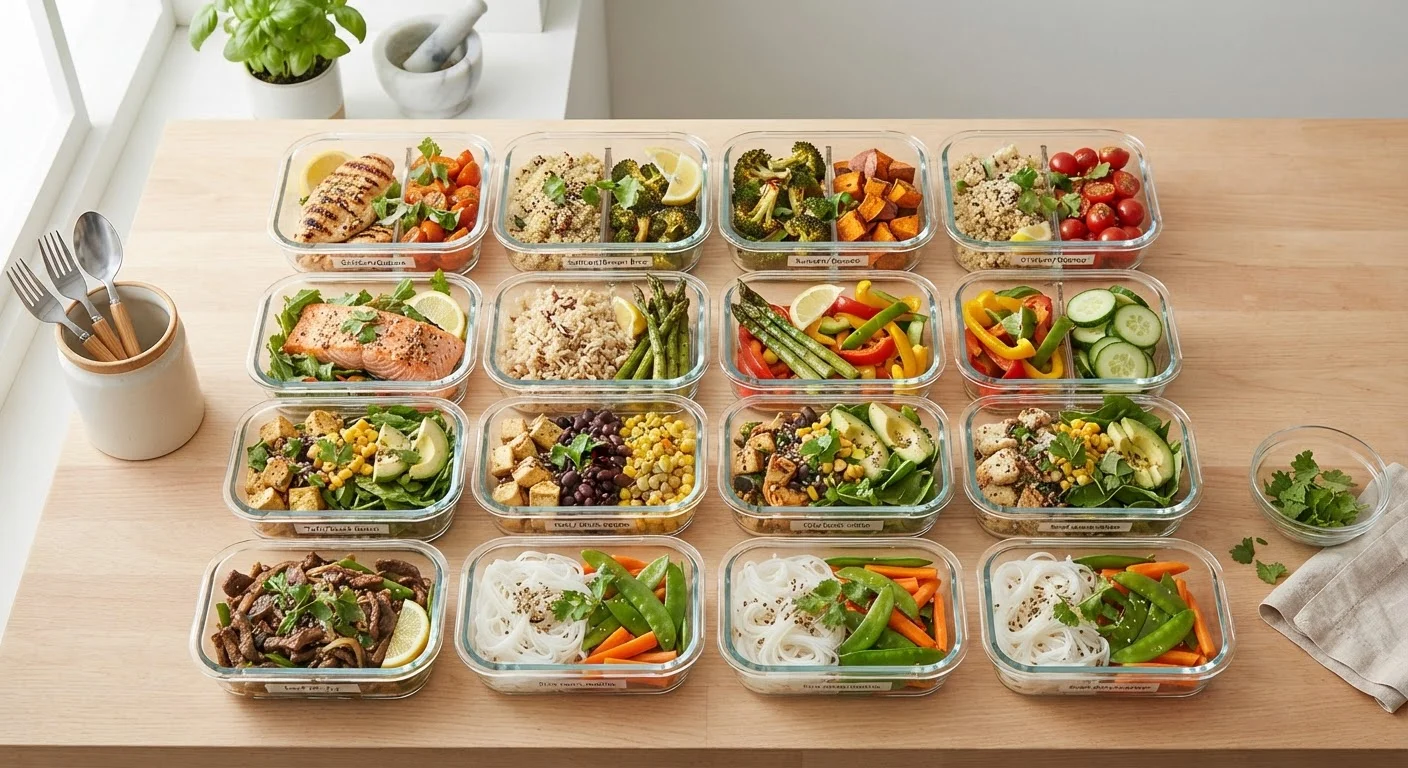
Rather than cooking every meal from scratch, prepare a few versatile components in advance: a batch of cooked grains (rice, farro, quinoa), roasted vegetables, and a base protein (hard-boiled eggs, cooked lentils, grilled chicken). These building blocks can be mixed and matched across multiple meals throughout the week, dramatically reducing daily cooking time.
Store and Label Everything Clearly
Transfer prepped ingredients and ready meals into airtight containers. Label each container with the contents and the date prepared. According to food safety guidelines from the USDA, most cooked proteins and grains are safe in the refrigerator for three to four days; items intended for later in the week should be frozen and transferred to the refrigerator the night before use.
Common Pitfalls and How to Avoid Them
Even well-intentioned plans fall apart. The most common reason is over-planning: mapping out elaborate recipes for every meal leaves no room for a busy evening or a change in appetite. Build at least two flex meals into each week - nights where a simple scrambled egg dinner, a grain bowl from leftovers, or a soup from pantry staples is perfectly acceptable.
Food waste is another signal that a plan needs adjustment. If you consistently throw out fresh produce, consider switching to hardier vegetables mid-week (cabbage, carrots, broccoli) and reserving more delicate greens for the first two or three days. A well-structured grocery list based on your meal plan is one of the most reliable tools for reducing waste and keeping food costs in check. For broader financial planning strategies, building a household budget from the ground up provides a useful foundation.
This article is for general informational and educational purposes only and is not a substitute for personalized nutrition or medical advice. Consult a qualified registered dietitian or healthcare provider for guidance tailored to your individual health needs.