

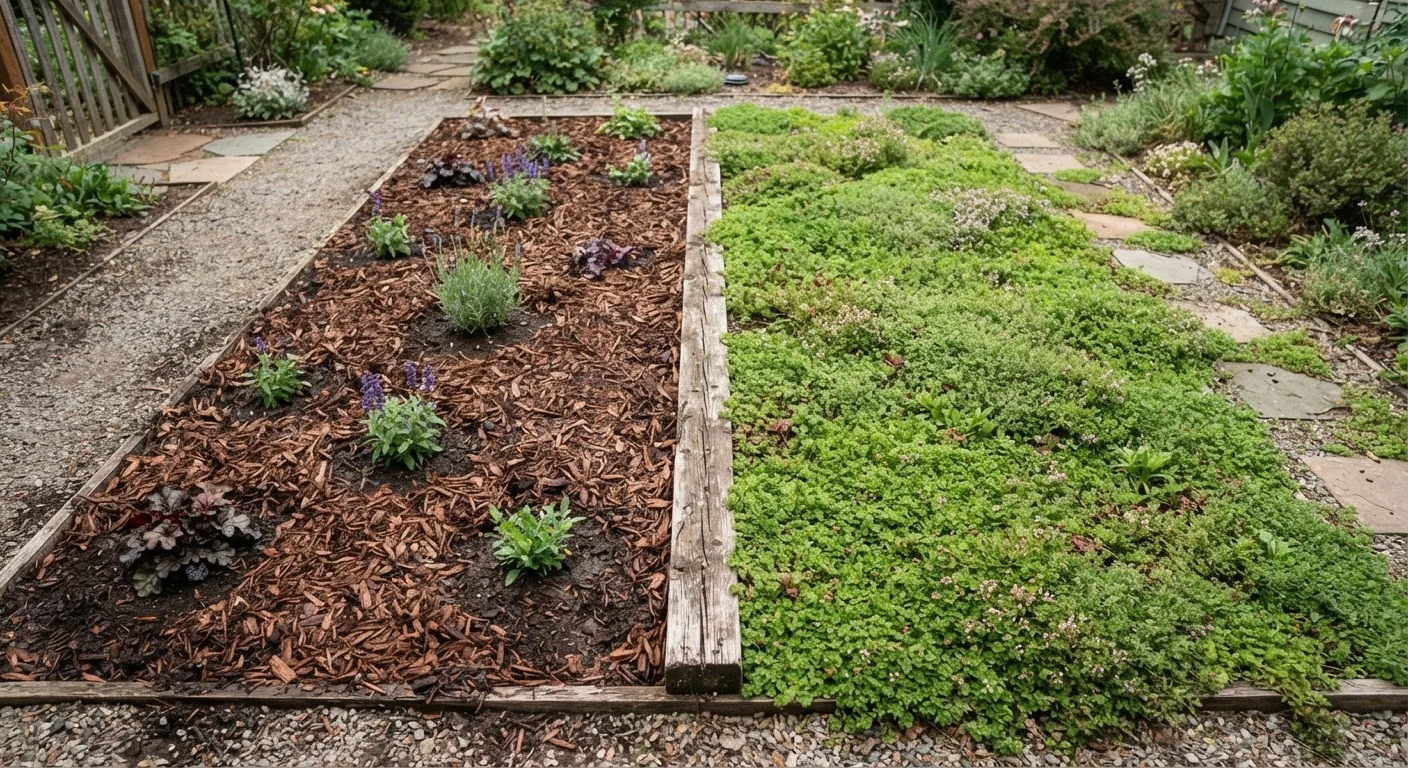
Key Takeaways
Option A
Mulch
The flexible, quick-install weed barrier.
Best for: Gardeners who want immediate weed suppression, soil moisture retention, and a tidy look with minimal plant establishment time.
Option B
Ground Cover Plants
The living, self-sustaining weed barrier.
Best for: Homeowners looking for a long-term, low-replenishment solution that adds ecological value and visual texture to the landscape.
If you need weed control right now without waiting for plants to establish
Mulch
Mulch can be installed in an afternoon and begins suppressing weeds immediately, making it ideal when you need fast results.
If you want a low-replenishment solution for a slope or large open area
Ground Cover Plants
Ground cover spreads over time to fill space naturally, reducing erosion and eliminating the need for annual reapplication.
If you're managing beds around established trees or shrubs
Mulch
Mulch doesn't compete with existing plant roots for nutrients or water, and it helps regulate soil temperature around established plantings.
If long-term ecological benefit and biodiversity are priorities
Ground Cover Plants
Many ground cover species support pollinators and soil organisms, adding ecological function that mulch alone cannot provide.
If you want the lowest possible ongoing cost over five or more years
Ground Cover Plants
After the establishment phase, ground cover typically requires far less material investment than repeatedly purchasing and applying mulch.
How Each Option Actually Suppresses Weeds
Both mulch and ground cover plants work by limiting the sunlight that weed seeds need to germinate. But their mechanisms - and their trade-offs - diverge significantly after that shared starting point.
Mulch is a physical layer applied over bare soil. Organic mulches such as wood chips, shredded bark, or straw decompose over time, which actually improves soil structure and feeds beneficial soil organisms. However, that decomposition means mulch gradually thins out, and weeds can push through once the layer drops below about two to three inches. Most gardeners plan to replenish organic mulch every one to three years depending on the material and climate. Inorganic mulches - such as gravel or crushed stone - don't break down but also don't improve soil biology.
Ground cover plants suppress weeds in two ways: they block light at the soil surface just as mulch does, and they occupy root space below ground, making it harder for weed seedlings to compete for water and nutrients. Common choices include creeping thyme, pachysandra, ajuga, and native options like wild ginger. The trade-off is time - most ground covers need a full growing season or two before they've spread densely enough to reliably block weeds. During establishment, weeds can actually move in aggressively, so many gardeners apply a thin layer of mulch in the gaps while waiting for coverage to fill in.
For deeper context on how plant selection affects long-term maintenance, see our comparison of native plants and ornamentals.
| Criterion | Mulch | Ground Cover Plants |
|---|---|---|
| Time to effectiveness | Immediate | 1-2 growing seasons |
| Upfront effort | Low - spread and done | Higher - planting and watering required |
| Ongoing maintenance | Replenish every 1-3 years | Trim edges seasonally once established |
| Slope/erosion control | Moderate - can wash away | Strong - roots stabilize soil |
| Soil health benefit | Good (organic types improve soil) | Good (living roots support soil organisms) |
| Ecological value | Low to moderate | High - can support pollinators |
| Best suited for | Established beds, annual gardens | Open areas, slopes, long-term plantings |
Practical Considerations Before You Choose
The right choice depends heavily on your specific site conditions - slope, existing plantings, sun exposure, and how much upkeep you're willing to do each season.
When Mulch Makes More Sense
- Established beds: Mulch works around existing shrubs, perennials, and trees without root competition.
- Vegetable gardens: Annual vegetable beds benefit from mulch since ground covers would interfere with crop rotation and harvest.
- Immediate results: If the space needs to look tidy quickly - say, before a season or event - mulch delivers fast.
When Ground Cover Makes More Sense
- Slopes and erosion-prone areas: Rooted plants stabilize soil far more effectively than mulch, which can wash away in heavy rain.
- Large open areas: Covering expansive spaces with mulch every year or two becomes costly; a spreading ground cover pays off over time.
- Low-maintenance goals: Once established, ground cover requires little intervention beyond occasional trimming at borders. This aligns well with the strategies discussed in our low-maintenance landscaping guide.
It's also worth noting that watering habits affect how both options perform. Overwatering can rot mulch faster and encourage shallow roots in ground cover. Our article on lawn watering habits covers how to avoid common irrigation mistakes that undermine your landscaping investments.
Watch for Ground Cover That Spreads Aggressively
Some ground cover species - like English ivy or certain varieties of vinca - can spread beyond their intended area and become difficult to control. In some U.S. regions, these plants are considered invasive. Before planting, check your local cooperative extension service's guidance on which ground covers are appropriate for your region. Native options are often the safest choice for avoiding unintended spread.
Using Both Together - and Knowing When to Switch
Many experienced gardeners don't treat this as a strict either/or decision. Applying mulch around newly planted ground cover is a well-established technique: the mulch fills the bare gaps during the establishment phase, suppresses weeds while the plants spread, and gradually becomes less necessary as coverage thickens.
If you're working with raised beds or defined planting areas, mulch tends to remain the dominant choice given the structured layout. For more on how raised bed gardening shapes your overall maintenance approach, our raised beds trade-offs overview offers a balanced look at what those setups demand over time.
One final thought: the best weed barrier is the one you'll actually maintain. Mulch that gets too thin loses effectiveness; ground cover that goes untrimmed can become invasive at bed edges. Whichever route you choose, build a simple annual check-in into your gardening calendar - assess coverage each spring and address any gaps before weed pressure builds.