

Key Takeaways
Our Verdict
Native plants hold a clear edge for ecological function, particularly pollinator support and water efficiency, based on current research. Ornamentals remain valuable for aesthetic goals and seasonal variety. Most gardeners will get the best results by making natives the backbone of their landscape and using ornamentals intentionally where natives fall short.
| Best for | Recommended |
|---|---|
| Gardeners prioritizing pollinator and wildlife habitat | Native Plants |
| Those seeking maximum seasonal color and design flexibility | Ornamental Plants |
| Homeowners wanting lower water and fertilizer inputs over time | Native Plants |
| Gardeners balancing curb appeal with ecological responsibility | Mixed Native and Ornamental Planting |
How Native and Ornamental Plants Differ at Their Core
A native plant is one that evolved in a specific region without human introduction - it developed alongside local soils, rainfall patterns, insects, and wildlife over thousands of years. Ornamental plants, by contrast, are selected or bred primarily for aesthetic traits: showier blooms, more compact growth, unusual foliage, or extended flowering periods. Many ornamentals originate in other countries or are cultivated varieties (called cultivars) of native species with deliberately altered features.
This distinction matters because co-evolution creates ecological relationships that can't easily be replicated. Native bees, in particular, often depend on native plant species for pollen that meets their specific nutritional needs. Altering a plant through breeding - even a native species - can disrupt those relationships in ways that aren't immediately visible in a garden setting.
For practical guidance on how plant selection interacts with other landscape decisions, see our low-maintenance landscaping overview.
What Research Says About Pollinators and Biodiversity
Multiple peer-reviewed studies have examined how plant origin affects pollinator activity. Research published in ecological journals consistently finds that native plants attract significantly more native bee species and greater total pollinator abundance than non-native ornamentals or native cultivars with modified flower structures - particularly double-flowered forms, which can obstruct access to nectar and pollen.
A well-cited line of research from the University of Delaware found that native oak trees alone support hundreds of caterpillar species, which are a critical food source for nesting birds. In contrast, many common ornamental trees - like ornamental pears or crepe myrtles - support few or no specialist insect species. This cascading effect means that choosing plants with low insect value can reduce bird populations even in yards that look lush and well-maintained.
| Native Plants | Ornamental Plants | |
|---|---|---|
| Pollinator support | High - supports specialist and generalist species | Variable - mainly generalist pollinators |
| Water needs once established | Low - adapted to local rainfall | Moderate to high - often needs supplemental irrigation |
| Soil adaptation | Strong - evolved for local soil types | May require amendments or imported soil |
| Aesthetic flexibility | Moderate - depends on regional flora | High - wide range of colors, forms, bloom times |
| Wildlife habitat value | High - supports birds, insects, small mammals | Low to moderate - fewer specialist species served |
| Establishment period | 1-3 seasons before low-maintenance | Often shorter, but ongoing care required |
| Long-term maintenance cost | Generally lower after establishment | Generally higher - fertilizer, water, pest control |
It's worth noting that not all ornamentals are ecologically inert. Some non-native plants, such as certain lavender species, do attract generalist pollinators. The issue is reliability and species diversity: natives tend to support a wider range of specialist insects, not just the most adaptable ones.
For a look at other commonly misunderstood garden topics, our article on garden myths worth revisiting covers what evidence actually supports.
Water Use, Soil Health, and Long-Term Maintenance
Once established - typically after one to three growing seasons - native plants generally require little supplemental irrigation because they're adapted to local rainfall cycles. Ornamentals, especially those bred for large blooms or from different climate zones, often need consistent watering, fertilizing, and pest management to perform well.
Natives also tend to develop deeper root systems than many ornamentals. These roots help with soil aeration, improve water infiltration, and reduce runoff - a tangible benefit in areas prone to erosion or stormwater issues. Ornamentals with shallow root structures don't deliver the same soil-building effects.
That said, native plants aren't automatically low-effort. They need the right conditions to thrive: planting a prairie species in dense clay or a shade-adapted woodland plant in full sun will likely result in struggle regardless of its native status. Matching plants to your specific site conditions matters as much as their origin.
For more on managing soil coverage around any planting style, our guide to mulch vs. ground cover is a useful companion read.
Finding the Right Balance for Your Yard
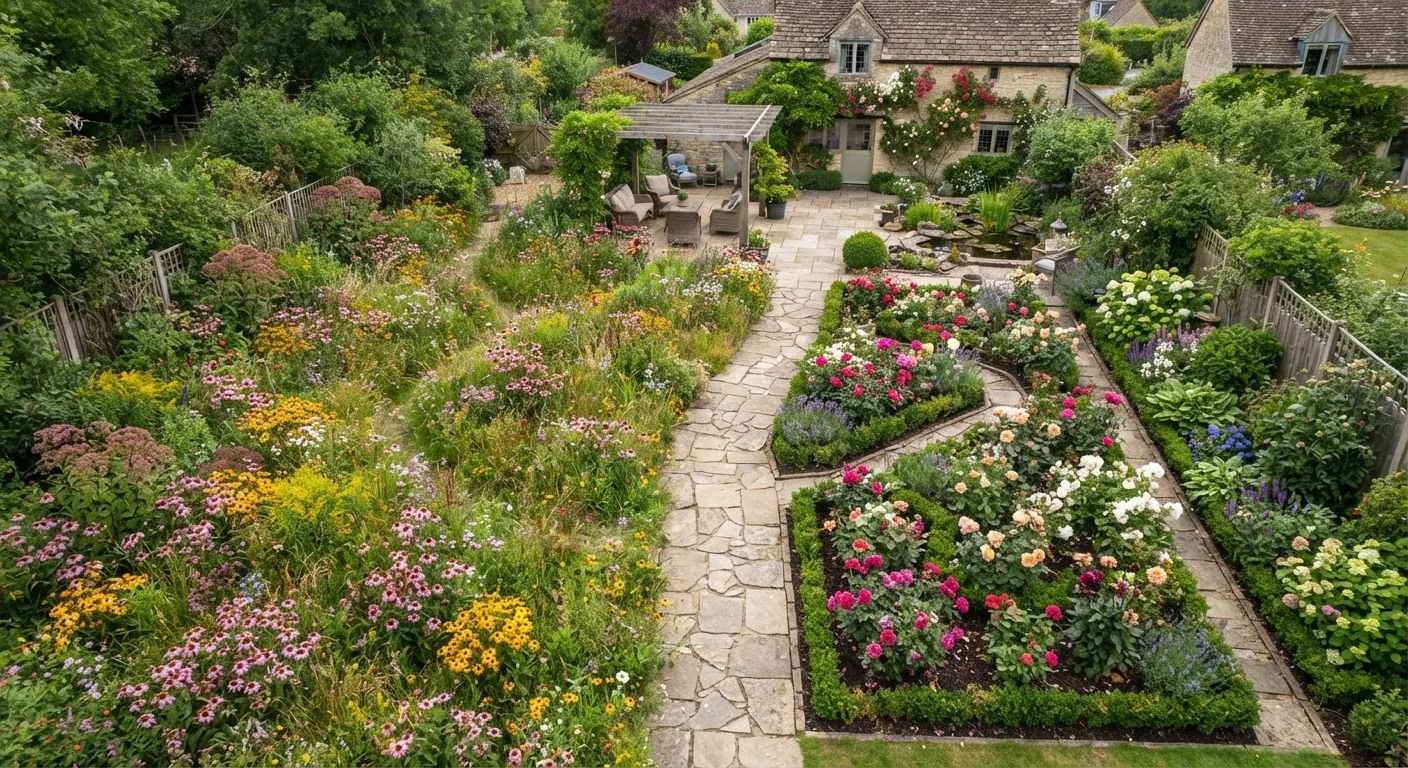
Few gardeners need to make an all-or-nothing choice. A practical approach supported by landscape ecologists is to use natives as the structural foundation - trees, shrubs, and perennials that provide food and shelter - while using ornamentals as deliberate accents for color, seasonal interest, or areas where natives struggle to establish.
When selecting ornamentals, look for straight (unmodified) species where possible, and avoid cultivars with doubled flowers, heavily variegated foliage, or dramatically altered petal structure. These modifications often reduce ecological value without a proportionate gain in visual appeal for most garden settings.
If you're working with raised or defined beds, the principles of plant selection still apply regardless of your bed structure. Our overview of raised bed trade-offs can help you think through how to integrate either plant type into a more controlled growing environment.
Start by identifying a handful of native species well-suited to your region - your local cooperative extension service is a reliable, non-commercial resource for regionally appropriate plant lists - then build your ornamental choices around those anchors rather than the other way around.