

Key Takeaways
Zero-Based Budgeting
Zero-based budgeting (ZBB) is a method where you allocate every dollar of your income to a specific category - expenses, savings, or debt payments - so that your income minus your planned spending equals zero. Nothing is left unassigned. The goal is intentional control: every dollar has a job before the month starts, rather than drifting toward unplanned purchases.
The term 'zero' refers to the balance remaining after allocation, not to your bank account balance. You are not spending everything - you are assigning everything, including funds earmarked for savings or emergencies.
How Zero-Based Budgeting Works
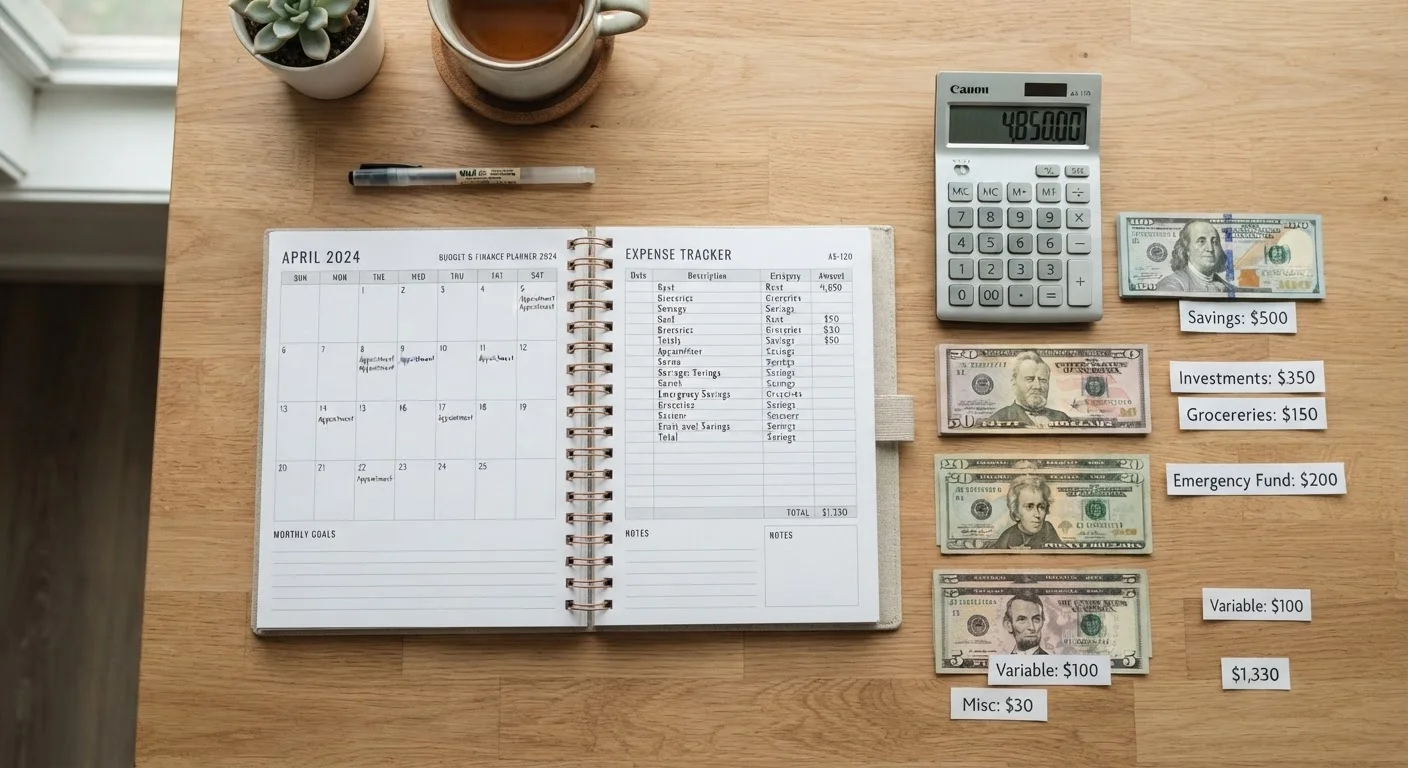
The mechanics of zero-based budgeting are straightforward. At the start of each month, you list your total expected income. Then you create categories - rent or mortgage, groceries, utilities, transportation, savings contributions, debt payments, entertainment, and so on - and assign dollar amounts until every dollar of income is spoken for. The math: Income − Assigned Categories = $0.
This is fundamentally different from passive tracking, where you record spending after it happens. ZBB is a forward-looking discipline. You decide in advance where each dollar goes, which means you must confront trade-offs before they happen rather than after. If you want to spend more on dining out, something else has to give.
For a thorough introduction to setting up any budget from scratch, see our step-by-step household budgeting guide, which covers income tallying and spending limits in detail.
Start with One Month of Real Data
Before building your first zero-based budget, review the last 30 days of actual bank and credit card statements. Real spending data - not estimates - gives you accurate category baselines and prevents you from underbudgeting variable expenses like groceries or gas in your very first month.
Why It Differs from Traditional Budgeting Methods
Most conventional budgets treat last month's spending as the starting point. If you spent $400 on groceries, next month's grocery line is approximately $400. Zero-based budgeting rejects that assumption. Each month begins with a blank slate, and every category must be justified by this month's actual priorities and income - not habit.
This monthly reset is both the method's strength and its challenge. On one hand, it forces regular reassessment: a month with a car repair requires reshuffling, not ignoring. On the other hand, it requires consistent time and attention that rolling budgets do not.
If you're weighing different budgeting philosophies, our comparison of pay-yourself-first vs. traditional budgeting explores how structure and mindset intersect across approaches. For a hands-on monthly framework grounded in real-life spending, see building a monthly budget that reflects your real life.
Who Benefits Most - and Who Should Proceed Carefully
Zero-based budgeting tends to work especially well for households with predictable monthly income. When you know what's coming in, assigning it out is straightforward. It also suits people who want granular visibility into their money - those who find categories like 'miscellaneous' frustrating because they hide where dollars actually go.
People with variable income - freelancers, gig workers, commission-based earners - can still use ZBB, but the approach needs adjustment. A common strategy is to budget using your lowest likely income month as the baseline, then assign any surplus dollars when they arrive as real income, not projections.
Those who find detailed monthly planning tedious may find ZBB unsustainable. Consistency matters more than perfection in any budgeting method. If the overhead of monthly reassignment causes you to abandon budgeting entirely, a simpler system may serve you better. Our article on common budgeting myths addresses many of the mental hurdles that keep people from sticking with any approach.
74%
Americans living paycheck to paycheck
A 2023 survey by LendingClub and PYMNTS found that roughly three in four Americans reported living paycheck to paycheck, underscoring the need for intentional monthly planning.
$1,000
Common recommended emergency fund starting point
Many personal finance educators suggest a $1,000 starter emergency fund as an early savings milestone - a goal zero-based budgeting makes explicit by assigning it as a named category.
Putting It Into Practice
Starting a zero-based budget requires three things: accurate income figures, a complete list of expense categories, and the discipline to assign before spending. Here's a practical sequence:
- Total your monthly income - after taxes, from all sources.
- List fixed expenses first - rent, loan payments, insurance premiums. These are non-negotiable and go in immediately.
- Assign savings and debt payoff next - treating these as obligations, not afterthoughts, is central to the method's effectiveness.
- Allocate variable expenses - groceries, gas, dining, subscriptions - based on realistic estimates, not wishful thinking.
- Assign remaining dollars to a buffer or specific savings goal until the balance is zero.
Mid-month adjustments happen. If a category runs short, move money from a lower-priority category - this is called a budget transfer, and it's a normal part of the process, not a failure. The key is making a conscious decision rather than ignoring the overage.
Once you've built consistent habits, zero-based budgeting naturally leads to stronger savings discipline. Explore how saving and investing strategies can build on that foundation over the long term. This article is for general informational purposes only and does not constitute personalized financial advice. Consider consulting a qualified financial professional for guidance specific to your situation.
This article is for informational purposes only and is not personalized financial advice. Please consult a licensed financial professional for guidance tailored to your individual circumstances.