

Key Takeaways
Our Verdict
Pay-yourself-first suits people who want saving to feel automatic and can live comfortably on what remains. Traditional budgeting rewards those who need visibility into every spending category to stay on track. Many households ultimately blend both - automating savings while monitoring key spending areas.
| Best for | Recommended |
|---|---|
| Savers who struggle to set money aside after spending | Pay-Yourself-First |
| Those managing tight margins or multiple financial obligations | Traditional Budgeting |
| People with stable, predictable income who dislike detailed tracking | Pay-Yourself-First |
| Anyone working to pay down debt while building savings simultaneously | Traditional Budgeting |
The Core Idea Behind Each Approach
Both methods aim to help you spend less than you earn - but they start from opposite ends of the paycheck.
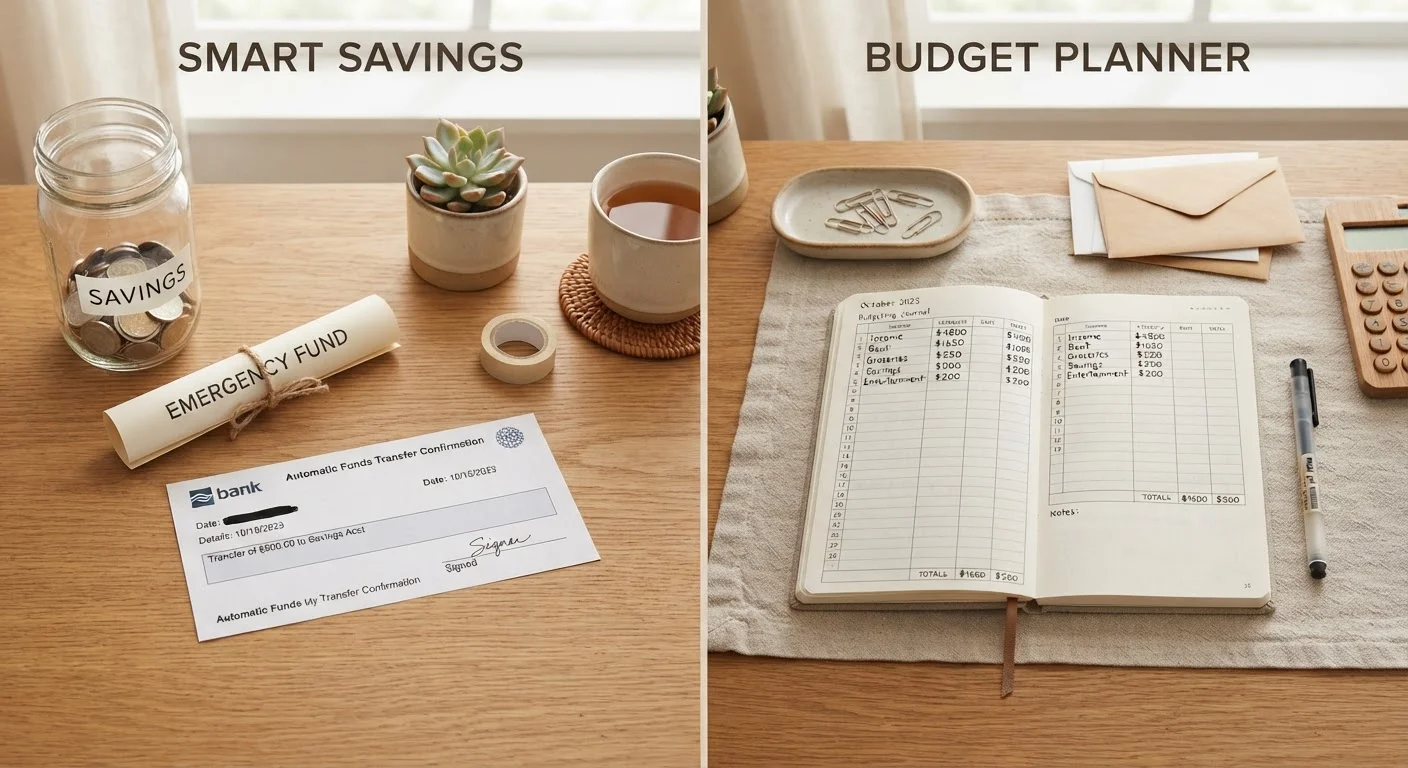
Pay-yourself-first flips the conventional order. Instead of spending throughout the month and saving whatever is left, you direct a set amount into savings or investments the moment income arrives - before paying bills, groceries, or anything else. The remainder is yours to use freely. This structure treats saving as a non-negotiable expense, not an afterthought.
Traditional budgeting works in the opposite sequence. You map out anticipated income, then allocate specific amounts to each spending category - housing, food, transportation, entertainment - with savings usually appearing as one line item among many. The goal is for income minus all planned expenses to equal zero or land in a surplus. For a deeper look at a closely related version of this method, see our guide on zero-based budgeting.
Understanding which sequence fits your habits is what makes the difference between a budget you maintain and one you abandon.
How They Differ in Structure and Daily Effort
| Pay-Yourself-First | Traditional Budgeting | |
|---|---|---|
| Starting point | Save first, spend the rest | Plan all categories, save as one line item |
| Ongoing effort | Low - largely automated | High - requires regular tracking |
| Spending visibility | Limited unless you track separately | High - every category monitored |
| Best income type | Stable, predictable income | Variable or irregular income |
| Flexibility | Spend freely after saving | Constrained by category limits |
| Debt management | Less structured for debt payoff | Easier to prioritize debt payments |
Pay-yourself-first is intentionally low-maintenance. Once you set an automatic transfer to a savings or retirement account - such as a 401(k) contribution that comes out of your paycheck before it hits your bank - the system largely runs itself. You are not required to log purchases, reconcile categories, or review a spreadsheet each week. The trade-off: without that visibility, it's easier to overspend on discretionary items without realizing it.
Traditional budgeting demands more ongoing effort. You build the plan at the start of each month, track actual spending against your categories, and adjust when reality diverges from the plan. That work pays off in clarity - you know exactly where your money is going and can pinpoint leaks quickly. The downside is that many people find the tracking tedious and gradually stop doing it.
If the idea of logging every coffee purchase sounds exhausting, pay-yourself-first may suit your temperament. If you feel anxious without knowing exactly how much remains in your dining-out fund, traditional budgeting will likely feel more grounding. You can also explore envelope budgeting versus digital spending trackers for tools that make category tracking less painful.
Who Each Approach Tends to Suit
Pay-yourself-first works well when:
- Your income is steady and predictable month to month.
- Your essential bills are comfortably covered after saving.
- You have a history of spending whatever remains in your account.
- You want saving to feel effortless rather than disciplined.
Traditional budgeting works well when:
- Your income varies - freelancers and gig workers, for example, benefit from the structure. Our article on budgeting on an irregular income covers this in detail.
- You are actively paying down debt and need to allocate every dollar strategically.
- You want to understand your spending patterns before committing to savings targets.
- Your household has multiple competing financial priorities to juggle.
Neither path is a permanent commitment. Many people start with traditional budgeting to learn their spending habits, then shift to pay-yourself-first once they trust their baseline expenses. Others combine both: automate savings, then track discretionary spending only.
If you are newer to budgeting overall, building a household budget from the ground up is a practical starting point before committing to either philosophy.
Common Pitfalls and How to Avoid Them
With pay-yourself-first, the most common mistake is setting the automatic savings amount too high. If your transfer leaves too little for genuine necessities, you may end up raiding the savings account or relying on credit - defeating the purpose. Start conservatively and increase the amount gradually as you confirm your remaining cash flow covers real expenses.
With traditional budgeting, the pitfall is over-engineering. Creating 25 spending categories feels thorough but often becomes unworkable. Most financial educators suggest starting with five to eight broad categories and refining from there. Also be honest about irregular expenses - annual insurance premiums, car registrations, and holiday spending - or your monthly budget will look balanced on paper while reality repeatedly surprises you.
A related concern worth flagging: pay-yourself-first does not automatically address debt. If you are carrying high-interest balances, routing money to savings while paying only minimums on debt can cost you more overall. The math of interest rates matters here. Our debt and credit guidance can help you think through prioritization.
This article is for general informational and educational purposes only and does not constitute personalized financial, investment, or tax advice. Please consult a qualified financial professional before making decisions about your own financial situation.